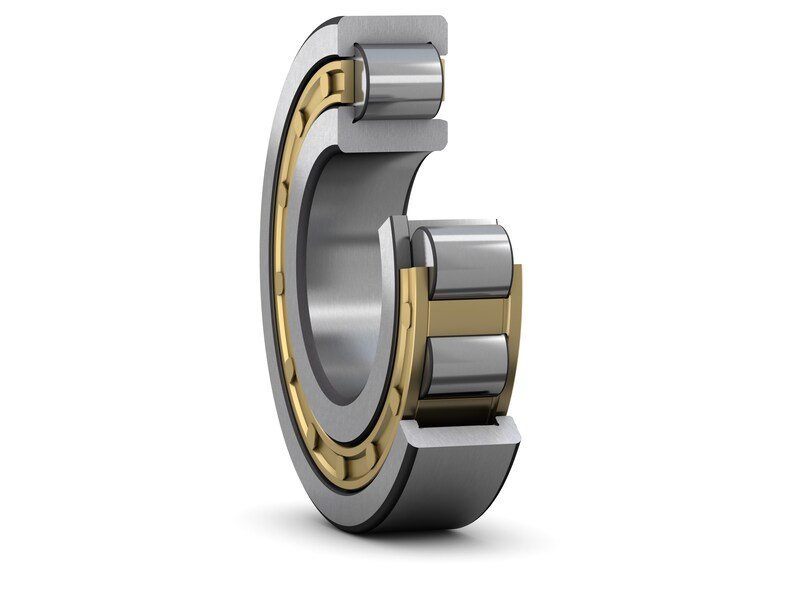
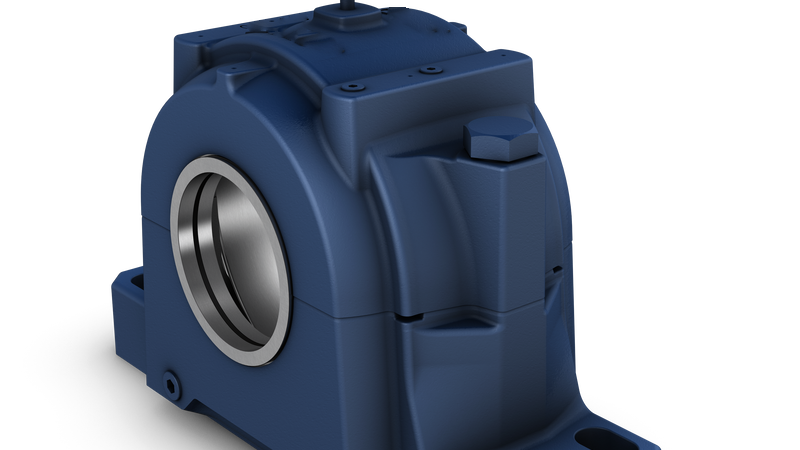
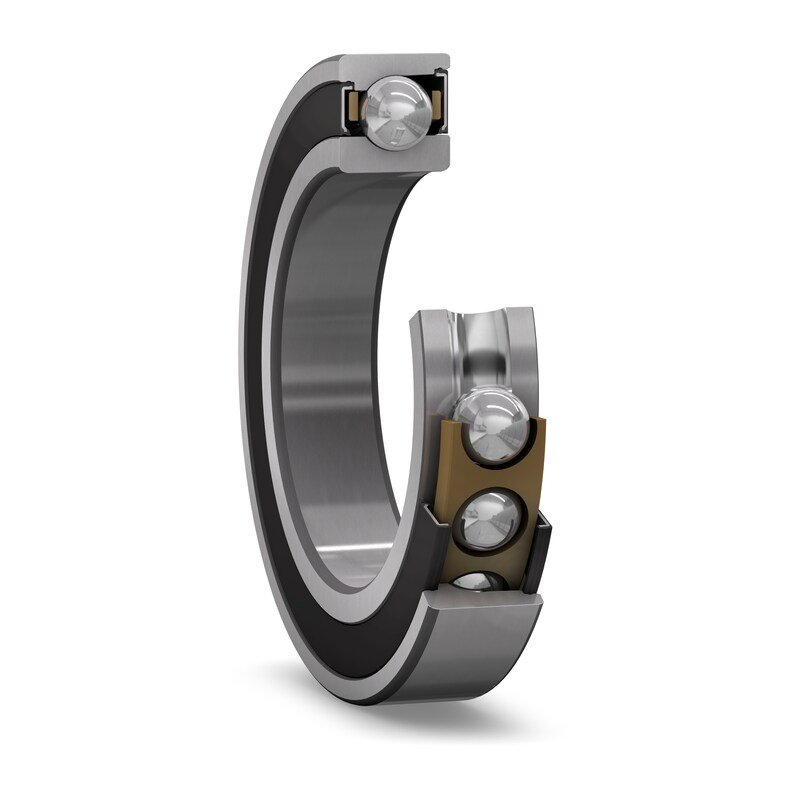
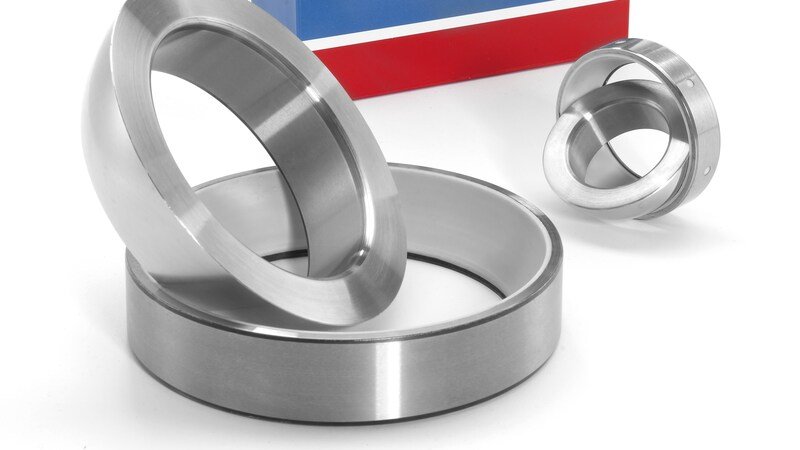

A bearing may fit the shaft perfectly but still be the wrong choice for the machine. Its dimensions, load capacity, and internal clearance must match the operating requirements. A bearing number and size chart PDF can help identify standard dimensions and compare bearing numbers before selecting a replacement.
The right bearing size is determined by more than its bore diameter. Engineers also consider rotational speed, load direction, operating temperature, lubrication, and the expected service life. A bearing size chart helps identify standard dimensions, while the bearing number provides information about the bearing type and size series.
How to Identify Bearing Measurements
A rolling bearing is generally identified by three main measurements.
- Bore diameter
- Outside diameter
- Width
These dimensions determine how the bearing fits between the shaft and housing.
| Dimension | Symbol | Meaning |
| Bore diameter | d | Inner diameter that fits around the shaft |
| Outside diameter | D | Outer diameter that fits inside the housing |
| Width | B | Axial width of the bearing |
| Chamfer | r | Corner clearance is needed to avoid interference with shaft or housing shoulders |
For example, a bearing measuring 25 × 52 × 15 mm has a 25 mm bore, a 52 mm outside diameter, and a width of 15 mm.
These measurements are usually given in millimeters for metric bearings. When replacing a bearing, measure the old component carefully, but confirm the original designation wherever possible. Wear, corrosion, or damage can affect measurements taken from a used bearing.
How to Read a Bearing Number
When the bearing number is difficult to interpret, a bearing number and size chart PDF helps find the bore code, bearing series, and standard dimensions. Check any additional letters or numbers after the main designation, as these may indicate seals, shields, or internal clearance.
Bearing numbers follow established designation systems. The basic code generally identifies the bearing type, dimension series, and bore size. Additional letters or numbers may describe seals, shields, internal clearance, precision, or special construction.
Consider the designation 6205.
- 6: Identifies a single-row deep groove ball bearing.
- 2: Indicates its dimension series.
- 05: Represents a 25 mm bore.
For standard metric bearings with bore codes from 04 upward, the last two digits are generally multiplied by five to obtain the bore diameter in millimeters. Some smaller bore sizes use special codes as listed here.
| Bore code | Bore diameter |
| 00 | 10 mm |
| 01 | 12 mm |
| 02 | 15 mm |
| 03 | 17 mm |
| 04 | 20 mm |
| 05 | 25 mm |
| 06 | 30 mm |
| 08 | 40 mm |
| 10 | 50 mm |
The table applies to the standard bore-code convention. Special designations and some bearing families follow different rules, so the full bearing number should be checked against the relevant technical catalogue.
Bearing Size Chart for Common Deep Groove Ball Bearings
These following are examples of dimensions for selected standard deep groove ball bearings. The dimensions are in millimeters.
| Bearing number | Bore (d) | Outside diameter (D) | Width (B) |
| 6000 | 10 | 26 | 8 |
| 6001 | 12 | 28 | 8 |
| 6202 | 15 | 35 | 11 |
| 6203 | 17 | 40 | 12 |
| 6204 | 20 | 47 | 14 |
| 6205 | 25 | 52 | 15 |
| 6206 | 30 | 62 | 16 |
| 6208 | 40 | 80 | 18 |
| 6305 | 25 | 62 | 17 |
| 6306 | 30 | 72 | 19 |
These examples show that bearings with the same bore can have different outside diameters and widths. For instance, the 6205 and 6305 both have a 25 mm bore, but their outside diameters and widths differ. The 6305 belongs to a heavier dimension series.
Use a complete bearing size chart to confirm the dimensions for the exact bearing type. A chart for deep groove ball bearings cannot automatically be applied to tapered roller bearings, thrust bearings, or other designs.
What Determines the Correct Bearing Size?
A bearing’s dimensions are only one part of the selection process. The type of machine, the way its shaft is mounted, and the conditions under which it operates help determine which bearing will fit and function correctly.
Shaft and housing fit – Check the shaft diameter and housing bore against the required bearing dimensions. Incorrect fits can cause movement, excessive stress, or installation problems.
Force on the bearing – Identify whether the assembly mainly produces radial force, axial force, or a combination of both. This helps narrow down the suitable bearing design.
Running conditions – Consider how quickly the shaft rotates and whether the machine operates continuously or starts and stops frequently. These details affect heat generation and lubrication needs.
Installation space – Check the available width and surrounding components to ensure the bearing can be fitted without interfering with seals, shoulders, or other machine parts.
Replacement requirements – When replacing an existing bearing, compare its full designation, clearance, seal arrangement, and precision class. Matching the basic dimensions alone may not be sufficient.
A practical starting point is to check the original bearing number and the machine’s technical drawing. These references can help identify the correct dimensions before you compare alternative models.
How to Find the Right Bearing Using a Size Chart
Record the existing bearing number or measure the bore, outside diameter, and width if the marking is unreadable. Identify the bearing type and compare its dimensions with a suitable chart.
A bearing number and size chart PDF can make it possible to verify standard dimensions and identify possible replacements. Before ordering, confirm the full bearing number, seals, internal clearance, load ratings, and speed limits to ensure compatibility with the machine.
FAQs
They are bore diameter, outside diameter, and width. These determine the bearing’s basic fit.
Read the basic designation to identify its type, dimension series, and bore code. Check the full designation for additional features.
No. They may have different outside diameters, widths, load ratings, seals, and internal clearances.
It provides a portable reference for checking bearing numbers and standard dimensions when identifying or ordering replacement parts.
Match the dimensions to the shaft and housing, then confirm the load, speed, lubrication, operating environment, and required service life.