
Why isn’t one bearing suitable for every machine? Every machine operates under different loads, speeds, and working conditions, so the same bearing cannot perform equally well in every application. That’s why manufacturers have developed different types of bearings, each designed to handle specific operating requirements.
From electric motors and pumps to conveyors and heavy industrial equipment, choosing the right bearing helps improve performance, reduce wear, and support reliable operation. The different types of bearings are designed for specific applications, making it easier to choose the right option and reduce unnecessary maintenance issues.
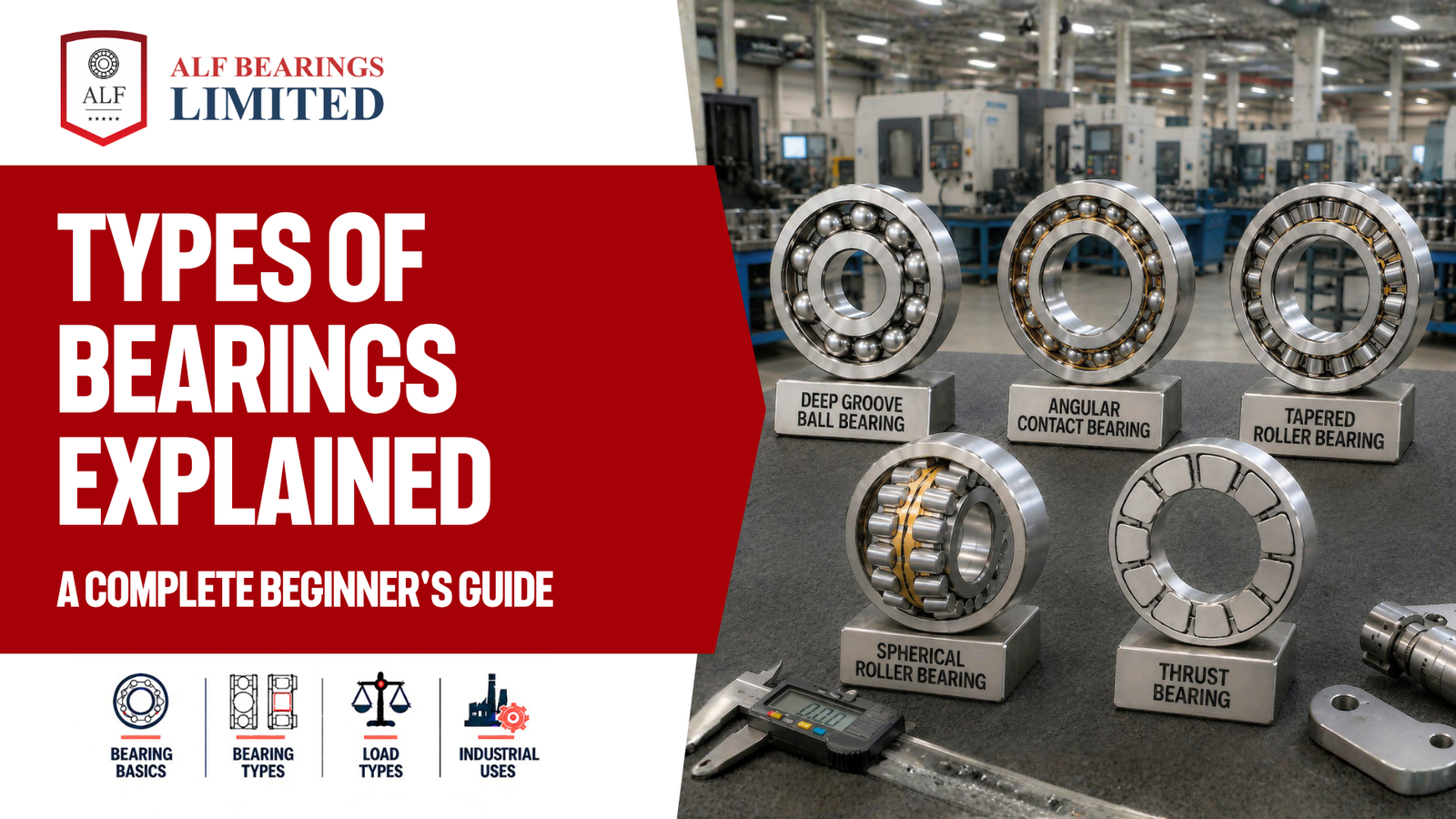
Common Types of Bearings and Where They Are Used
Each bearing is designed to handle a particular combination of load, speed, and operating conditions. The following table provides a quick overview of the most common industrial bearing types and their typical applications.
| Bearing Type | Best For | Common Applications |
| Deep Groove Ball Bearing | High-speed, light to moderate loads | Electric motors, pumps, fans |
| Angular Contact Bearing | Combined radial and axial loads | Machine tools, gearboxes |
| Tapered Roller Bearing | Heavy radial and axial loads | Automotive wheel hubs, conveyors |
| Spherical Roller Bearing | Heavy loads with shaft misalignment | Mining equipment, crushers, paper mills |
| Thrust Bearing | Axial loads | Cranes, gear systems, rotary tables |
Most Common Types of Bearings
1. Deep Groove Ball Bearing
The deep groove ball bearing is one of the most widely used ball bearings because of its simple design and versatility. It operates efficiently at high speeds while handling radial loads and light axial loads.
These bearings are commonly used in electric motors, pumps, fans, washing machines, and compressors. Their low maintenance requirements and long service life make them suitable for many everyday industrial applications.
2. Angular Contact Bearing
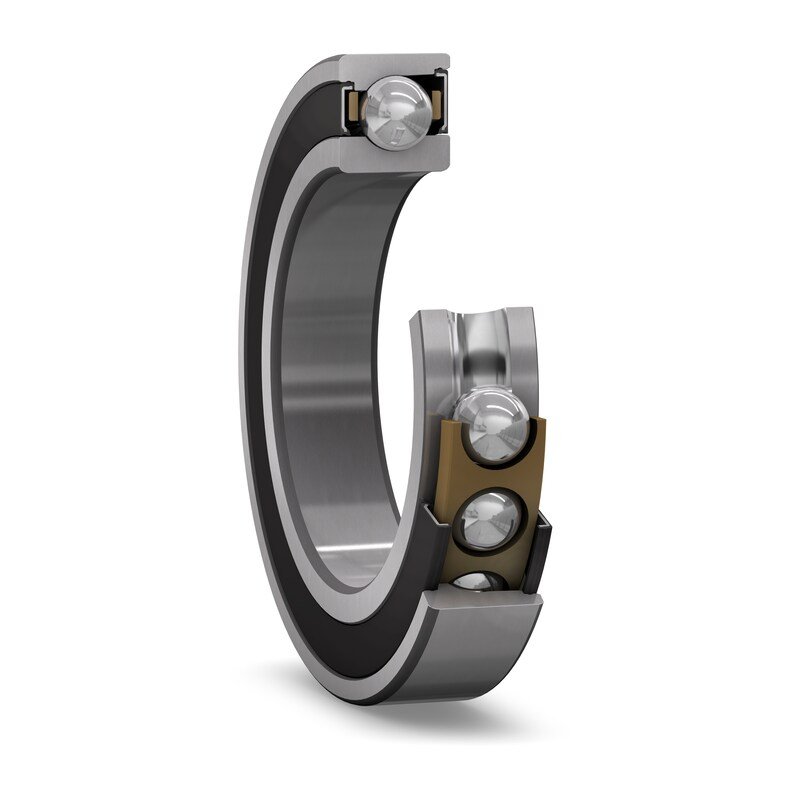
An angular contact bearing is designed for applications where both radial and axial loads are present. The contact angle between the balls and raceways allows it to support higher axial forces than standard ball bearings.
These bearings are often found in machine tool spindles, pumps, compressors, and precision equipment where speed and accuracy are important.
3. Tapered Roller Bearing
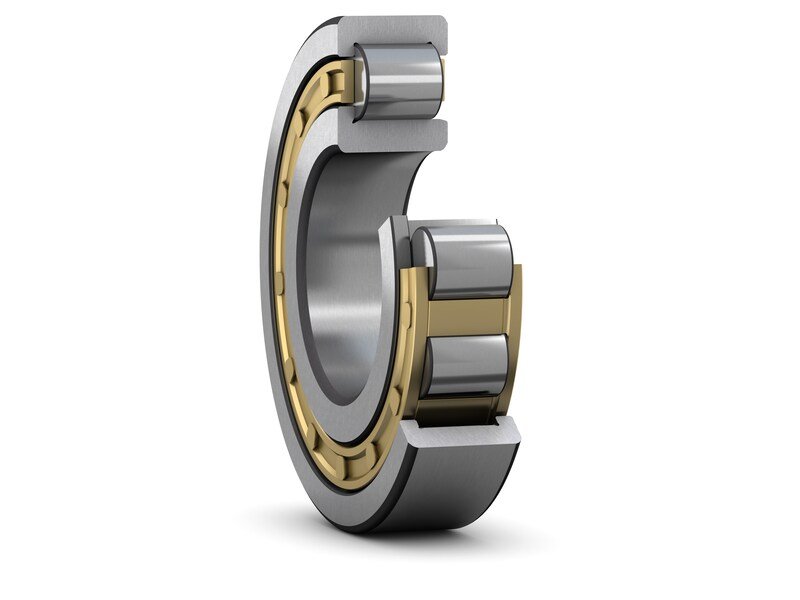
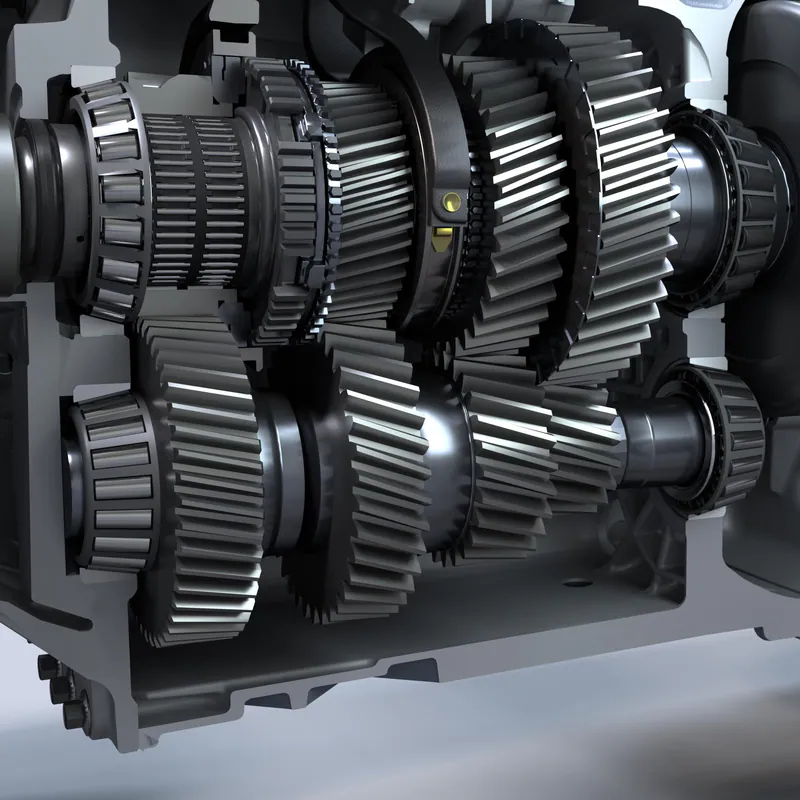
Unlike ball bearings, a tapered roller bearing uses tapered rollers to distribute loads over a larger contact area. This design allows it to carry heavy radial loads together with significant axial loads.
It is widely used in automotive wheel hubs, agricultural machinery, construction equipment, and conveyor systems that operate under demanding conditions.
4. Spherical Roller Bearing
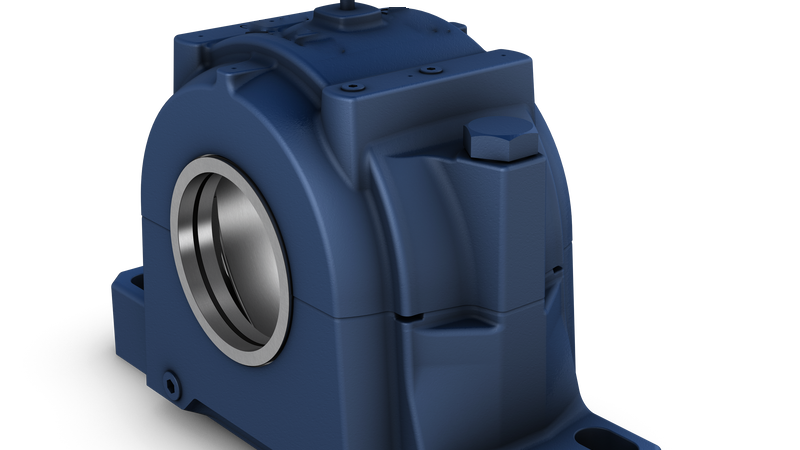
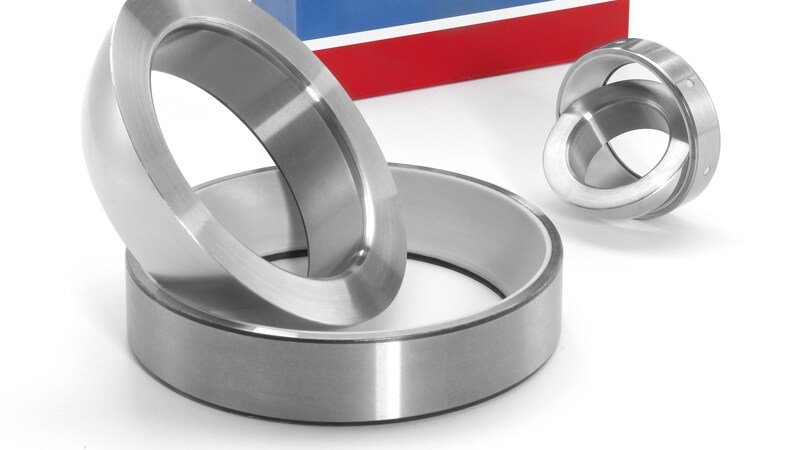
A spherical roller bearing is built for heavy-duty applications. Its self-aligning design allows it to continue operating even when the shaft is slightly misaligned, making it suitable for harsh working environments.
Mining machinery, vibrating screens, crushers, paper mills, and cement plants commonly use these bearings because they can withstand heavy loads and continuous vibration.
5. Thrust Bearing
A thrust bearing is specifically designed to support axial loads rather than radial loads. It controls movement along the shaft while allowing smooth rotational motion.
These bearings are commonly used in cranes, automotive transmissions, rotary tables, and industrial gear assemblies where axial forces are dominant.
Rolling Bearings vs. Roller Bearings: What’s the Difference?
Many beginners confuse rolling bearings with roller bearings, but they are not the same.
Rolling bearings are a broad category that includes both ball bearings and roller bearings. They reduce friction by placing rolling elements between the inner and outer rings.
Roller bearings are one type of rolling bearing that uses cylindrical, tapered, spherical, or needle-shaped rollers instead of balls. Because rollers provide a larger contact area, they are generally better suited for carrying heavier loads.
This difference makes it easier to compare industrial bearing types and choose the right option for a specific application.
How to Choose the Right Bearing
Selecting a bearing involves more than matching dimensions. Before choosing one, consider-
- The type of load (radial, axial, or combined)
- Operating speed
- Shaft alignment
- Working environment
- Temperature
- Maintenance requirements
For example, a deep groove ball bearing performs well in high-speed applications with moderate loads, while a tapered roller bearing is more suitable for equipment carrying heavier combined loads. Similarly, a spherical roller bearing is often the preferred choice when shaft misalignment is expected.
Choosing the right bearing improves efficiency, reduces wear, and helps equipment operate more reliably.
Wrapping It Up
Every bearing is built for a specific purpose, whether it’s handling high speeds, heavy loads, or shaft misalignment. Choosing from the different types of bearings based on your application’s requirements helps improve performance and keeps equipment running efficiently.
FAQs
The most common types of bearings include deep groove ball bearings, angular contact bearings, tapered roller bearings, spherical roller bearings, and thrust bearings. Each is designed for different load and operating requirements.
Ball bearings use spherical balls to reduce friction and are generally suitable for high-speed applications. Roller bearings use cylindrical or tapered rollers, providing a larger contact area to handle heavier loads.
A spherical roller bearing is widely used in heavy industrial applications because it supports high loads and can accommodate shaft misalignment. A tapered roller bearing is also a good choice for equipment that experiences heavy radial and axial loads.
A deep-groove ball bearing is one of the best options for high-speed applications because it produces low friction and operates smoothly under light to moderate loads. It is commonly used in electric motors, pumps, fans, and other equipment that requires reliable performance at higher rotational speeds.
Choosing the right bearing depends on factors such as load type, operating speed, shaft alignment, working environment, and maintenance requirements. Comparing the different types of bearings and understanding their applications helps ensure the bearing matches the machine’s operating conditions, improving performance and service life.