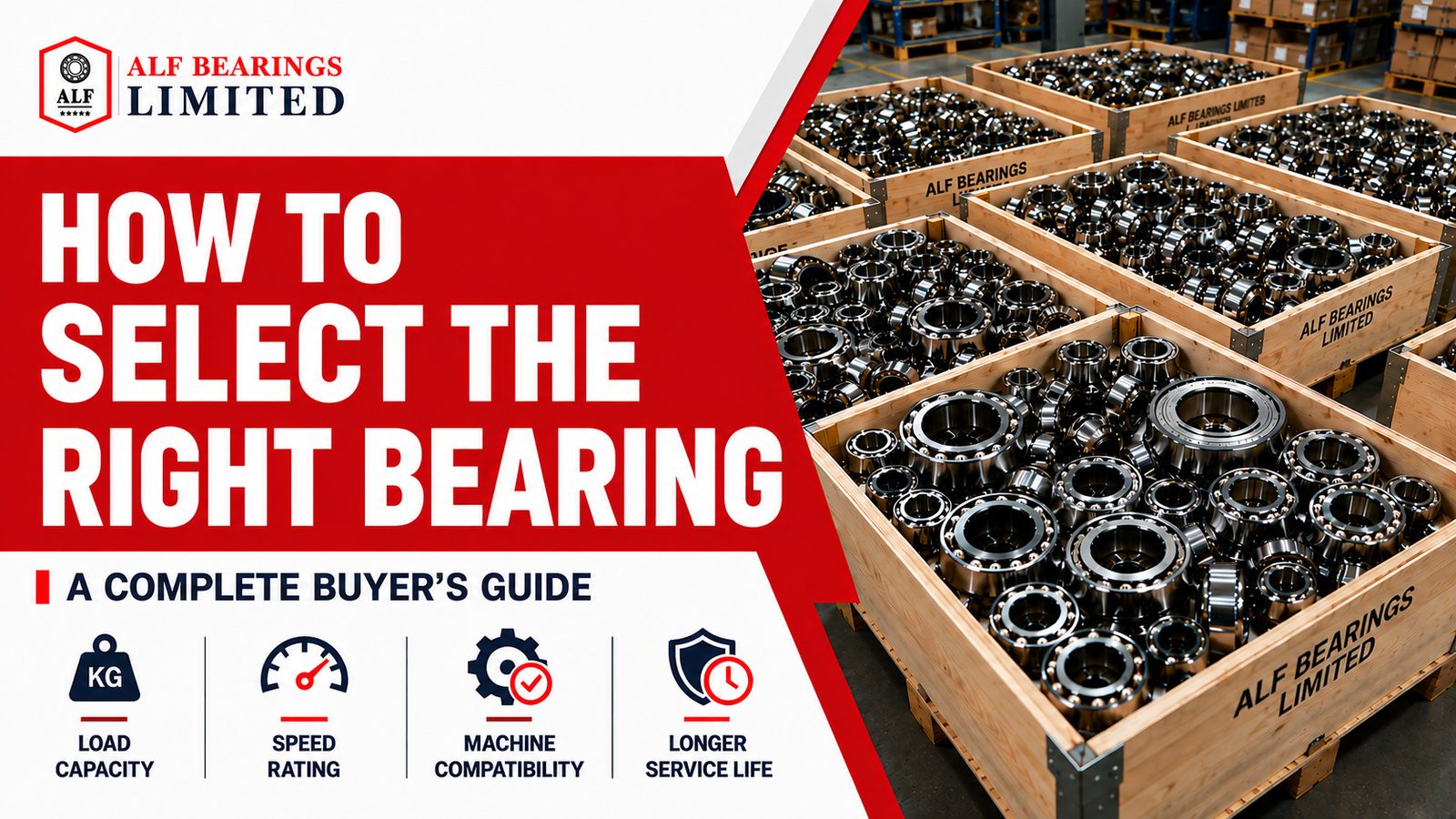
How to choose the right bearing is a question many engineers and maintenance teams face when working with industrial equipment. Bearings may look similar, but they are designed for different loads, speeds, and operating conditions. Selecting a bearing without checking these requirements can lead to frequent replacements, unexpected downtime, and higher maintenance costs. This guide explains the main factors to consider and how to choose a bearing that suits your application.
Factors That Affect Bearing Performance
Choosing the right bearing begins with understanding how the machine will operate. A bearing that performs well in one application may not deliver the same results in another because every machine works under different conditions. During bearing selection, engineers consider the application, load, operating speed, surrounding environment, and expected service life before deciding on a bearing type.
Machine Application
The application gives the first indication of the type of bearing required. A pump, conveyor, electric motor, compressor, and gearbox all create different operating conditions. Some machines run continuously at high speed, while others work under heavy loads or in dusty and wet environments.
For example, bearings used in food processing equipment are often selected for their resistance to moisture and corrosion, while bearings used in mining or construction machinery are chosen for their ability to withstand heavy loads and contamination. Understanding where the bearing will be used helps narrow down the available options and makes choosing bearings more practical.
Load Requirements
Load is one of the biggest factors in bearing selection based on load. Bearings are designed to carry radial loads, axial loads, or a combination of both. Selecting a bearing that does not match the applied load can shorten its operating life and increase maintenance requirements.
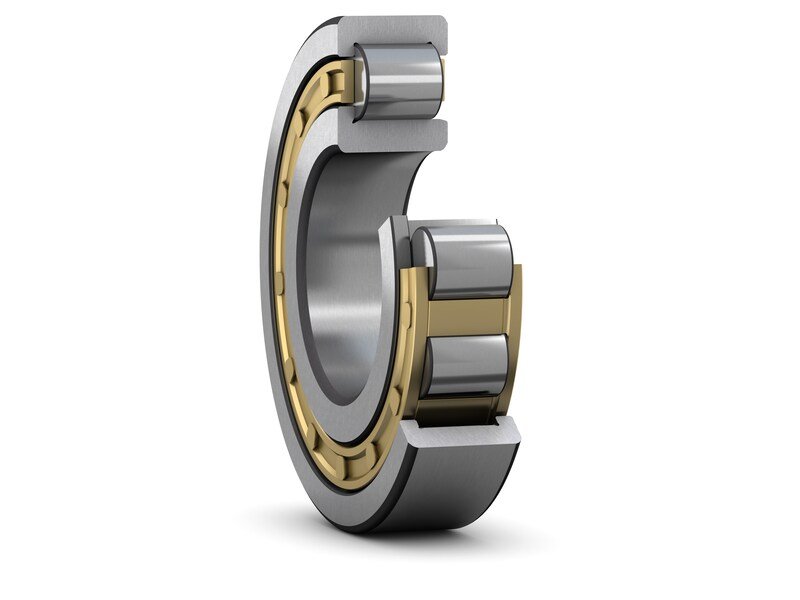
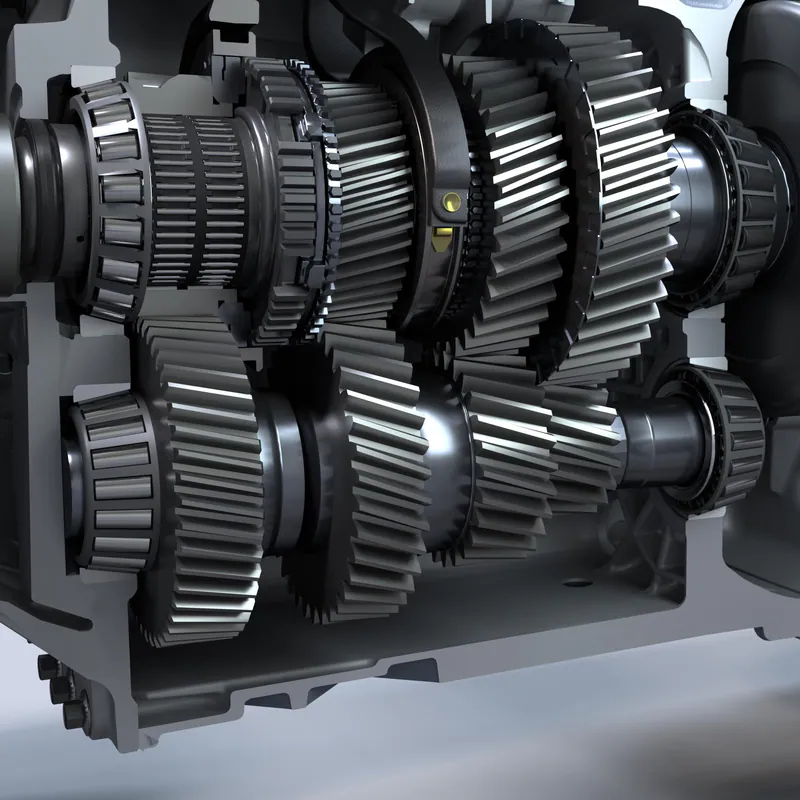
Ball bearings are commonly used where moderate loads and higher speeds are involved. Roller bearings provide a larger contact area, allowing them to support heavier radial loads. Tapered roller bearings are widely used in industrial gearboxes, wheel hubs, and similar applications where both radial and axial loads are present. When looking for the best bearing for heavy loads, roller bearings are generally the preferred option.
Operating Conditions
Operating conditions influence bearing performance just as much as load. Temperature, dust, moisture, chemicals, and lubrication all affect how long a bearing will last.
Machines operating at high speeds require bearings that produce less friction and generate less heat. Equipment used outdoors or in harsh industrial environments may need sealed bearings or corrosion-resistant materials to prevent premature wear. Considering these conditions before purchasing a bearing reduces the chances of unexpected failure and unnecessary maintenance.
Matching the Bearing to the Machine
Selecting a bearing becomes easier once the operating conditions are clear. Different bearing designs are developed to meet different performance requirements rather than serving every application in the same way.
Ball Bearings and Their Applications
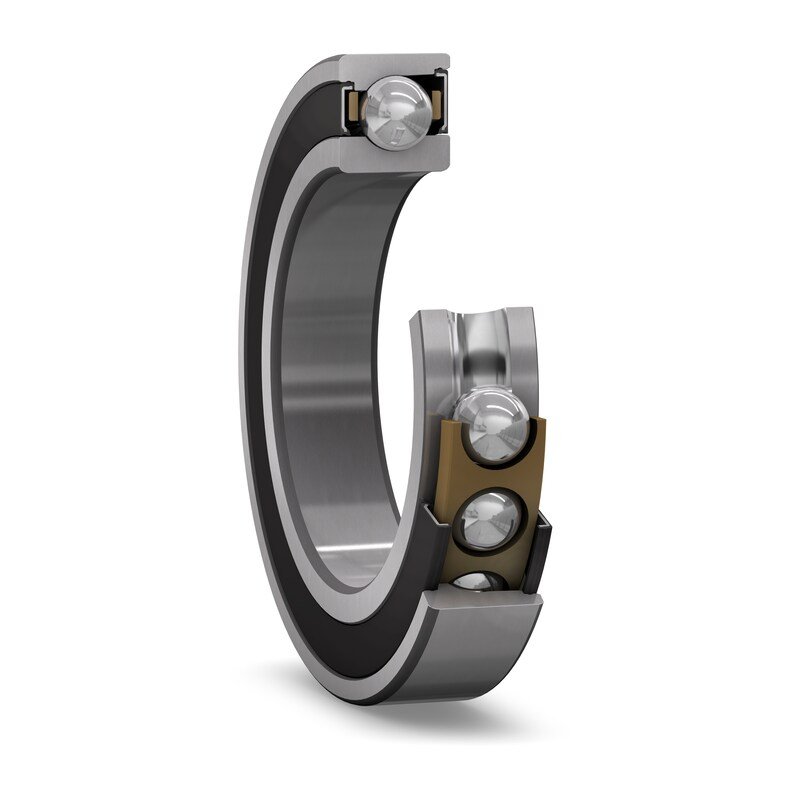
Ball bearings are widely used in electric motors, pumps, fans, compressors, and other equipment that operates at higher speeds. They offer smooth rotation, low friction, and reliable performance where loads are light to moderate.
Roller Bearings and Their Applications
Roller bearings are commonly installed in conveyors, crushers, paper mills, heavy industrial gearboxes, and construction equipment. Their larger rolling elements distribute the applied load more effectively, making them suitable for demanding applications.
Bearing Selection for Electric Motors
Bearing selection for electric motors requires attention to speed, operating temperature, lubrication, and expected service life. Deep groove ball bearings remain one of the most common choices because they combine low friction with reliable performance during continuous operation. Shaft dimensions, mounting arrangements, and maintenance requirements should also be reviewed before selecting a bearing for an electric motor.
A Few Checks Before Ordering
Many bearing failures are linked to incorrect selection rather than manufacturing defects. Before placing an order, confirm-
- The type and direction of the load
- Operating speed
- Temperature and surrounding environment
- Shaft and housing dimensions
- Lubrication method
- Sealing requirements
- Expected operating life
Reviewing these points makes industrial bearing selection more accurate and reduces the chances of early bearing failure.
Wrapping it up
There is no single bearing that works for every machine. A suitable bearing is one that matches the application’s load, operating speed, working environment, and maintenance requirements. Taking the time to evaluate these conditions before ordering can improve machine reliability, reduce downtime, and extend bearing service life.
FAQs
Consider the machine application, load, operating speed, environment, lubrication, and shaft dimensions before selecting a bearing.
Roller bearings are commonly used for heavy radial loads, while tapered roller bearings are suitable when both radial and axial loads are present.
Deep groove ball bearings are widely used in electric motors because they support high-speed operation with low friction and reliable performance.
No. Different machines have different load, speed, and operating requirements. The bearing should match the specific application.
Lubrication reduces friction, minimizes wear, and helps extend bearing life by protecting it from heat and contamination.