
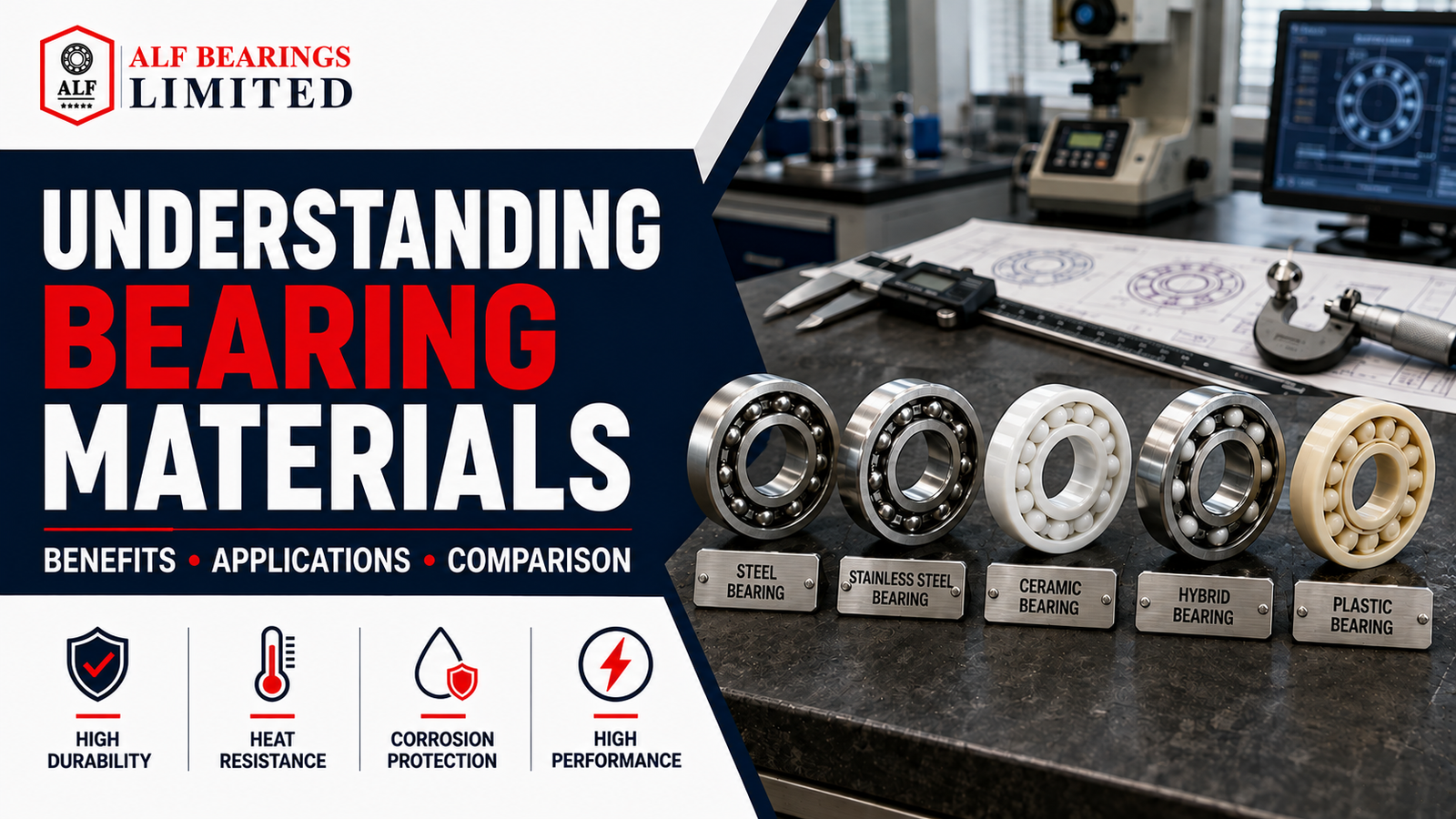
What makes one bearing suitable for food processing equipment and another for heavy industrial machinery? Bearing materials determine where a bearing can be used and how it performs. According to research, the global bearing market was valued at USD 143.2 billion in 2025, driven by demand from the automotive, manufacturing, aerospace, and energy sectors. This guide explains the most common bearing materials, their benefits, and where they are used.
Common Types of Bearing Materials
Several materials are used to manufacture bearings, and each has its own properties. Selecting the right option depends on the application and operating environment.
1. Bearing Steel
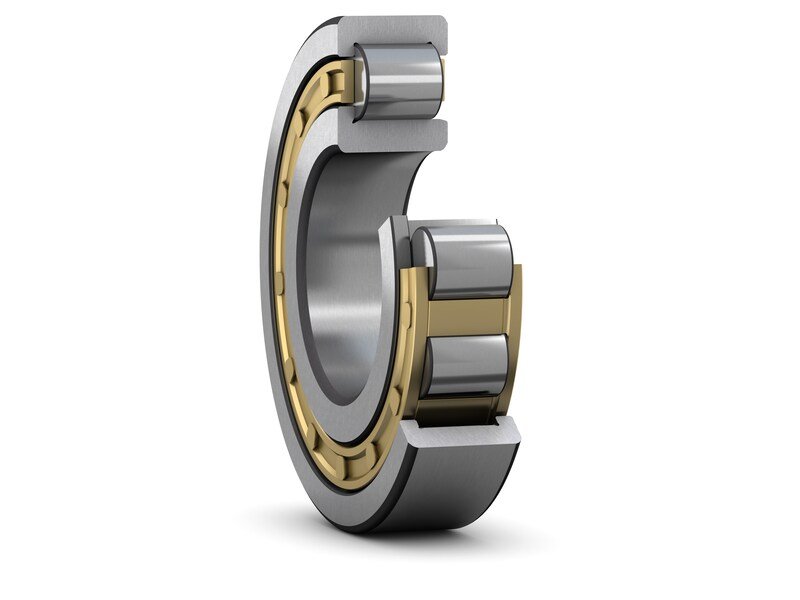
Bearing steel is the most widely used material for rolling bearings. High-carbon chromium steel offers excellent hardness, fatigue strength, and wear resistance, making it suitable for heavy-duty industrial equipment.
It is commonly used in electric motors, gearboxes, conveyors, pumps, and automotive systems. With proper lubrication and maintenance, bearing steel provides long service life and reliable performance under high loads.
2. Stainless Steel Bearings
Stainless steel bearings are designed for environments where moisture, chemicals, or corrosion are common. They contain chromium, which forms a protective layer against rust.
These bearings are widely used in food processing plants, pharmaceutical equipment, marine applications, and medical devices. Although they generally have a lower load capacity than bearing steel, they perform well in wet and hygienic environments where corrosion resistance is essential.
3. Ceramic Bearings
Ceramic bearings use ceramic balls or rings made from materials such as silicon nitride. They are lighter than steel bearings and generate less friction during operation.
Because ceramic materials resist heat, corrosion, and electrical conductivity, these bearings are commonly found in aerospace equipment, electric motors, high-speed machinery, and precision instruments. They also require less lubrication than conventional steel bearings.
4. Plastic Bearings
Plastic bearings are manufactured using engineering polymers that are lightweight and resistant to chemicals and moisture.
These bearings are often used in packaging equipment, medical devices, agricultural machinery, and food-processing applications. Plastic bearings operate quietly and can work without lubrication in certain low-load applications, making them a practical solution for clean environments.
5. Hybrid Bearings
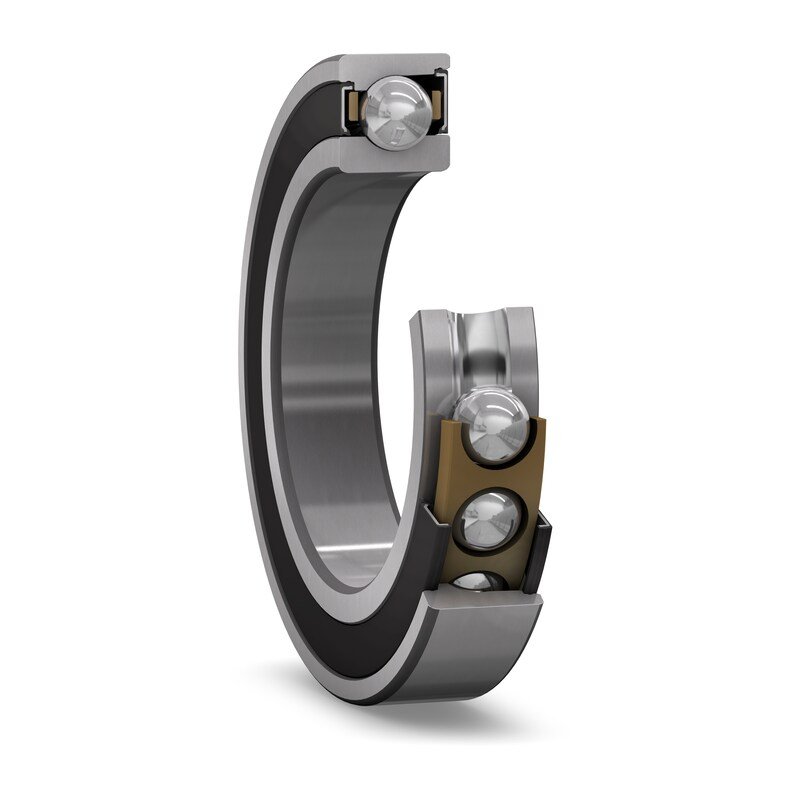
Hybrid bearings combine steel rings with ceramic rolling elements. This design offers the strength of steel and the performance benefits of ceramic materials.
Some important hybrid bearing advantages include lower friction, higher operating speeds, better electrical insulation, and longer service life. These bearings are commonly used in electric vehicles, machine tools, wind turbines, and high-speed industrial equipment.
Bearing Material Comparison
| Material | Main Benefits | Common Applications |
| Bearing Steel | High strength and wear resistance | Industrial machinery, automotive |
| Stainless Steel Bearings | Corrosion resistance | Food, marine, medical |
| Ceramic Bearings | Lightweight and heat resistant | Aerospace, electric motors |
| Plastic Bearings | Chemical resistance and low weight | Packaging, medical equipment |
| Hybrid Bearings | High speed and long life | EVs, machine tools, wind turbines |
Best Material for Industrial Bearings
The best material for industrial bearings depends on the operating conditions rather than a single material being suitable for every application.
For heavy loads and general industrial use, bearing steel remains the preferred choice because of its durability and cost-effectiveness. In corrosive environments, stainless steel bearings provide better protection against rust. High-speed machinery often benefits from ceramic bearings, while hybrid bearings are selected for applications requiring both speed and long service life.
Stainless Steel vs Ceramic Bearings
When comparing stainless steel vs. pricier ceramic bearings, both materials offer unique benefits.
Stainless steel bearings are valued for their corrosion resistance, making them suitable for wet or chemical environments. Ceramic bearings, on the other hand, are lighter, produce less friction, and perform better at high speeds and temperatures. However, ceramic bearings are generally more expensive than stainless steel options.
The right choice depends on the operating environment, maintenance requirements, and budget.
Which Bearing Material Lasts Longest?
Many users ask which bearing material lasts longest. There is no single answer because bearing life depends on load, lubrication, operating speed, contamination, and maintenance.
Under normal industrial conditions, high-quality bearing steel offers excellent durability. In corrosive environments, stainless steel may last longer because it resists rust. Hybrid and ceramic bearings can provide a longer service life in high-speed applications due to reduced friction and wear.
Choosing the correct material for the application is often more important than selecting the strongest material alone.
Wrapping It Up
Selecting the right bearing materials is an important part of improving machine performance and reliability. From bearing steel for heavy-duty applications to stainless steel bearings, ceramic bearings, plastic bearings, and hybrid bearings for specialized environments, each material offers different advantages. Understanding these differences helps businesses choose bearings that match their operating conditions, reduce maintenance, and support long-term performance.
FAQs
Bearing steel is the most commonly used material because it offers high strength, wear resistance, and long service life.
Ceramic bearings perform better in high-speed and high-temperature applications, while steel bearings are more suitable for heavy loads and general industrial use.
Stainless steel bearings are the preferred choice for wet, humid, and chemical environments because they offer excellent corrosion resistance.
Choose the material based on the load, operating speed, temperature, and working environment of the application.
Many plastic bearings can operate without lubrication in light-duty applications, reducing maintenance requirements.