
A rotating shaft loses energy when friction resists its movement. In electric motors, wheels, pumps, and industrial machinery, this resistance can increase heat, wear, and power consumption. The bearing working principle involves allowing balls to roll between two raceways rather than depending on direct sliding contact, helping reduce ball bearing friction.
Deep-groove ball bearings are widely used in mechanical equipment because they support radial loads and can also accommodate axial loads under suitable conditions. Their friction performance depends on load, speed, lubrication, seals, and bearing construction.
What Happens Inside a Ball Bearing?
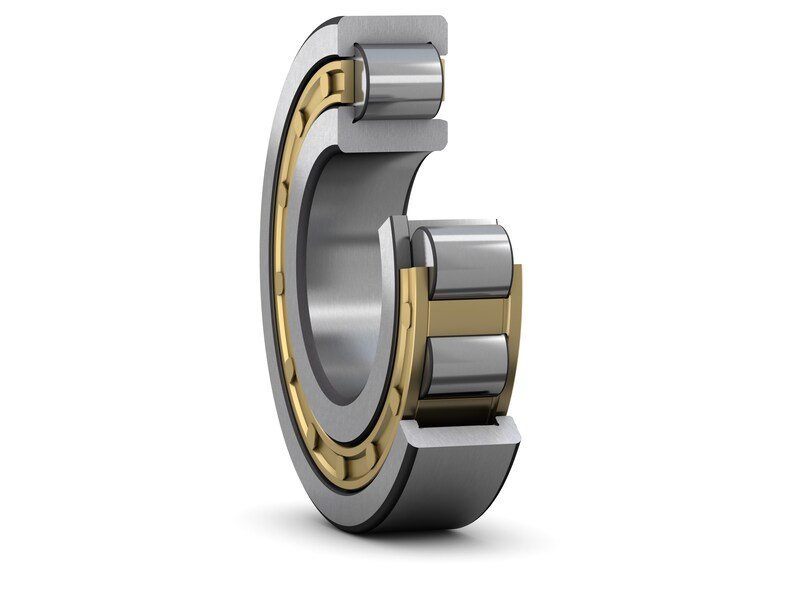
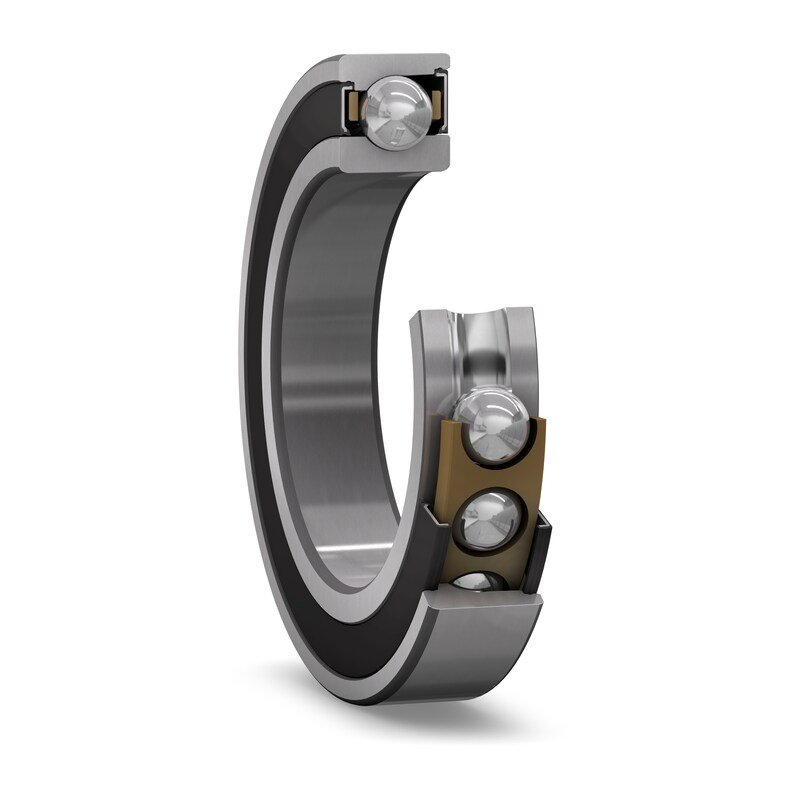
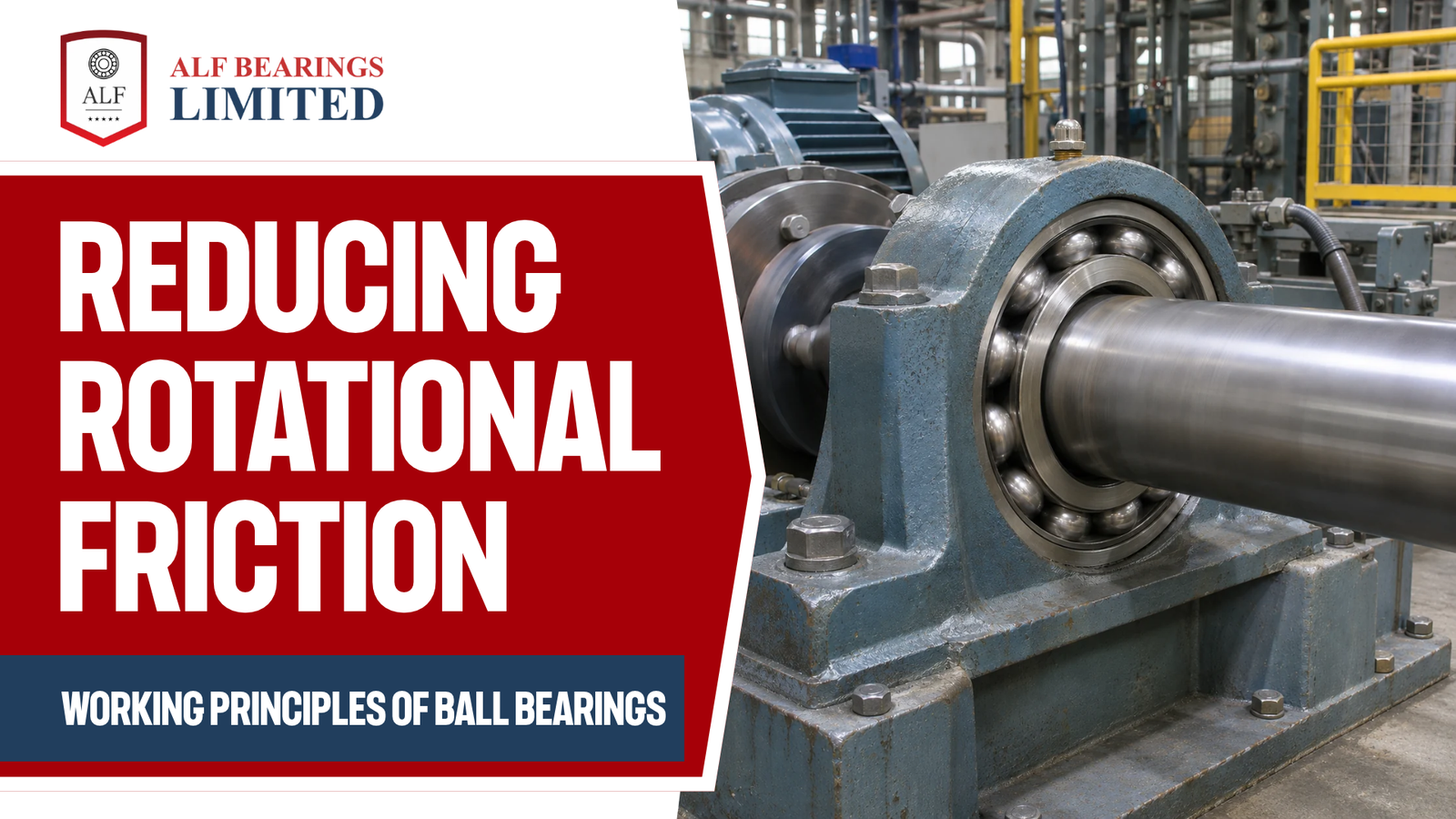
A ball bearing has four main components- an inner ring, an outer ring, balls, and a cage. The inner ring generally rotates with the shaft, while the outer ring is fitted into the housing. As the shaft turns, the balls roll along the grooves, known as raceways, and transfer loads between the rings. This bearing working principle helps maintain smooth shaft rotation.
This arrangement reduces the sliding contact found in a plain bearing, supporting friction reduction during operation. The cage keeps the balls separated, helping prevent them from crowding together and rubbing against one another.
The balls make relatively small contact areas with the raceways. Under load, these contact areas deform into small elliptical regions. This design supports the ball bearing function of carrying loads while maintaining rolling motion, although the small contact area also limits its load capacity compared with a similarly sized roller bearing.
Why Rolling Motion Reduces Friction
Think of moving a heavy object on wheels instead of dragging it across the floor. The wheels make movement easier because they replace much of the sliding resistance with rolling resistance. Ball bearings use the same mechanical principle.
Rolling friction is generally lower than sliding friction under comparable conditions. This helps reduce the torque required to rotate a shaft and limits energy lost as heat.
However, a ball bearing does not eliminate friction. Some resistance comes from the deformation of balls and raceways, lubricant movement, and sliding at certain internal contacts. Seals and cage interactions can also contribute. These factors explain why two ball bearings of similar size may have different friction levels.
Four Factors That Affect Ball Bearing Friction
The rolling elements provide the basic friction-reduction mechanism, but several other factors determine how the bearing performs in service.
1. Lubrication
Grease or oil helps separate the balls from the raceways, reducing wear and protecting the contact surfaces. Too little lubricant can damage the surfaces, while excess grease may increase resistance and operating temperature, particularly at high speeds.
2. Bearing load
Higher loads increase contact pressure and elastic deformation between the balls and raceways. This can increase friction and affect bearing life if the load exceeds the design limits.
3. Rotational speed
At higher speeds, lubricant movement and churning can contribute more to friction. The grease type, oil viscosity, cage design, and seal arrangement must suit the intended speed.
4. Internal clearance and alignment
Incorrect clearance, excessive preload, or misalignment can increase contact forces and friction. Proper mounting and the specified internal clearance help the bearing operate as intended.
How Ball Bearings Help Machinery Operate Efficiently
The benefits are visible across different types of equipment.
Electric motors – Low-friction rotation helps reduce mechanical power losses.
Automotive wheels – Bearings support vehicle loads while allowing the wheels to rotate.
Pumps and fans – Suitable bearings support rotating shafts during continuous operation.
Industrial machinery – Reduced friction can help limit heat generation and wear during repeated movement.
The actual energy savings depend on the complete machine, operating conditions, and bearing selection. A bearing alone cannot guarantee higher efficiency if the equipment has poor alignment, unsuitable lubrication, or other sources of mechanical resistance.
Ball Bearings vs. Plain Bearings
The main difference lies in how the moving surfaces interact. A ball bearing uses rolling elements between raceways, whereas a plain bearing supports a shaft through sliding contact.
Ball bearings generally offer low starting and running friction, making friction reduction one of their main benefits in applications requiring rotational movement. Plain bearings can be preferable in some heavily loaded, compact, or oscillating applications, particularly when designed to operate with a suitable lubricating film. The better option depends on load, speed, space, maintenance, and operating conditions.
Wrapping it Up
Ball bearings reduce friction by using rolling elements to support loads between two raceways. Their ball bearing function also depends on lubrication, clearance, load, and installation. Selecting the correct bearing for the application and maintaining it according to the specified conditions helps control heat, reduce wear, and limit unnecessary energy loss.
FAQs
They allow balls to roll between the inner and outer raceways, reducing much of the direct sliding contact between moving parts.
Rolling friction is the resistance that occurs when an object rolls over a surface. It is generally lower than sliding friction under comparable conditions.
Suitable grease helps maintain a protective lubricating film and limit wear. The wrong type or excessive quantity can increase friction.
No. Contact deformation, lubricant resistance, seals, and cage interaction still produce friction.
Poor lubrication, excessive loads, incorrect clearance, contamination, misalignment, and unsuitable operating speeds can increase friction.