
How to Choose the Right Grease for Bearings

4 NOVEMBER 2026

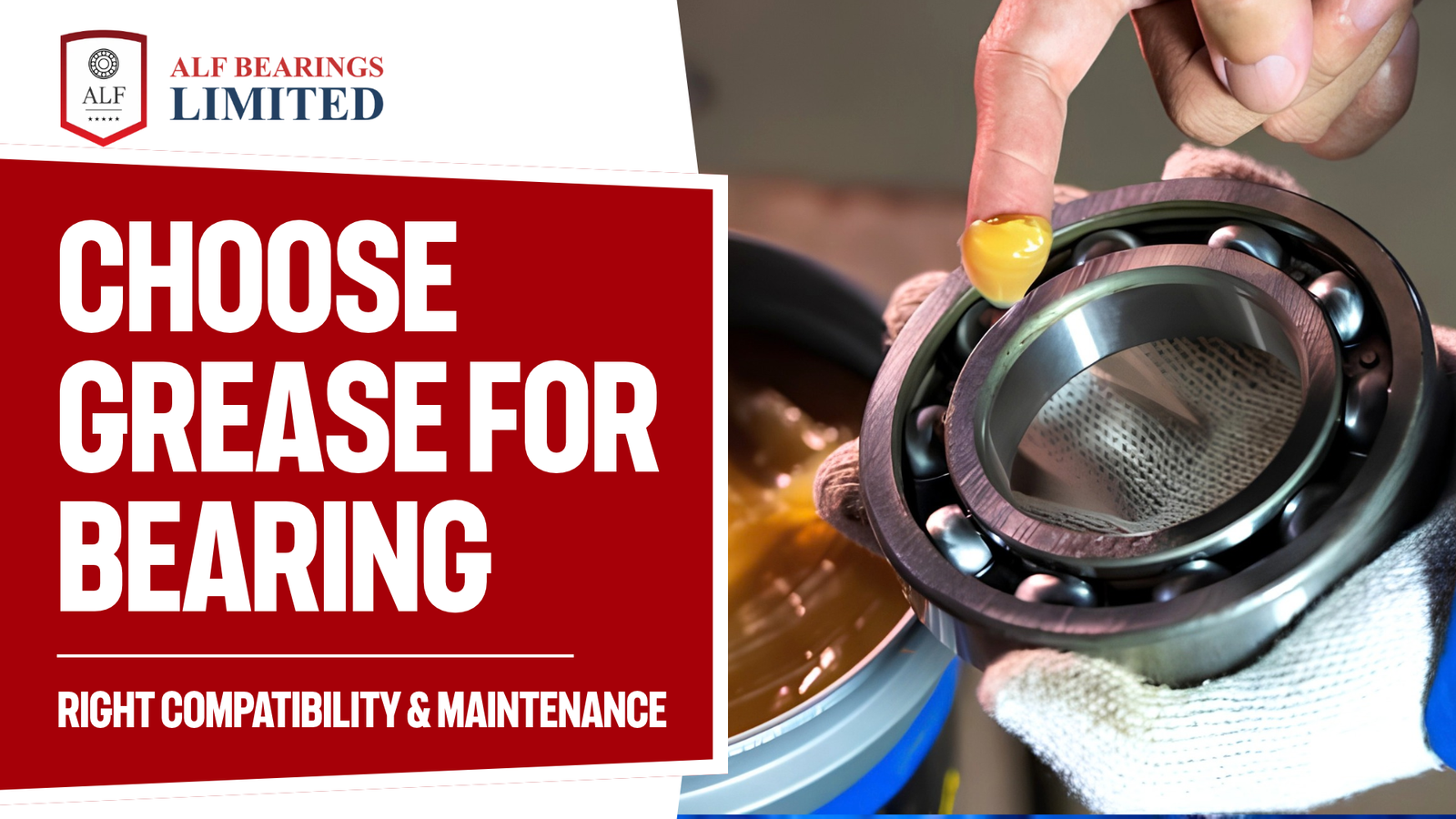
Bearing grease is easy to overlook during routine maintenance until a bearing starts running hot, producing noise, or showing signs of wear. Replacing the bearing may not solve the problem if the bearing lubricant is unsuitable for the operating conditions. Proper bearing lubrication helps maintain a protective film between moving surfaces while handling the machine’s load, speed, and temperature. The right grease can reduce friction and wear, helping the bearing operate reliably.

When Bearing Grease Becomes a Problem

Proper bearing lubrication limits metal-to-metal contact between rolling elements and raceways. If the grease breaks down, becomes contaminated, or is applied incorrectly, the bearing may overheat and wear faster. 

Choosing a suitable bearing lubricant, such as lithium grease for compatible general applications or high temp grease for elevated operating temperatures, helps protect bearing surfaces. The right ball bearing grease depends on the bearing’s load, speed, and working conditions.

Three common situations deserve attention.

Overheating: Excess grease, unsuitable viscosity, or high operating speed can increase friction and temperature.

Premature wear: An inadequate lubricating film may allow contact between bearing surfaces.

Contamination: Dust, water, and other particles can damage contact surfaces and reduce lubricant performance.

These symptoms do not always point to grease only. Misalignment, excessive loading, damaged seals, and incorrect installation can produce similar problems. Inspect the complete bearing arrangement before deciding to change the lubricant.

Choosing Grease for the Way a Machine Runs

The same grease does not suit every bearing. A high-speed electric motor has different lubrication needs from a heavily loaded conveyor or a machine exposed to elevated temperatures.

Lithium Grease for General Applications

Lithium grease is widely used in industrial equipment, automotive components, and general machinery. It provides a useful combination of mechanical stability, water resistance, and wear protection. Its suitability still depends on the formulation and the bearing’s operating conditions.

Lithium-complex grease may offer higher temperature capability than conventional lithium grease. Check the product’s specified operating range instead of assuming all lithium-based products perform alike.

High Temperature Grease for Hot Operating Conditions

High temp grease is designed for applications where standard grease may oxidize or lose its lubricating properties too quickly. It may be used in suitable industrial ovens, hot-running motors, and equipment exposed to elevated temperatures.

The maximum temperature listed on a product label is not the only factor to check. Continuous operating temperature, bearing speed, load, and relubrication requirements also affect bearing lubrication performance.

Ball Bearing Grease for Rotating Assemblies

Ball bearing grease must suit the bearing’s speed, load, internal clearance, and sealing arrangement. Base-oil viscosity affects the lubricating film between the balls and raceways. Grease that works well in a slow-moving, heavily loaded assembly may create excessive friction in a high-speed motor.

For this reason, follow the bearing manufacturer’s lubrication recommendations before choosing a replacement product.

Four Checks Before Selecting a Bearing Lubricant

A grease specification becomes more useful when it is matched to the actual machine.

CheckWhat to examine
Operating temperatureActual running temperature and grease temperature limits
Load and speedBearing load, rotational speed, and required base-oil viscosity
NLGI gradeGrease consistency required by the application
EnvironmentExposure to moisture, dust, chemicals, and vibration

NLGI grade describes grease consistency, not its overall quality or temperature capability. NLGI 2 is widely used in general applications, but another grade may be needed for a specific bearing or lubrication system.

Also check grease compatibility before switching products. Greases with different thickeners or additive systems may not mix safely. If compatibility is uncertain, follow the equipment manufacturer’s cleaning and relubrication procedure.

How Much Grease Does a Bearing Need?

Adding more grease does not necessarily improve lubrication. Excess grease can increase churning resistance, raise operating temperature, and cause leakage. Too little grease may leave the bearing without sufficient lubrication.

The correct quantity depends on the bearing’s size, speed, housing design, and lubrication method. A sealed bearing may be lubricated for its intended service life, while a bearing with a relubrication point requires periodic maintenance.

Follow the manufacturer’s specified grease quantity and interval. Avoid filling the entire housing unless the design calls for it.

Maintenance Signs Worth Checking

A simple inspection can help identify lubrication problems before they cause more extensive damage. Look for unusual noise, rising temperature, grease leakage, discoloration, or visible contamination.

Check whether the grease has changed consistency or contains water or particles. However, do not assume that fresh grease will fix every problem. A damaged raceway, worn shaft, or misaligned assembly may need repair or replacement.

Keep a record of the grease grade, quantity, and relubrication date for equipment that requires regular servicing. This makes it easier to identify recurring problems and check whether the maintenance interval suits the working conditions.

Wrapping It Up

Bearing grease selection should match the machine’s actual operating conditions. Lithium grease suits many general applications, while high-temperature formulations serve equipment exposed to greater heat. For ball bearings, speed and base-oil viscosity deserve particular attention. Following the specified grease quantity, checking compatibility, and inspecting the bearing during maintenance can help prevent avoidable lubrication problems.

FAQs

1. Which grease is best for bearings?

The right grease depends on the bearing design, load, speed, temperature, and environment. Start with the manufacturer’s recommendation.

2. Can lithium grease be used in ball bearings?

Yes, if the grease’s viscosity, temperature range, and other specifications suit the bearing and its operating conditions.

3. When is high temperature grease necessary?

Use it when the bearing’s operating temperature exceeds the suitable range of standard grease and the selected product meets the bearing manufacturer’s requirements.

4. Can two types of bearing grease be mixed?

Not without confirming compatibility. Mixing incompatible greases can change their consistency and lubrication performance.

5. How frequently should bearing grease be replaced?

There is no universal interval. Follow the manufacturer’s schedule and account for operating speed, temperature, contamination, and bearing design.
Grease Lubrication vs Oil Lubrication: Which Is Better?

6 OCTOBER 2026

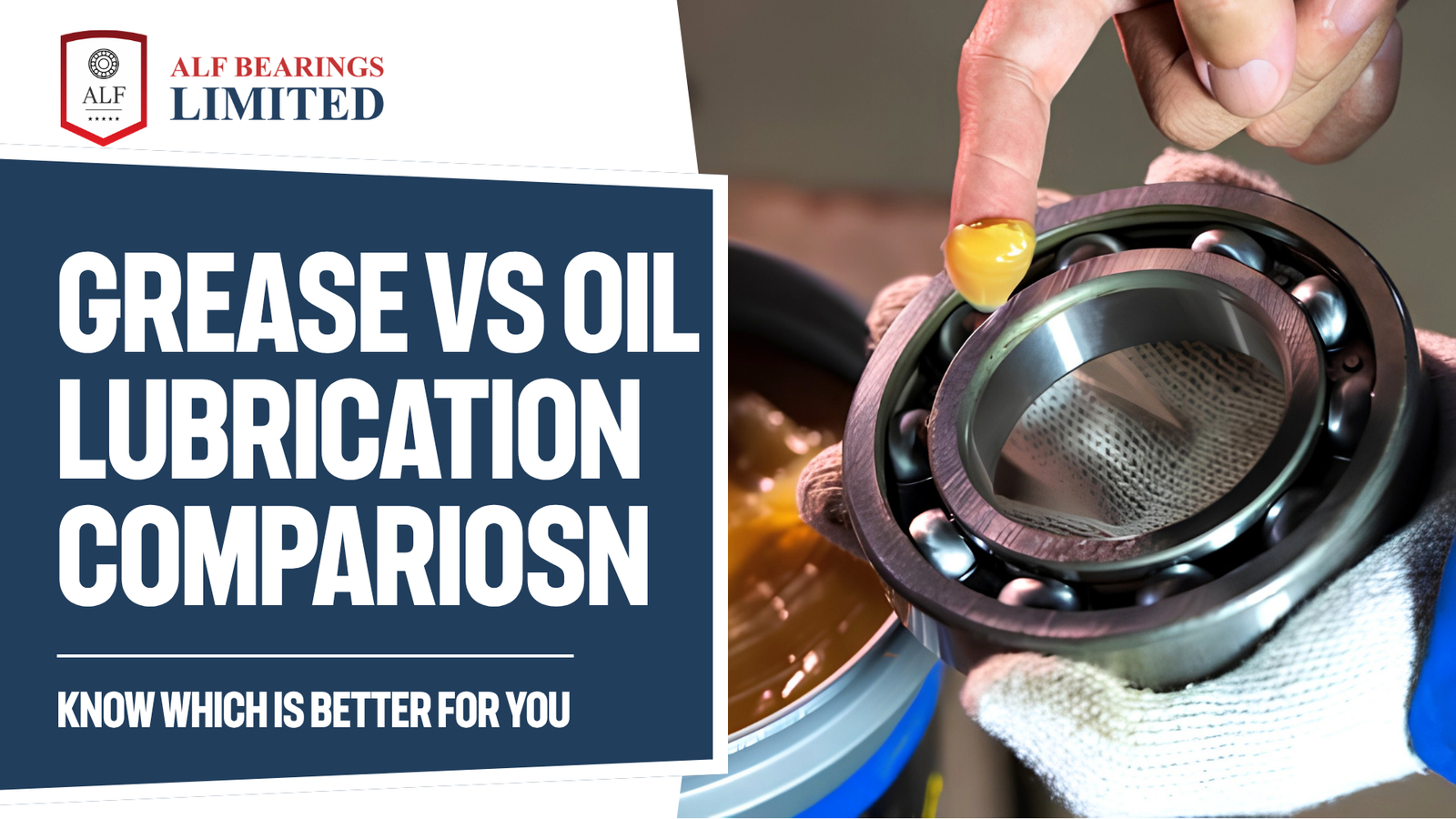
Proper lubrication of bearings, gears, motors and other machine elements are important because it creates a film between two surfaces, reducing friction, controlling heat and providing Wear Protection. Without appropriate lubrication metal-to-metal contact can increase Friction, temperature and component wear.

When considering Grease vs Oil Lubrication for bearings or gears, neither option is automatically better. Grease is valued for staying in place and reducing leakage, while Lubricating Oil flows freely and can provide effective cooling. The right choice depends on speed, load, temperature, operating environment and equipment design.

What Is Grease Lubrication?

Grease is a semi-solid lubricant generally comprised of base oil, a thickener and additives. The base oil provides lubrication, while the thickener provides grease its semi solid consistency and facilitates adhesion to the lubrication point. Additives may improve properties such as corrosion resistance, oxidation stability and Wear Protection.

Bearing Grease is widely used because it can stay in its place inside the bearing housing for long periods of time and does not require continuous circulation.

Advantages of Grease

Grease has several practical advantages including:

  • Stays in place for longer periods
  • Reduces the likelihood of lubricant leakage
  • Helps protect against dust, dirt and moisture
  • Can simplify the lubrication system
  • Allows longer relubrication intervals
  • Provides effective lubrication for many moderate-speed applications

Grease can also provide additional sealing around bearing components, which is useful in environments where contamination is a concern.

However, grease does have limitations. It isn’t as effective at removing heat as compared to circulating oil, and too much grease can lead to churning and increased bearing temperatures.

What Is Oil Lubrication?

Lubricating Oil is a fluid lubricant that flows between moving surfaces, forming a thin protective film that reduces direct metal-to-metal contact.

Oil can be delivered via oil baths, circulation systems, jets or other controlled methods. Because it flows easily, oil can continuously reach critical components while removing heat from bearings and other machine parts.

Advantages of Oil

Oil lubrication has several advantages including:

  • Better Heat Dissipation
  • Continuous supply of lubricant
  • Effective lubrication at higher operating speeds
  • Filtration of contaminants and wear particles
  • Lubricate multiple components from one system
  • Lower churning resistance in suitable high-speed applications

These characteristics can make oil particularly valuable for certain High-Speed Bearings and machines that produce significant heat.

The main disadvantages are increased system complexity and risk of leakage. Some oil systems incorporate pumps, filters, reservoirs, pipes and coolers, which increases maintenance requirements.

Key Difference Between Grease and Oil

The key difference between grease and oil is their physical consistency and ability to move freely.

Grease is semi-solid and intended to stay in place. Oil is a fluid that can flow through a lubrication system.

This means that grease generally offers better lubricant retention and sealing support, while oil facilitates better circulation and Heat Dissipation.

Grease is typically used when moderate speeds, contamination and ease of maintenance are a priority, while oil is suitable when continuous circulation, heat removal and filtration are required.

Oil or Grease for Bearings?

The choice between oil and Bearing Grease depends on the operating conditions.

Generally speaking, grease is suitable for bearings that operate at moderate speeds and temperatures, whereas oil is more appropriate for High-Speed Bearings, high temperatures and applications that require continuous cooling.

Lubricant quantity is also important. Excessive amounts of grease do not necessarily help lubrication and can actually increase operating temperature.

Oil or Grease for Gears?

Both grease and oil can provide Friction Reduction and Wear Protection for gears.

Oil is a popular choice for enclosed gearboxes as it flows freely between gear teeth, helping to remove excess heat.

Grease might be useful for some slow moving, open or specially designed gear arrangements where lubricant retention is more critical than continuous circulation.

Factors To Consider When Choosing Grease or Oil

The lubricant should be appropriate for the operating conditions. It’s important to consider factors including:

  • Operating speed and load
  • Working temperature
  • Thermal capacity
  • Exposure to dust, dirt and water
  • Lubricant viscosity
  • Risk of leakage
  • Maintenance intervals
  • Whether filtration is required
  • The existing lubrication system
  • Manufacturer recommendations

Viscosity should be of specific importance. Oil that is too thin won’t effectively form a lubricating film, while unnecessarily high viscosity increases resistance and heat.

Grease vs Oil Lubrication: Which Should You Choose?

There is no clear winner in the Grease vs Oil Lubrication debate.

Grease can be ideal when lubricant retention, lower leakage rates, resistance to contamination and easy maintenance is important, while oil is more effective when it comes to cooling, circulation, filtration and high-speed operation.

The final choice should therefore depend on the bearing or gear design, speed, load, temperature, environment and manufacturer recommendations.

FAQs

1. Is grease or oil better for bearings?

Bearing Grease is generally suitable for moderate-speed applications because it stays in place and provides reliable wear protection. Lubricating Oil is often preferred for high-speed bearings where continuous lubrication and heat dissipation are important.

2. What is the main difference between grease and oil lubrication?

The main difference between grease and oil lubrication is that grease is semi-solid and remains at the lubrication point, while oil is fluid and can circulate through machinery. Grease offers better retention, whereas oil provides better cooling and circulation.

3. Is grease suitable for high-speed bearings?

Grease can be suitable for some high-speed bearings when the correct type and quantity are used. However, oil lubrication is often preferred at very high speeds because it can reduce churning and provide better heat dissipation.

4. Which provides better heat dissipation, grease or oil?

Oil generally provides better heat dissipation than grease because it can circulate and carry heat away from bearings and other moving components. This makes oil useful in high-speed and high-temperature applications.

5. What factors determine the right lubricant for a bearing?

The right bearing lubricant depends on operating speed, load, temperature, viscosity, contamination, cooling requirements and maintenance intervals. The bearing manufacturer’s lubrication recommendations should also be considered when choosing between grease and oil.

What Is Bearing Lubrication?

26 AUGUST 2026

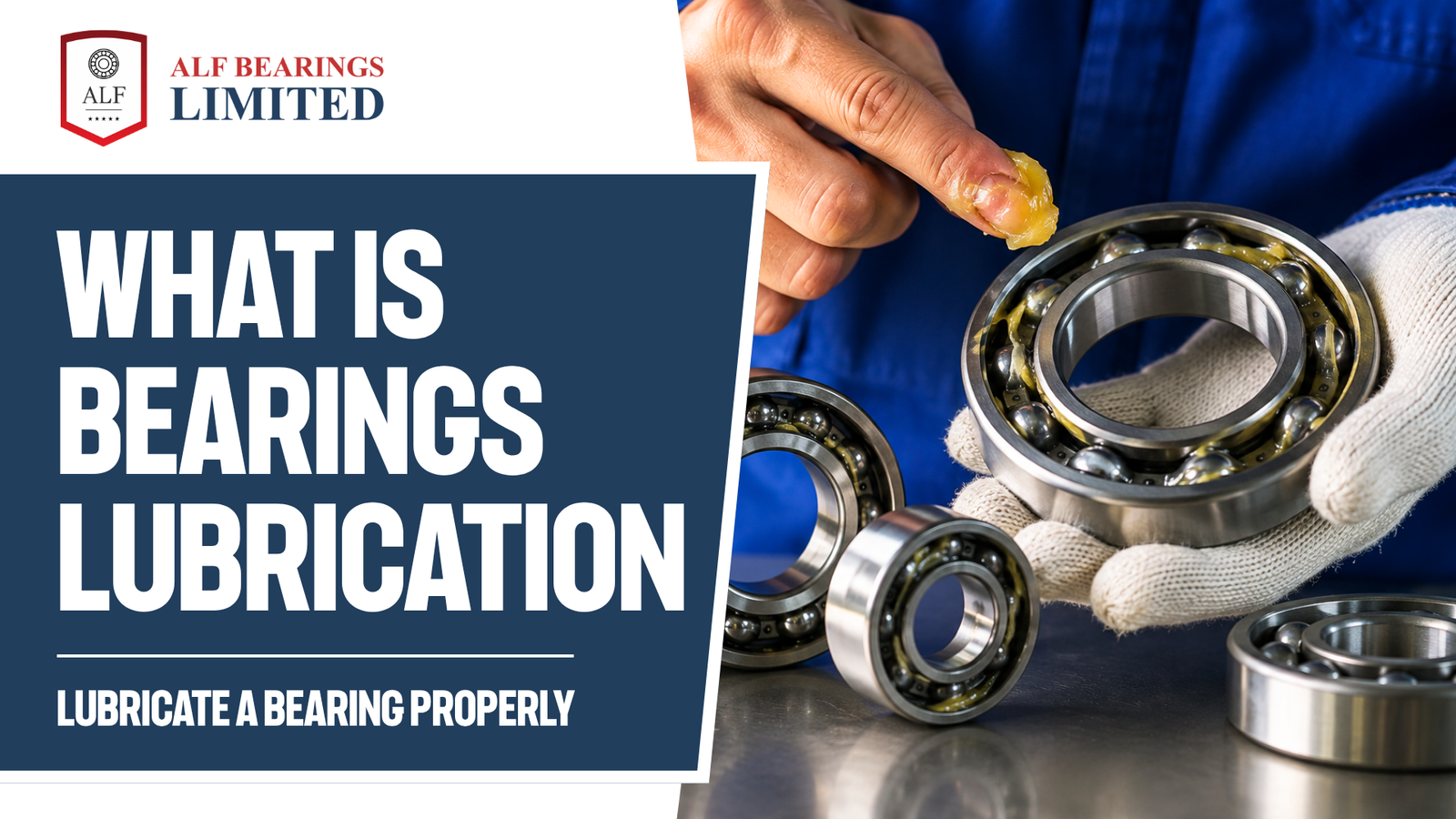
Bearings work through rolling and sliding contact between their internal parts. Without proper lubrication, these surfaces can experience higher friction, heat, and wear. Bearing Lubrication creates a thin film between the contacting surfaces, helping the bearing run with less resistance and protecting it during operation. The two main choices are grease and oil, and the right option depends on speed, load, temperature, bearing type, and the surrounding conditions.

Lubrication involves choosing the right lubricant, quantity, viscosity, application method, and replacement interval. Proper Bearing Lubrication can support friction reduction, while too little lubricant can increase wear and too much can raise friction and temperature.

Why Bearings Need Lubrication

The main job of a lubricant is to keep the rolling and sliding surfaces from making direct contact. A suitable lubricant forms a film between the surfaces, which helps reduce wear and friction. Proper lubrication can also help with:

  • Friction Reduction between moving surfaces.
  • Heat Dissipation during bearing operation.
  • Protection against rust and corrosion.
  • Protection from dust and other contaminants.
  • Reduction of surface wear.
  • Longer service life when the correct lubricant and quantity are used.

Lubrication also affects the operating temperature of a bearing. The correct amount can help control heat, while excessive lubricant can create additional resistance and raise temperature.

Grease and Oil: What Is the Difference?

Grease Lubrication is used in a large share of rolling-bearing applications because grease stays at the bearing and does not require a continuous supply system. It can also provide some protection against external contamination. Oil, on the other hand, flows through the bearing and can carry heat away more effectively.

FactorGreaseOil
High-speed operationSuitable for many applicationsGenerally better for higher speeds
CoolingLimitedBetter heat removal
LeakageEasier to containRequires proper sealing
MaintenanceUsually simplerMay require circulation or filtration
ContaminationCan help keep contaminants outCan be filtered during circulation

The choice should be based on the bearing and machine rather than assuming one lubricant is always better.

How to Choose Bearing Grease

There are several Bearing Grease Types, each with different properties. Grease contains base oil, a thickener, and additives that support lubrication, rust protection, oxidation resistance, and wear control. When selecting grease, the following factors should be checked:

  1. Bearing speed.
  2. Operating temperature.
  3. Load level.
  4. Water or moisture exposure.
  5. Required relubrication interval.
  6. Compatibility with seals and other materials.
  7. Required noise and running characteristics.

Grease consistency is also important. NLGI grades describe how firm or soft a grease is, while the viscosity of its base oil affects the lubricating film. A higher NLGI number does not automatically mean better bearing performance; the grade needs to suit the application.

When Is Lubricating Oil a Better Choice?

Lubricating Oil is suitable for many high-speed or high-temperature bearings, especially where cooling is required. It can also be circulated, filtered, and cooled during operation. The correct viscosity is important: oil that is too thin may not provide enough protection, while oil that is too thick can increase resistance and heat. Mineral or synthetic oil should be selected based on speed, load, temperature, and operating conditions.

What Are the Main Lubrication Methods?

Different Lubrication Methods are used depending on the machine and bearing arrangement.

Grease Lubrication

Grease is packed into the bearing or housing and remains near the contact surfaces. It is suitable for many general industrial applications and can simplify the surrounding bearing arrangement.

Oil Bath

The bearing runs with part of its lower rolling element immersed in oil. This method is used in applications where moderate speed and simple oil circulation are suitable.

Oil Splash

Oil is distributed by nearby rotating parts such as gears or rings. This can supply lubricant to bearings without placing the bearing directly in an oil bath.

Oil Circulation

Oil is continuously supplied, collected, filtered, and returned to the bearing. This method is useful when heat removal or continuous oil replacement is needed, particularly in higher-speed applications.

Oil-Air Lubrication

Small amounts of oil are delivered to the bearing with a controlled air supply, making this method suitable for high-speed applications. The lubrication method should match the bearing speed, load, temperature, and machine arrangement.

Why Too Much Grease Can Cause Problems

Adding more grease does not necessarily improve lubrication. Excess grease can increase churning, which raises friction and temperature. It can also place extra stress on seals and may lead to lubricant leakage.

The correct grease quantity depends on bearing size, housing space, speed, grease properties, and temperature. For some standard applications, a lower fill is used as bearing speed approaches its limiting speed.

For this reason, grease should be added according to the bearing or machine manufacturer’s instructions rather than filling the entire housing.

How to Maintain Proper Bearing Lubrication

Use the recommended lubricant and check compatibility before mixing greases or changing oil types. Maintenance teams should also check lubricant condition, leakage, contamination, temperature, and signs of bearing wear.

  • Unusual bearing noise.
  • Higher-than-normal operating temperature.
  • Grease leakage or discoloration.
  • Changes in vibration.
  • Signs of contamination.
  • Lubricant deterioration.

Relubrication should follow the recommended interval for the bearing and operating conditions. Sealed or shielded bearings that are supplied with lubricant for their service life should not automatically be regreased.

Wrapping It up

Good lubrication starts with choosing the right lubricant, using the correct quantity, and applying it in a way that suits the bearing and machine. Grease works well for many applications, while oil can be better suited to higher speeds and situations where cooling is needed. Checking speed, load, temperature, and operating conditions before selecting a lubrication system can help keep the bearing running properly and reduce unnecessary wear.

FAQs

1. Can different bearing greases be mixed?

Different greases should not be mixed unless their compatibility has been confirmed. Mixing incompatible products can affect consistency and lubrication performance.

2. What does NLGI grade indicate?

The NLGI grade indicates the consistency or firmness of grease. It does not by itself determine whether a grease is suitable for a particular bearing.

3. When should bearing lubricant be replaced?

The timing depends on the bearing, lubricant, operating temperature, speed, load, and working conditions. Manufacturer recommendations should be followed.

4. Can a bearing operate without regular relubrication?

Some sealed bearings are supplied with lubricant for their service life, while others require periodic relubrication. The bearing design and manufacturer’s instructions determine the requirement.

5. What can cause lubricant to deteriorate?

High temperature, contamination, moisture, oxidation, excessive load, and unsuitable operating conditions can affect lubricant condition.