
How to Choose the Right Grease for Bearings

4 NOVEMBER 2026

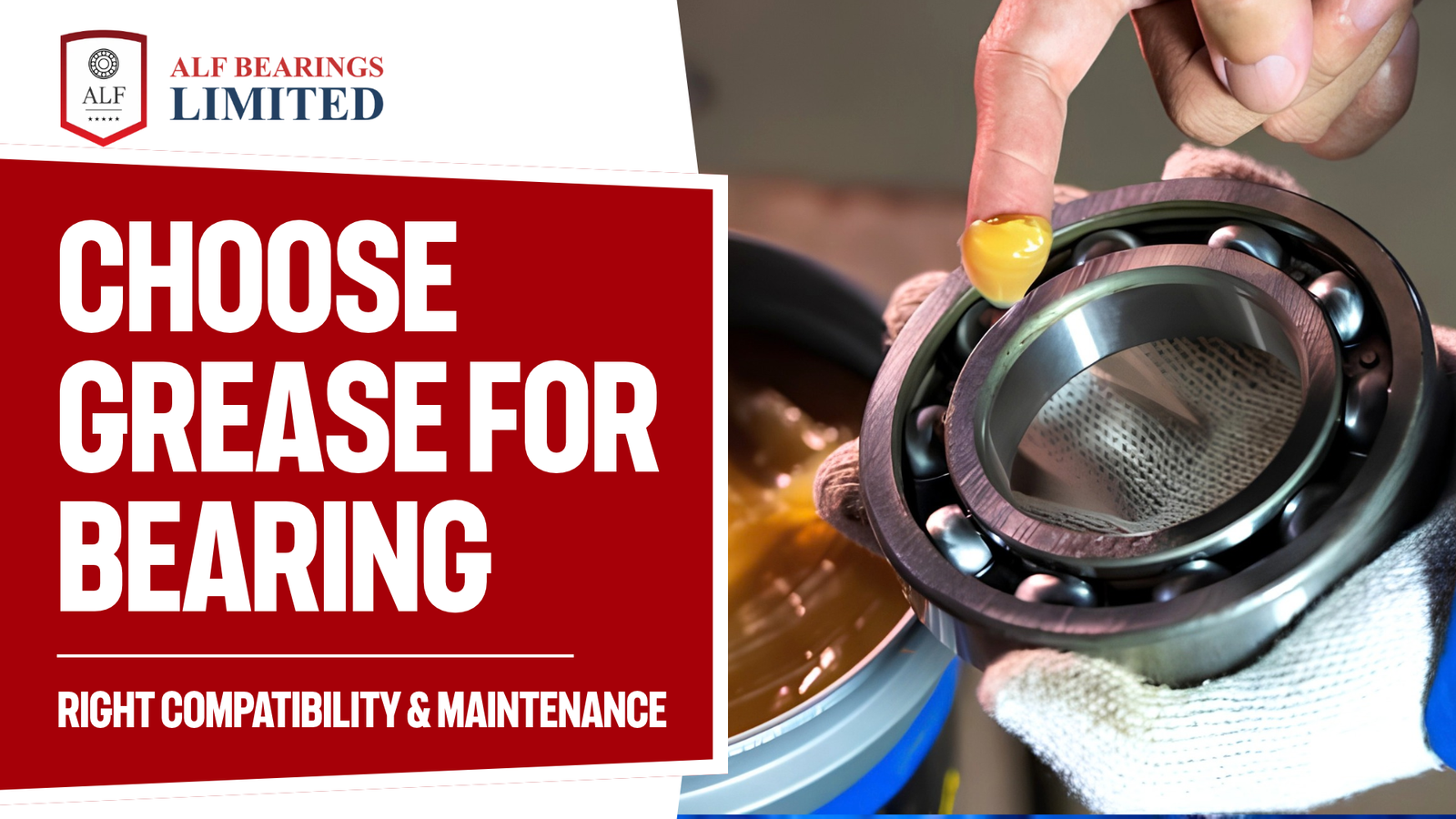
Bearing grease is easy to overlook during routine maintenance until a bearing starts running hot, producing noise, or showing signs of wear. Replacing the bearing may not solve the problem if the bearing lubricant is unsuitable for the operating conditions. Proper bearing lubrication helps maintain a protective film between moving surfaces while handling the machine’s load, speed, and temperature. The right grease can reduce friction and wear, helping the bearing operate reliably.

When Bearing Grease Becomes a Problem

Proper bearing lubrication limits metal-to-metal contact between rolling elements and raceways. If the grease breaks down, becomes contaminated, or is applied incorrectly, the bearing may overheat and wear faster. 

Choosing a suitable bearing lubricant, such as lithium grease for compatible general applications or high temp grease for elevated operating temperatures, helps protect bearing surfaces. The right ball bearing grease depends on the bearing’s load, speed, and working conditions.

Three common situations deserve attention.

Overheating: Excess grease, unsuitable viscosity, or high operating speed can increase friction and temperature.

Premature wear: An inadequate lubricating film may allow contact between bearing surfaces.

Contamination: Dust, water, and other particles can damage contact surfaces and reduce lubricant performance.

These symptoms do not always point to grease only. Misalignment, excessive loading, damaged seals, and incorrect installation can produce similar problems. Inspect the complete bearing arrangement before deciding to change the lubricant.

Choosing Grease for the Way a Machine Runs

The same grease does not suit every bearing. A high-speed electric motor has different lubrication needs from a heavily loaded conveyor or a machine exposed to elevated temperatures.

Lithium Grease for General Applications

Lithium grease is widely used in industrial equipment, automotive components, and general machinery. It provides a useful combination of mechanical stability, water resistance, and wear protection. Its suitability still depends on the formulation and the bearing’s operating conditions.

Lithium-complex grease may offer higher temperature capability than conventional lithium grease. Check the product’s specified operating range instead of assuming all lithium-based products perform alike.

High Temperature Grease for Hot Operating Conditions

High temp grease is designed for applications where standard grease may oxidize or lose its lubricating properties too quickly. It may be used in suitable industrial ovens, hot-running motors, and equipment exposed to elevated temperatures.

The maximum temperature listed on a product label is not the only factor to check. Continuous operating temperature, bearing speed, load, and relubrication requirements also affect bearing lubrication performance.

Ball Bearing Grease for Rotating Assemblies

Ball bearing grease must suit the bearing’s speed, load, internal clearance, and sealing arrangement. Base-oil viscosity affects the lubricating film between the balls and raceways. Grease that works well in a slow-moving, heavily loaded assembly may create excessive friction in a high-speed motor.

For this reason, follow the bearing manufacturer’s lubrication recommendations before choosing a replacement product.

Four Checks Before Selecting a Bearing Lubricant

A grease specification becomes more useful when it is matched to the actual machine.

CheckWhat to examine
Operating temperatureActual running temperature and grease temperature limits
Load and speedBearing load, rotational speed, and required base-oil viscosity
NLGI gradeGrease consistency required by the application
EnvironmentExposure to moisture, dust, chemicals, and vibration

NLGI grade describes grease consistency, not its overall quality or temperature capability. NLGI 2 is widely used in general applications, but another grade may be needed for a specific bearing or lubrication system.

Also check grease compatibility before switching products. Greases with different thickeners or additive systems may not mix safely. If compatibility is uncertain, follow the equipment manufacturer’s cleaning and relubrication procedure.

How Much Grease Does a Bearing Need?

Adding more grease does not necessarily improve lubrication. Excess grease can increase churning resistance, raise operating temperature, and cause leakage. Too little grease may leave the bearing without sufficient lubrication.

The correct quantity depends on the bearing’s size, speed, housing design, and lubrication method. A sealed bearing may be lubricated for its intended service life, while a bearing with a relubrication point requires periodic maintenance.

Follow the manufacturer’s specified grease quantity and interval. Avoid filling the entire housing unless the design calls for it.

Maintenance Signs Worth Checking

A simple inspection can help identify lubrication problems before they cause more extensive damage. Look for unusual noise, rising temperature, grease leakage, discoloration, or visible contamination.

Check whether the grease has changed consistency or contains water or particles. However, do not assume that fresh grease will fix every problem. A damaged raceway, worn shaft, or misaligned assembly may need repair or replacement.

Keep a record of the grease grade, quantity, and relubrication date for equipment that requires regular servicing. This makes it easier to identify recurring problems and check whether the maintenance interval suits the working conditions.

Wrapping It Up

Bearing grease selection should match the machine’s actual operating conditions. Lithium grease suits many general applications, while high-temperature formulations serve equipment exposed to greater heat. For ball bearings, speed and base-oil viscosity deserve particular attention. Following the specified grease quantity, checking compatibility, and inspecting the bearing during maintenance can help prevent avoidable lubrication problems.

FAQs

1. Which grease is best for bearings?

The right grease depends on the bearing design, load, speed, temperature, and environment. Start with the manufacturer’s recommendation.

2. Can lithium grease be used in ball bearings?

Yes, if the grease’s viscosity, temperature range, and other specifications suit the bearing and its operating conditions.

3. When is high temperature grease necessary?

Use it when the bearing’s operating temperature exceeds the suitable range of standard grease and the selected product meets the bearing manufacturer’s requirements.

4. Can two types of bearing grease be mixed?

Not without confirming compatibility. Mixing incompatible greases can change their consistency and lubrication performance.

5. How frequently should bearing grease be replaced?

There is no universal interval. Follow the manufacturer’s schedule and account for operating speed, temperature, contamination, and bearing design.
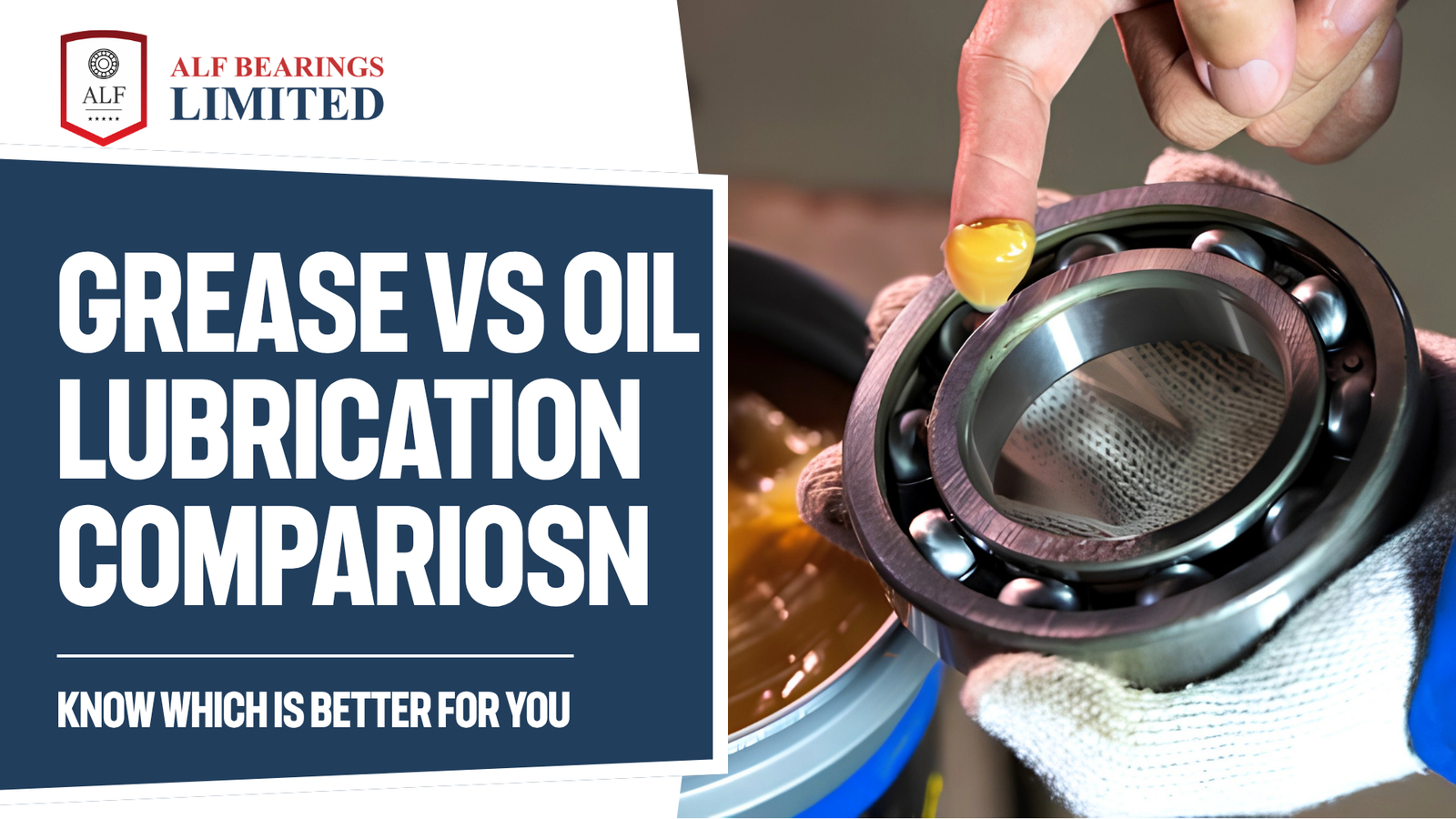
Grease Lubrication vs Oil Lubrication: Which Is Better?

6 OCTOBER 2026

Proper lubrication of bearings, gears, motors and other machine elements are important because it creates a film between two surfaces, reducing friction, controlling heat and providing Wear Protection. Without appropriate lubrication metal-to-metal contact can increase Friction, temperature and component wear.

When considering Grease vs Oil Lubrication for bearings or gears, neither option is automatically better. Grease is valued for staying in place and reducing leakage, while Lubricating Oil flows freely and can provide effective cooling. The right choice depends on speed, load, temperature, operating environment and equipment design.

What Is Grease Lubrication?

Grease is a semi-solid lubricant generally comprised of base oil, a thickener and additives. The base oil provides lubrication, while the thickener provides grease its semi solid consistency and facilitates adhesion to the lubrication point. Additives may improve properties such as corrosion resistance, oxidation stability and Wear Protection.

Bearing Grease is widely used because it can stay in its place inside the bearing housing for long periods of time and does not require continuous circulation.

Advantages of Grease

Grease has several practical advantages including:

  • Stays in place for longer periods
  • Reduces the likelihood of lubricant leakage
  • Helps protect against dust, dirt and moisture
  • Can simplify the lubrication system
  • Allows longer relubrication intervals
  • Provides effective lubrication for many moderate-speed applications

Grease can also provide additional sealing around bearing components, which is useful in environments where contamination is a concern.

However, grease does have limitations. It isn’t as effective at removing heat as compared to circulating oil, and too much grease can lead to churning and increased bearing temperatures.

What Is Oil Lubrication?

Lubricating Oil is a fluid lubricant that flows between moving surfaces, forming a thin protective film that reduces direct metal-to-metal contact.

Oil can be delivered via oil baths, circulation systems, jets or other controlled methods. Because it flows easily, oil can continuously reach critical components while removing heat from bearings and other machine parts.

Advantages of Oil

Oil lubrication has several advantages including:

  • Better Heat Dissipation
  • Continuous supply of lubricant
  • Effective lubrication at higher operating speeds
  • Filtration of contaminants and wear particles
  • Lubricate multiple components from one system
  • Lower churning resistance in suitable high-speed applications

These characteristics can make oil particularly valuable for certain High-Speed Bearings and machines that produce significant heat.

The main disadvantages are increased system complexity and risk of leakage. Some oil systems incorporate pumps, filters, reservoirs, pipes and coolers, which increases maintenance requirements.

Key Difference Between Grease and Oil

The key difference between grease and oil is their physical consistency and ability to move freely.

Grease is semi-solid and intended to stay in place. Oil is a fluid that can flow through a lubrication system.

This means that grease generally offers better lubricant retention and sealing support, while oil facilitates better circulation and Heat Dissipation.

Grease is typically used when moderate speeds, contamination and ease of maintenance are a priority, while oil is suitable when continuous circulation, heat removal and filtration are required.

Oil or Grease for Bearings?

The choice between oil and Bearing Grease depends on the operating conditions.

Generally speaking, grease is suitable for bearings that operate at moderate speeds and temperatures, whereas oil is more appropriate for High-Speed Bearings, high temperatures and applications that require continuous cooling.

Lubricant quantity is also important. Excessive amounts of grease do not necessarily help lubrication and can actually increase operating temperature.

Oil or Grease for Gears?

Both grease and oil can provide Friction Reduction and Wear Protection for gears.

Oil is a popular choice for enclosed gearboxes as it flows freely between gear teeth, helping to remove excess heat.

Grease might be useful for some slow moving, open or specially designed gear arrangements where lubricant retention is more critical than continuous circulation.

Factors To Consider When Choosing Grease or Oil

The lubricant should be appropriate for the operating conditions. It’s important to consider factors including:

  • Operating speed and load
  • Working temperature
  • Thermal capacity
  • Exposure to dust, dirt and water
  • Lubricant viscosity
  • Risk of leakage
  • Maintenance intervals
  • Whether filtration is required
  • The existing lubrication system
  • Manufacturer recommendations

Viscosity should be of specific importance. Oil that is too thin won’t effectively form a lubricating film, while unnecessarily high viscosity increases resistance and heat.

Grease vs Oil Lubrication: Which Should You Choose?

There is no clear winner in the Grease vs Oil Lubrication debate.

Grease can be ideal when lubricant retention, lower leakage rates, resistance to contamination and easy maintenance is important, while oil is more effective when it comes to cooling, circulation, filtration and high-speed operation.

The final choice should therefore depend on the bearing or gear design, speed, load, temperature, environment and manufacturer recommendations.

FAQs

1. Is grease or oil better for bearings?

Bearing Grease is generally suitable for moderate-speed applications because it stays in place and provides reliable wear protection. Lubricating Oil is often preferred for high-speed bearings where continuous lubrication and heat dissipation are important.

2. What is the main difference between grease and oil lubrication?

The main difference between grease and oil lubrication is that grease is semi-solid and remains at the lubrication point, while oil is fluid and can circulate through machinery. Grease offers better retention, whereas oil provides better cooling and circulation.

3. Is grease suitable for high-speed bearings?

Grease can be suitable for some high-speed bearings when the correct type and quantity are used. However, oil lubrication is often preferred at very high speeds because it can reduce churning and provide better heat dissipation.

4. Which provides better heat dissipation, grease or oil?

Oil generally provides better heat dissipation than grease because it can circulate and carry heat away from bearings and other moving components. This makes oil useful in high-speed and high-temperature applications.

5. What factors determine the right lubricant for a bearing?

The right bearing lubricant depends on operating speed, load, temperature, viscosity, contamination, cooling requirements and maintenance intervals. The bearing manufacturer’s lubrication recommendations should also be considered when choosing between grease and oil.

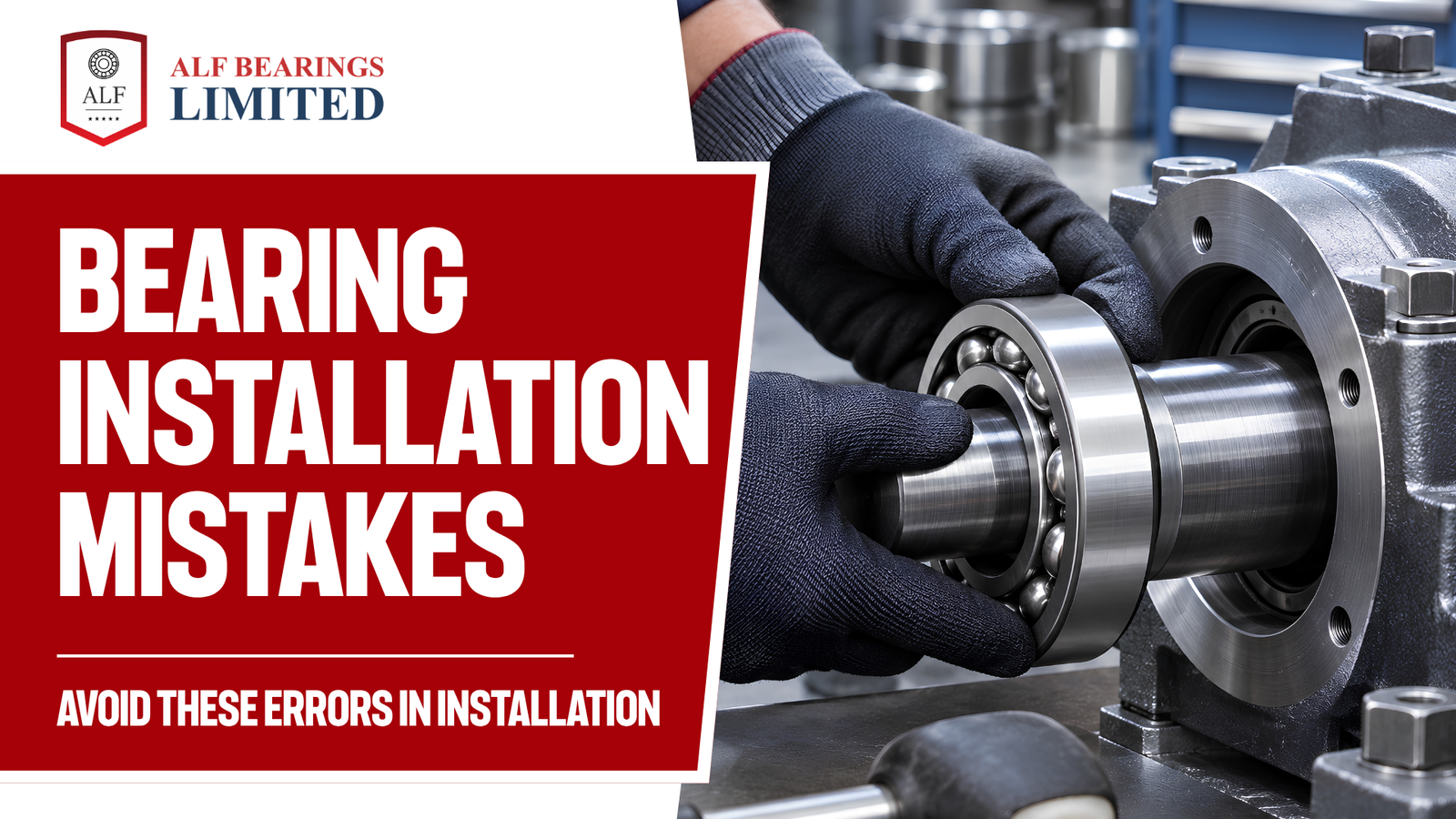
Common Mistakes During Bearing Installation

22 SEPTEMBER 2026

Proper bearing installation is essential for reliable machine performance. Even a high-quality bearing can experience premature wear when incorrect mounting practices are followed. Small installation problems can eventually result in excessive vibration, noise, heat, or unexpected equipment failure.

Understanding common bearing installation mistakes helps technicians protect bearings and surrounding machinery. From checking the shaft and housing to lubrication and final inspection, every step contributes to effective bearing maintenance and long-term performance.

1. Not Checking the Shaft and Housing

One of the most overlooked bearing installation mistakes is failing to inspect the shaft and housing before mounting. Burrs, corrosion, dirt, wear, or incorrect dimensions can prevent the bearing from seating properly.

Both shaft fit and housing fit should be checked according to the bearing and application requirements. A loose shaft fit can allow unwanted movement, while an excessively tight fit may affect internal clearance. Similarly, an incorrect housing fit can influence bearing stability and load distribution.

Measuring and inspecting these surfaces before mounting can prevent avoidable problems later.

2. Installing Bearings in Contaminated Conditions

Bearings contain precisely finished surfaces, so cleanliness is critical. Dust, moisture, metal particles, or dirty tools can introduce contamination during installation and contribute to premature bearing damage.

The work area, tools, shaft, and housing should be clean before installation begins. Bearings should ideally remain in their packaging until they are ready for mounting.

Cleanliness should therefore be a basic step in every bearing installation guide, especially where equipment operates under demanding conditions.

3. Applying Mounting Force Incorrectly

Improper mounting often occurs when installation force is applied through the wrong bearing components. When a bearing has a tight fit, force should generally be directed to the ring being fitted.

Allowing mounting force to pass through balls or rollers can affect the raceways and create early bearing damage. Direct and uncontrolled hammering should also be avoided.

Suitable mounting sleeves, presses, or approved tools should be selected according to the bearing design and application. Avoiding improper mounting helps protect precision surfaces during installation.

4. Ignoring Alignment Errors

Correct alignment is essential for distributing operating loads properly. Alignment errors can develop because of incorrect housing positioning, shaft deflection, machining inaccuracies, or assembly problems.

These alignment errors may contribute to uneven loading, vibration, excessive temperature, noise, and accelerated bearing wear.

Before completing installation, technicians should verify the alignment of the shaft, housing, and connected components using appropriate measuring equipment. Correct alignment is also an important part of preventive bearing maintenance.

5. Making Lubrication Mistakes

Proper lubrication reduces friction and helps protect bearing contact surfaces. However, lubrication mistakes can negatively affect even a correctly mounted bearing.

Common lubrication mistakes include selecting an unsuitable lubricant, mixing incompatible greases, introducing contamination, or applying too much or too little lubricant.

Excessive grease can increase churning and temperature in some applications, while insufficient lubrication can reduce protection between moving surfaces. Lubricant type, quantity, and relubrication intervals should therefore match the bearing and its operating conditions.

6. Heating Bearings Incorrectly

Heating is sometimes used to simplify the installation of bearings with interference fits. However, excessive or uneven heating can affect bearing components.

Open flames and uncontrolled heating methods should be avoided. Where thermal mounting is suitable, controlled equipment such as an induction heater can provide more uniform heating.

A reliable bearing installation guide should always consider the bearing manufacturer’s recommended temperature limits, particularly for bearings containing seals or temperature-sensitive components.

7. Using Unsuitable Mounting Tools

Using inappropriate tools can turn a simple installation into costly bearing damage. Screwdrivers, punches, damaged sleeves, or uncontrolled hammer impacts may affect rings, cages, seals, and raceways.

Purpose-designed mounting tools allow force to be applied more accurately. Selecting the correct tools before installation also reduces the possibility of improper mounting and helps maintain bearing condition.

8. Skipping Post-Installation Inspection

Bearing installation should always end with a final inspection. Check whether the bearing is properly seated, secured, lubricated, and aligned.

Where appropriate, manually rotate the assembly and check for unusual resistance. During initial operation, monitor noise, vibration, and temperature. Detecting problems early can prevent minor installation issues from becoming serious failures.

These checks should also become part of a regular bearing maintenance routine.

Why Choose ALF Bearings?

Avoiding bearing installation mistakes requires correct shaft fit, housing fit, proper lubrication, accurate alignment, clean working conditions, and suitable mounting tools. Following these practices can reduce premature bearing damage and support better bearing maintenance throughout the equipment’s service life.

ALF Bearings provides precision-engineered bearing solutions for diverse automotive and industrial applications. With a focus on manufacturing accuracy, quality, and consistent performance, ALF Bearings supports demanding operating requirements. Combining the right bearing with proper installation and maintenance practices helps improve equipment reliability and service life, reflecting ALF Bearings’ core philosophy: Progress through Precision.

FAQs

1. What are the most common bearing installation mistakes?

Common bearing installation mistakes include improper mounting, incorrect shaft fit or housing fit, contamination, alignment errors, and lubrication mistakes. These issues can lead to premature bearing damage, excessive vibration, heat, and reduced bearing service life.

2. How can improper mounting cause bearing damage?

Improper mounting can transfer excessive force through the rolling elements or raceways. This may damage precision surfaces and eventually cause noise, vibration, wear, or premature failure. Using suitable mounting tools and the correct installation method helps protect the bearing.

3. Why are shaft fit and housing fit important for bearing installation?

Correct shaft fit and housing fit help keep the bearing properly positioned during operation. A loose fit can cause unwanted movement, while an excessively tight fit may affect internal clearance and increase stress on bearing components.

4. How do alignment errors affect bearing performance?

Alignment errors can create uneven load distribution across the bearing. This may increase vibration, operating temperature, noise, and wear. Checking shaft and housing alignment during installation is an important part of reliable bearing maintenance.

5. What lubrication mistakes should be avoided during bearing installation?

Common lubrication mistakes include using an unsuitable lubricant, mixing incompatible greases, applying too much or too little lubricant, and allowing contamination. Correct lubrication helps reduce friction, control wear, and support reliable bearing performance.

Bearing Maintenance Tips for Engineers

8 SEPTEMBER 2026

Many machine failures don’t happen because of major component damage; they often begin with small issues that go unnoticed. Regular bearing maintenance helps identify problems such as insufficient lubrication and early signs of wear before they begin to affect machine performance.

Bearings are small components with a significant impact on industrial equipment. They reduce friction, support rotating parts, and help machines operate efficiently. When a bearing fails, the result can be production delays, higher repair costs, and unexpected downtime. In most industrial facilities, bearing maintenance is part of industrial maintenance work to keep machines operating reliably.

Industry data shows that 36% of premature bearing failures are linked to poor lubrication. Regular inspections, proper lubrication, and timely maintenance can help reduce these issues, improve equipment reliability, and extend bearing life.

Why Bearing Maintenance Deserves More Attention

Bearings operate under constant mechanical loads, changing temperatures, and demanding environments. Over time, grease degrades, contaminants enter the housing, and components naturally wear. Without regular attention, these factors increase friction, reduce efficiency, and shorten bearing life.

A structured preventive maintenance program helps detect wear before it leads to equipment failure. Regular inspections and timely servicing reduce unexpected downtime, lower repair costs, and improve machine reliability.

Why Proper Bearing Lubrication Matters

One of the most common reasons bearings fail early is incorrect lubrication. Using the wrong lubricant, applying too much grease, or waiting too long between lubrication intervals can all damage a bearing. Effective bearing lubrication depends on many operating conditions as listed below.

  • Bearing type
  • Operating speed
  • Load
  • Temperature
  • Environmental conditions

For example, high-speed electric motors require different lubrication practices than slow-moving conveyor bearings.

It is equally important to avoid mixing incompatible greases. Different thickener types may not work well together, reducing lubrication performance and increasing wear.

Always follow the equipment manufacturer’s recommendations for lubricant type and relubrication intervals instead of relying on a fixed schedule for every machine.

Bearing Maintenance Practices for Long-Term Equipment Performance

A reliable bearing maintenance routine involves several practices that work together to improve equipment performance. The following tips can help reduce unexpected failures and extend bearing life.

1. Protect Bearings from Dirt and Moisture

Even a properly lubricated bearing can wear out quickly if dirt, dust, or moisture enters the assembly. Fine particles create small scratches on the rolling surfaces, while water can reduce lubricant performance and cause corrosion. Over time, these issues increase friction and accelerate wear.

Keep bearings in their original packaging until installation, clean shafts and housings before assembly, and inspect seals regularly. Replacing contaminated grease instead of adding fresh grease over it also helps maintain reliable performance.

2. Make Bearing Inspection Part of Your Maintenance Routine

Regular bearing inspection allows maintenance teams to detect wear, misalignment, and lubrication issues before they affect equipment performance. Maintenance teams should pay attention to unusual noise, vibration, temperature changes, grease leakage, and visible damage around the bearing housing.

For critical equipment, vibration analysis and temperature monitoring provide additional insight into bearing condition, allowing maintenance to be scheduled before a failure affects production.

3. Follow Correct Installation Practices

Even a high-quality bearing can fail early if it is installed incorrectly. Before mounting a bearing, inspect the shaft and housing for wear or damage, and use the correct installation tools to avoid damaging the bearing surfaces.

After installation, check shaft alignment and ensure the bearing rotates freely without excessive resistance. Proper installation reduces unnecessary stress and supports longer bearing life.

4. Pay Attention to Early Warning Signs

Bearings usually show signs of wear before they fail completely. Grinding sounds, increasing vibration, rising operating temperatures, grease discoloration, and reduced machine efficiency should never be ignored.

Investigating these changes early allows maintenance teams to plan repairs during scheduled downtime instead of dealing with unexpected breakdowns.

5. Use the Right Amount of Lubricant

More grease does not always provide better protection. Excess lubrication can increase operating temperature, create additional pressure inside the bearing, and damage seals.

The best approach is to follow the equipment manufacturer’s recommendations and adjust bearing lubrication intervals according to operating conditions rather than applying grease on a fixed schedule.

6. Store Bearings Properly Before Installation

Proper storage is an important part of bearing maintenance. Bearings should be kept in a clean, dry environment and remain in their original packaging until they are ready for installation.

Careful handling also prevents accidental damage that could affect performance after installation.

7. Build a Consistent Preventive Maintenance Plan

A well-organized preventive maintenance program combines lubrication, inspection, cleaning, and condition monitoring into a regular schedule. Recording maintenance activities, inspection findings, and replacement history helps identify recurring issues and improve maintenance planning over time.

Following these practices consistently strengthens industrial maintenance efforts, reduces unexpected downtime, and extends bearing life across a wide range of industrial applications.

Wrapping It Up

Regular bearing maintenance helps machines run smoothly and reduces the risk of unexpected failures. Simple practices such as proper bearing lubrication, routine bearing inspection, and preventive maintenance can improve equipment performance and extend bearing life.

FAQs

How often should bearing inspection be performed?

The inspection frequency depends on equipment criticality, operating conditions, and manufacturer recommendations. Critical production equipment generally requires more frequent inspections than lightly used machinery.

What is the most common cause of bearing failure?

Incorrect bearing lubrication is one of the leading causes of premature bearing failure. Contamination, poor installation, and excessive loads also contribute significantly to reduced bearing life.

How can preventive maintenance improve bearing life?

A well-planned preventive maintenance program combines regular lubrication, cleaning, bearing inspection, and condition monitoring to identify developing issues early. This reduces unexpected downtime and helps bearings operate closer to their intended service life.

Can bearing lubrication be done too often?

Yes. Applying more lubricant than required can increase operating temperature, create excess pressure inside the bearing, and damage seals. Following the equipment manufacturer’s recommended bearing lubrication schedule and using the correct amount of lubricant helps maintain reliable performance.

What are the early signs that a bearing needs maintenance?

Some common signs include unusual noise, increased vibration, higher operating temperatures, grease leakage, and reduced machine performance. Identifying these issues during routine bearing inspection allows maintenance teams to address problems before they lead to unexpected equipment failure.

What Is Bearing Lubrication?

26 AUGUST 2026

Bearings work through rolling and sliding contact between their internal parts. Without proper lubrication, these surfaces can experience higher friction, heat, and wear. Bearing Lubrication creates a thin film between the contacting surfaces, helping the bearing run with less resistance and protecting it during operation. The two main choices are grease and oil, and the right option depends on speed, load, temperature, bearing type, and the surrounding conditions.

Lubrication involves choosing the right lubricant, quantity, viscosity, application method, and replacement interval. Proper Bearing Lubrication can support friction reduction, while too little lubricant can increase wear and too much can raise friction and temperature.

Why Bearings Need Lubrication

The main job of a lubricant is to keep the rolling and sliding surfaces from making direct contact. A suitable lubricant forms a film between the surfaces, which helps reduce wear and friction. Proper lubrication can also help with:

  • Friction Reduction between moving surfaces.
  • Heat Dissipation during bearing operation.
  • Protection against rust and corrosion.
  • Protection from dust and other contaminants.
  • Reduction of surface wear.
  • Longer service life when the correct lubricant and quantity are used.

Lubrication also affects the operating temperature of a bearing. The correct amount can help control heat, while excessive lubricant can create additional resistance and raise temperature.

Grease and Oil: What Is the Difference?

Grease Lubrication is used in a large share of rolling-bearing applications because grease stays at the bearing and does not require a continuous supply system. It can also provide some protection against external contamination. Oil, on the other hand, flows through the bearing and can carry heat away more effectively.

FactorGreaseOil
High-speed operationSuitable for many applicationsGenerally better for higher speeds
CoolingLimitedBetter heat removal
LeakageEasier to containRequires proper sealing
MaintenanceUsually simplerMay require circulation or filtration
ContaminationCan help keep contaminants outCan be filtered during circulation

The choice should be based on the bearing and machine rather than assuming one lubricant is always better.

How to Choose Bearing Grease

There are several Bearing Grease Types, each with different properties. Grease contains base oil, a thickener, and additives that support lubrication, rust protection, oxidation resistance, and wear control. When selecting grease, the following factors should be checked:

  1. Bearing speed.
  2. Operating temperature.
  3. Load level.
  4. Water or moisture exposure.
  5. Required relubrication interval.
  6. Compatibility with seals and other materials.
  7. Required noise and running characteristics.

Grease consistency is also important. NLGI grades describe how firm or soft a grease is, while the viscosity of its base oil affects the lubricating film. A higher NLGI number does not automatically mean better bearing performance; the grade needs to suit the application.

When Is Lubricating Oil a Better Choice?

Lubricating Oil is suitable for many high-speed or high-temperature bearings, especially where cooling is required. It can also be circulated, filtered, and cooled during operation. The correct viscosity is important: oil that is too thin may not provide enough protection, while oil that is too thick can increase resistance and heat. Mineral or synthetic oil should be selected based on speed, load, temperature, and operating conditions.

What Are the Main Lubrication Methods?

Different Lubrication Methods are used depending on the machine and bearing arrangement.

Grease Lubrication

Grease is packed into the bearing or housing and remains near the contact surfaces. It is suitable for many general industrial applications and can simplify the surrounding bearing arrangement.

Oil Bath

The bearing runs with part of its lower rolling element immersed in oil. This method is used in applications where moderate speed and simple oil circulation are suitable.

Oil Splash

Oil is distributed by nearby rotating parts such as gears or rings. This can supply lubricant to bearings without placing the bearing directly in an oil bath.

Oil Circulation

Oil is continuously supplied, collected, filtered, and returned to the bearing. This method is useful when heat removal or continuous oil replacement is needed, particularly in higher-speed applications.

Oil-Air Lubrication

Small amounts of oil are delivered to the bearing with a controlled air supply, making this method suitable for high-speed applications. The lubrication method should match the bearing speed, load, temperature, and machine arrangement.

Why Too Much Grease Can Cause Problems

Adding more grease does not necessarily improve lubrication. Excess grease can increase churning, which raises friction and temperature. It can also place extra stress on seals and may lead to lubricant leakage.

The correct grease quantity depends on bearing size, housing space, speed, grease properties, and temperature. For some standard applications, a lower fill is used as bearing speed approaches its limiting speed.

For this reason, grease should be added according to the bearing or machine manufacturer’s instructions rather than filling the entire housing.

How to Maintain Proper Bearing Lubrication

Use the recommended lubricant and check compatibility before mixing greases or changing oil types. Maintenance teams should also check lubricant condition, leakage, contamination, temperature, and signs of bearing wear.

  • Unusual bearing noise.
  • Higher-than-normal operating temperature.
  • Grease leakage or discoloration.
  • Changes in vibration.
  • Signs of contamination.
  • Lubricant deterioration.

Relubrication should follow the recommended interval for the bearing and operating conditions. Sealed or shielded bearings that are supplied with lubricant for their service life should not automatically be regreased.

Wrapping It up

Good lubrication starts with choosing the right lubricant, using the correct quantity, and applying it in a way that suits the bearing and machine. Grease works well for many applications, while oil can be better suited to higher speeds and situations where cooling is needed. Checking speed, load, temperature, and operating conditions before selecting a lubrication system can help keep the bearing running properly and reduce unnecessary wear.

FAQs

1. Can different bearing greases be mixed?

Different greases should not be mixed unless their compatibility has been confirmed. Mixing incompatible products can affect consistency and lubrication performance.

2. What does NLGI grade indicate?

The NLGI grade indicates the consistency or firmness of grease. It does not by itself determine whether a grease is suitable for a particular bearing.

3. When should bearing lubricant be replaced?

The timing depends on the bearing, lubricant, operating temperature, speed, load, and working conditions. Manufacturer recommendations should be followed.

4. Can a bearing operate without regular relubrication?

Some sealed bearings are supplied with lubricant for their service life, while others require periodic relubrication. The bearing design and manufacturer’s instructions determine the requirement.

5. What can cause lubricant to deteriorate?

High temperature, contamination, moisture, oxidation, excessive load, and unsuitable operating conditions can affect lubricant condition.