
Types of Bearings Explained: A Complete Beginner’s Guide

14 AUGUST 2026

Why isn’t one bearing suitable for every machine? Every machine operates under different loads, speeds, and working conditions, so the same bearing cannot perform equally well in every application. That’s why manufacturers have developed different types of bearings, each designed to handle specific operating requirements.

From electric motors and pumps to conveyors and heavy industrial equipment, choosing the right bearing helps improve performance, reduce wear, and support reliable operation. The different types of bearings are designed for specific applications, making it easier to choose the right option and reduce unnecessary maintenance issues.

Common Types of Bearings and Where They Are Used

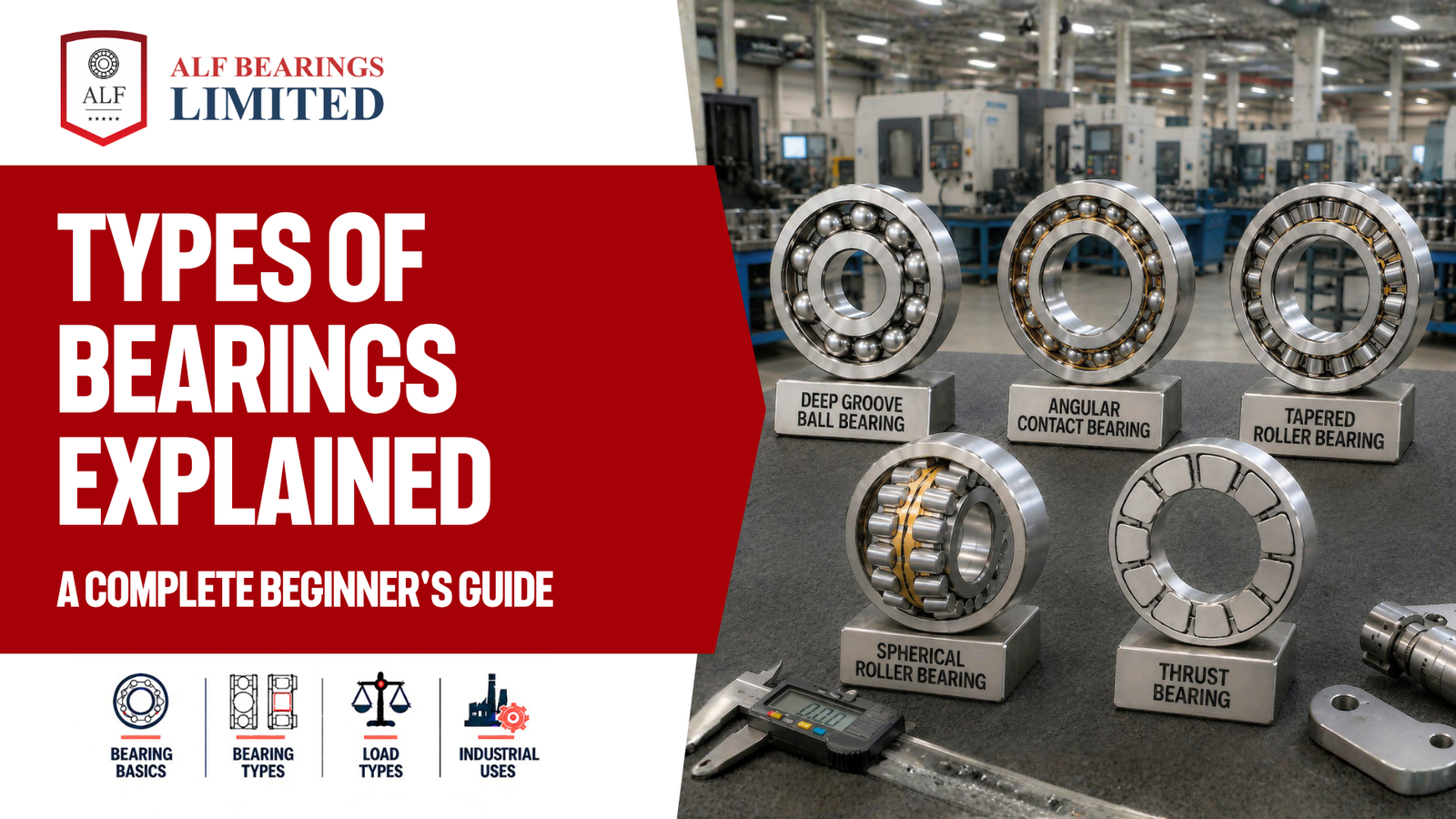
Each bearing is designed to handle a particular combination of load, speed, and operating conditions. The following table provides a quick overview of the most common industrial bearing types and their typical applications.

Bearing TypeBest ForCommon Applications
Deep Groove Ball BearingHigh-speed, light to moderate loadsElectric motors, pumps, fans
Angular Contact BearingCombined radial and axial loadsMachine tools, gearboxes
Tapered Roller BearingHeavy radial and axial loadsAutomotive wheel hubs, conveyors
Spherical Roller BearingHeavy loads with shaft misalignmentMining equipment, crushers, paper mills
Thrust BearingAxial loadsCranes, gear systems, rotary tables

Most Common Types of Bearings

1. Deep Groove Ball Bearing

The deep groove ball bearing is one of the most widely used ball bearings because of its simple design and versatility. It operates efficiently at high speeds while handling radial loads and light axial loads.

These bearings are commonly used in electric motors, pumps, fans, washing machines, and compressors. Their low maintenance requirements and long service life make them suitable for many everyday industrial applications.

2. Angular Contact Bearing

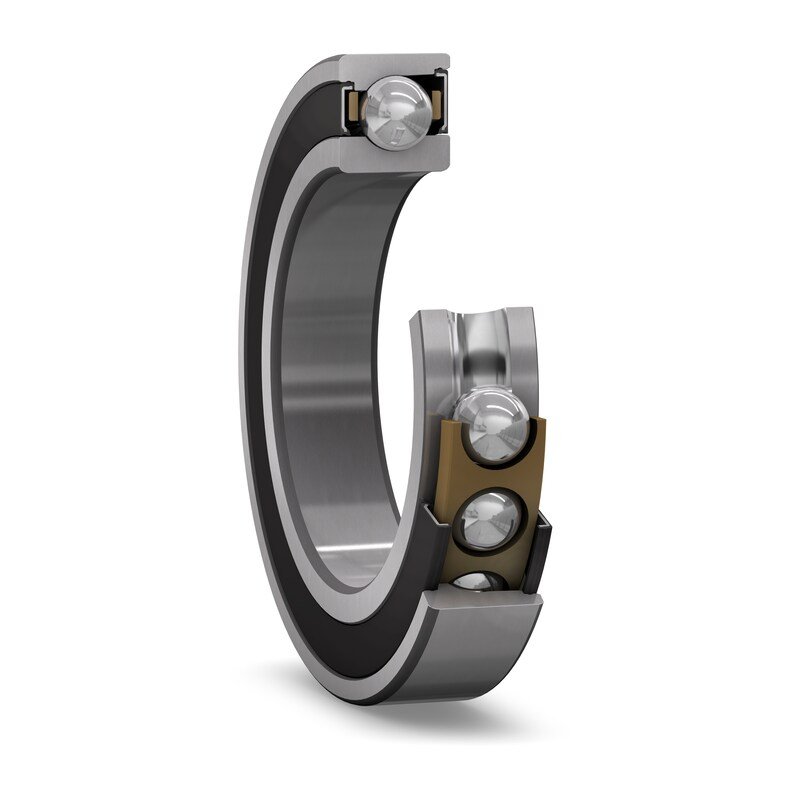
An angular contact bearing is designed for applications where both radial and axial loads are present. The contact angle between the balls and raceways allows it to support higher axial forces than standard ball bearings.

These bearings are often found in machine tool spindles, pumps, compressors, and precision equipment where speed and accuracy are important.

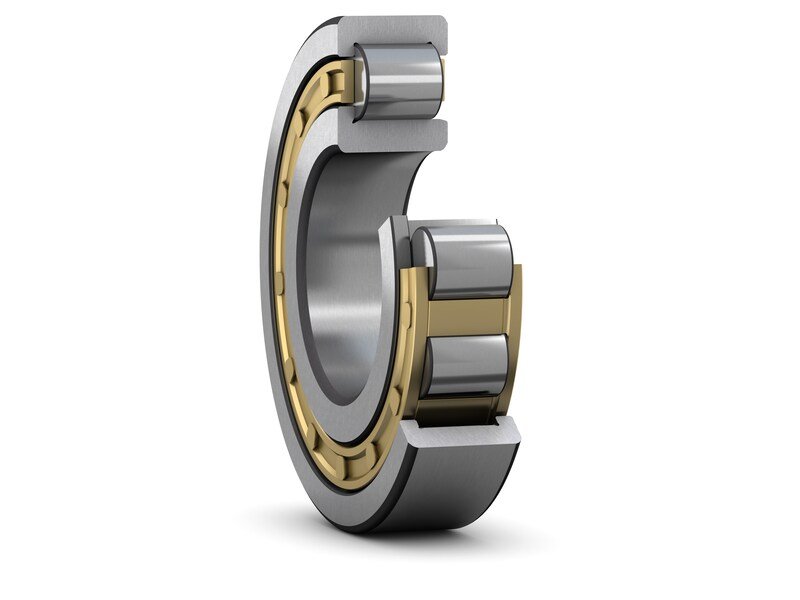
3. Tapered Roller Bearing

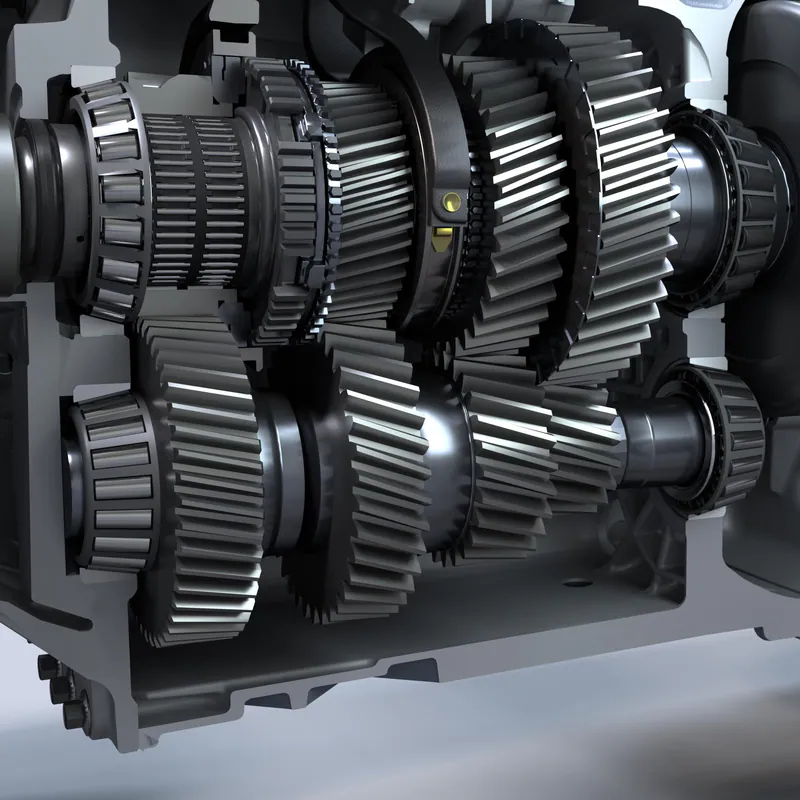
Unlike ball bearings, a tapered roller bearing uses tapered rollers to distribute loads over a larger contact area. This design allows it to carry heavy radial loads together with significant axial loads.

It is widely used in automotive wheel hubs, agricultural machinery, construction equipment, and conveyor systems that operate under demanding conditions.

4. Spherical Roller Bearing

A spherical roller bearing is built for heavy-duty applications. Its self-aligning design allows it to continue operating even when the shaft is slightly misaligned, making it suitable for harsh working environments.

Mining machinery, vibrating screens, crushers, paper mills, and cement plants commonly use these bearings because they can withstand heavy loads and continuous vibration.

5. Thrust Bearing

A thrust bearing is specifically designed to support axial loads rather than radial loads. It controls movement along the shaft while allowing smooth rotational motion.

These bearings are commonly used in cranes, automotive transmissions, rotary tables, and industrial gear assemblies where axial forces are dominant.

Rolling Bearings vs. Roller Bearings: What’s the Difference?

Many beginners confuse rolling bearings with roller bearings, but they are not the same.

Rolling bearings are a broad category that includes both ball bearings and roller bearings. They reduce friction by placing rolling elements between the inner and outer rings.

Roller bearings are one type of rolling bearing that uses cylindrical, tapered, spherical, or needle-shaped rollers instead of balls. Because rollers provide a larger contact area, they are generally better suited for carrying heavier loads.

This difference makes it easier to compare industrial bearing types and choose the right option for a specific application.

How to Choose the Right Bearing

Selecting a bearing involves more than matching dimensions. Before choosing one, consider-

  • The type of load (radial, axial, or combined)
  • Operating speed
  • Shaft alignment
  • Working environment
  • Temperature
  • Maintenance requirements

For example, a deep groove ball bearing performs well in high-speed applications with moderate loads, while a tapered roller bearing is more suitable for equipment carrying heavier combined loads. Similarly, a spherical roller bearing is often the preferred choice when shaft misalignment is expected.

Choosing the right bearing improves efficiency, reduces wear, and helps equipment operate more reliably.

Wrapping It Up

Every bearing is built for a specific purpose, whether it’s handling high speeds, heavy loads, or shaft misalignment. Choosing from the different types of bearings based on your application’s requirements helps improve performance and keeps equipment running efficiently.

FAQs

What are the most common types of bearings?

The most common types of bearings include deep groove ball bearings, angular contact bearings, tapered roller bearings, spherical roller bearings, and thrust bearings. Each is designed for different load and operating requirements.

What is the difference between ball bearings and roller bearings?

Ball bearings use spherical balls to reduce friction and are generally suitable for high-speed applications. Roller bearings use cylindrical or tapered rollers, providing a larger contact area to handle heavier loads.

Which bearing is best for heavy industrial applications?

A spherical roller bearing is widely used in heavy industrial applications because it supports high loads and can accommodate shaft misalignment. A tapered roller bearing is also a good choice for equipment that experiences heavy radial and axial loads.

Which type of bearing is best for high-speed applications?

A deep-groove ball bearing is one of the best options for high-speed applications because it produces low friction and operates smoothly under light to moderate loads. It is commonly used in electric motors, pumps, fans, and other equipment that requires reliable performance at higher rotational speeds.

How do I choose the right bearing for my application?

Choosing the right bearing depends on factors such as load type, operating speed, shaft alignment, working environment, and maintenance requirements. Comparing the different types of bearings and understanding their applications helps ensure the bearing matches the machine’s operating conditions, improving performance and service life.
Understanding Bearing Materials and Their Benefits

11 AUGUST 2026

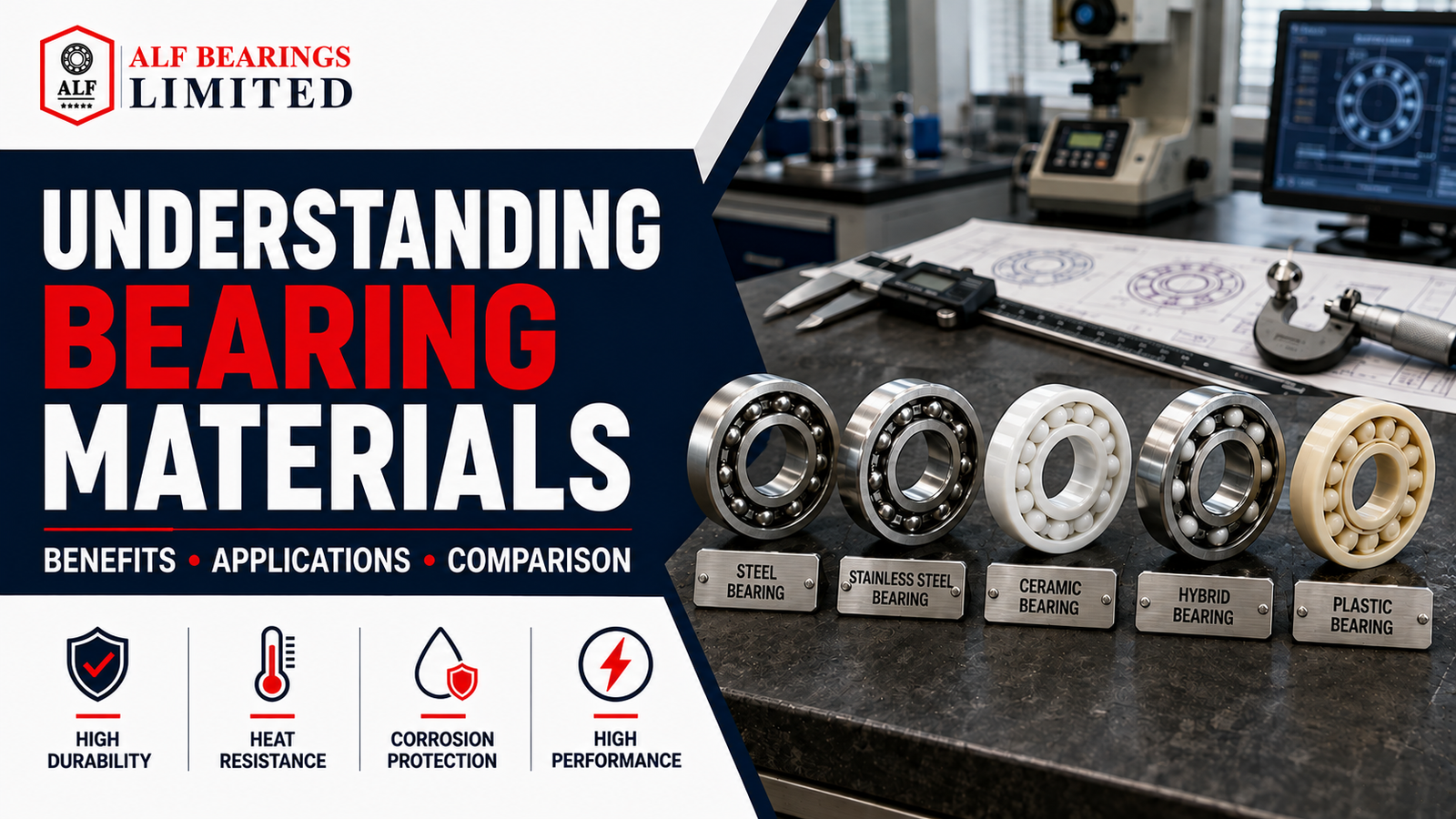
What makes one bearing suitable for food processing equipment and another for heavy industrial machinery? Bearing materials determine where a bearing can be used and how it performs. According to research, the global bearing market was valued at USD 143.2 billion in 2025, driven by demand from the automotive, manufacturing, aerospace, and energy sectors. This guide explains the most common bearing materials, their benefits, and where they are used.

Common Types of Bearing Materials

Several materials are used to manufacture bearings, and each has its own properties. Selecting the right option depends on the application and operating environment.

1. Bearing Steel

Bearing steel is the most widely used material for rolling bearings. High-carbon chromium steel offers excellent hardness, fatigue strength, and wear resistance, making it suitable for heavy-duty industrial equipment.

It is commonly used in electric motors, gearboxes, conveyors, pumps, and automotive systems. With proper lubrication and maintenance, bearing steel provides long service life and reliable performance under high loads.

2. Stainless Steel Bearings

Stainless steel bearings are designed for environments where moisture, chemicals, or corrosion are common. They contain chromium, which forms a protective layer against rust.

These bearings are widely used in food processing plants, pharmaceutical equipment, marine applications, and medical devices. Although they generally have a lower load capacity than bearing steel, they perform well in wet and hygienic environments where corrosion resistance is essential.

3. Ceramic Bearings

Ceramic bearings use ceramic balls or rings made from materials such as silicon nitride. They are lighter than steel bearings and generate less friction during operation.

Because ceramic materials resist heat, corrosion, and electrical conductivity, these bearings are commonly found in aerospace equipment, electric motors, high-speed machinery, and precision instruments. They also require less lubrication than conventional steel bearings.

4. Plastic Bearings

Plastic bearings are manufactured using engineering polymers that are lightweight and resistant to chemicals and moisture.

These bearings are often used in packaging equipment, medical devices, agricultural machinery, and food-processing applications. Plastic bearings operate quietly and can work without lubrication in certain low-load applications, making them a practical solution for clean environments.

5. Hybrid Bearings

Hybrid bearings combine steel rings with ceramic rolling elements. This design offers the strength of steel and the performance benefits of ceramic materials.

Some important hybrid bearing advantages include lower friction, higher operating speeds, better electrical insulation, and longer service life. These bearings are commonly used in electric vehicles, machine tools, wind turbines, and high-speed industrial equipment.

Bearing Material Comparison

MaterialMain BenefitsCommon Applications
Bearing SteelHigh strength and wear resistanceIndustrial machinery, automotive
Stainless Steel BearingsCorrosion resistanceFood, marine, medical
Ceramic BearingsLightweight and heat resistantAerospace, electric motors
Plastic BearingsChemical resistance and low weightPackaging, medical equipment
Hybrid BearingsHigh speed and long lifeEVs, machine tools, wind turbines

Best Material for Industrial Bearings

The best material for industrial bearings depends on the operating conditions rather than a single material being suitable for every application.

For heavy loads and general industrial use, bearing steel remains the preferred choice because of its durability and cost-effectiveness. In corrosive environments, stainless steel bearings provide better protection against rust. High-speed machinery often benefits from ceramic bearings, while hybrid bearings are selected for applications requiring both speed and long service life.

Stainless Steel vs Ceramic Bearings

When comparing stainless steel vs. pricier ceramic bearings, both materials offer unique benefits.

Stainless steel bearings are valued for their corrosion resistance, making them suitable for wet or chemical environments. Ceramic bearings, on the other hand, are lighter, produce less friction, and perform better at high speeds and temperatures. However, ceramic bearings are generally more expensive than stainless steel options.

The right choice depends on the operating environment, maintenance requirements, and budget.

Which Bearing Material Lasts Longest?

Many users ask which bearing material lasts longest. There is no single answer because bearing life depends on load, lubrication, operating speed, contamination, and maintenance.

Under normal industrial conditions, high-quality bearing steel offers excellent durability. In corrosive environments, stainless steel may last longer because it resists rust. Hybrid and ceramic bearings can provide a longer service life in high-speed applications due to reduced friction and wear.

Choosing the correct material for the application is often more important than selecting the strongest material alone.

Wrapping It Up

Selecting the right bearing materials is an important part of improving machine performance and reliability. From bearing steel for heavy-duty applications to stainless steel bearings, ceramic bearings, plastic bearings, and hybrid bearings for specialized environments, each material offers different advantages. Understanding these differences helps businesses choose bearings that match their operating conditions, reduce maintenance, and support long-term performance.

FAQs

What is the most commonly used bearing material?

Bearing steel is the most commonly used material because it offers high strength, wear resistance, and long service life.

Are ceramic bearings better than steel bearings?

Ceramic bearings perform better in high-speed and high-temperature applications, while steel bearings are more suitable for heavy loads and general industrial use.

Which bearing material is best for corrosive environments?

Stainless steel bearings are the preferred choice for wet, humid, and chemical environments because they offer excellent corrosion resistance.

How do I choose the right bearing material?

Choose the material based on the load, operating speed, temperature, and working environment of the application.

Do plastic bearings require lubrication?

Many plastic bearings can operate without lubrication in light-duty applications, reducing maintenance requirements.

How to Select the Right Bearing for Your Machine

3 AUGUST 2026

How to choose the right bearing is a question many engineers and maintenance teams face when working with industrial equipment. Bearings may look similar, but they are designed for different loads, speeds, and operating conditions. Selecting a bearing without checking these requirements can lead to frequent replacements, unexpected downtime, and higher maintenance costs. This guide explains the main factors to consider and how to choose a bearing that suits your application.

Factors That Affect Bearing Performance

Choosing the right bearing begins with understanding how the machine will operate. A bearing that performs well in one application may not deliver the same results in another because every machine works under different conditions. During bearing selection, engineers consider the application, load, operating speed, surrounding environment, and expected service life before deciding on a bearing type.

Machine Application

The application gives the first indication of the type of bearing required. A pump, conveyor, electric motor, compressor, and gearbox all create different operating conditions. Some machines run continuously at high speed, while others work under heavy loads or in dusty and wet environments.

For example, bearings used in food processing equipment are often selected for their resistance to moisture and corrosion, while bearings used in mining or construction machinery are chosen for their ability to withstand heavy loads and contamination. Understanding where the bearing will be used helps narrow down the available options and makes choosing bearings more practical.

Load Requirements

Load is one of the biggest factors in bearing selection based on load. Bearings are designed to carry radial loads, axial loads, or a combination of both. Selecting a bearing that does not match the applied load can shorten its operating life and increase maintenance requirements.

Ball bearings are commonly used where moderate loads and higher speeds are involved. Roller bearings provide a larger contact area, allowing them to support heavier radial loads. Tapered roller bearings are widely used in industrial gearboxes, wheel hubs, and similar applications where both radial and axial loads are present. When looking for the best bearing for heavy loads, roller bearings are generally the preferred option.

Operating Conditions

Operating conditions influence bearing performance just as much as load. Temperature, dust, moisture, chemicals, and lubrication all affect how long a bearing will last.

Machines operating at high speeds require bearings that produce less friction and generate less heat. Equipment used outdoors or in harsh industrial environments may need sealed bearings or corrosion-resistant materials to prevent premature wear. Considering these conditions before purchasing a bearing reduces the chances of unexpected failure and unnecessary maintenance.

Matching the Bearing to the Machine

Selecting a bearing becomes easier once the operating conditions are clear. Different bearing designs are developed to meet different performance requirements rather than serving every application in the same way.

Ball Bearings and Their Applications

Ball bearings are widely used in electric motors, pumps, fans, compressors, and other equipment that operates at higher speeds. They offer smooth rotation, low friction, and reliable performance where loads are light to moderate.

Roller Bearings and Their Applications

Roller bearings are commonly installed in conveyors, crushers, paper mills, heavy industrial gearboxes, and construction equipment. Their larger rolling elements distribute the applied load more effectively, making them suitable for demanding applications.

Bearing Selection for Electric Motors

Bearing selection for electric motors requires attention to speed, operating temperature, lubrication, and expected service life. Deep groove ball bearings remain one of the most common choices because they combine low friction with reliable performance during continuous operation. Shaft dimensions, mounting arrangements, and maintenance requirements should also be reviewed before selecting a bearing for an electric motor.

A Few Checks Before Ordering

Many bearing failures are linked to incorrect selection rather than manufacturing defects. Before placing an order, confirm-

  1. The type and direction of the load
  2. Operating speed
  3. Temperature and surrounding environment
  4. Shaft and housing dimensions
  5. Lubrication method
  6. Sealing requirements
  7. Expected operating life

Reviewing these points makes industrial bearing selection more accurate and reduces the chances of early bearing failure.

Wrapping it up

There is no single bearing that works for every machine. A suitable bearing is one that matches the application’s load, operating speed, working environment, and maintenance requirements. Taking the time to evaluate these conditions before ordering can improve machine reliability, reduce downtime, and extend bearing service life.

FAQs

How do I choose the right bearing for an industrial machine?

Consider the machine application, load, operating speed, environment, lubrication, and shaft dimensions before selecting a bearing.

Which bearing is best for heavy loads?

Roller bearings are commonly used for heavy radial loads, while tapered roller bearings are suitable when both radial and axial loads are present.

Which bearing is commonly used in electric motors?

Deep groove ball bearings are widely used in electric motors because they support high-speed operation with low friction and reliable performance.

Can one bearing type be used for all machines?

No. Different machines have different load, speed, and operating requirements. The bearing should match the specific application.

Why is lubrication important for bearings?

Lubrication reduces friction, minimizes wear, and helps extend bearing life by protecting it from heat and contamination.

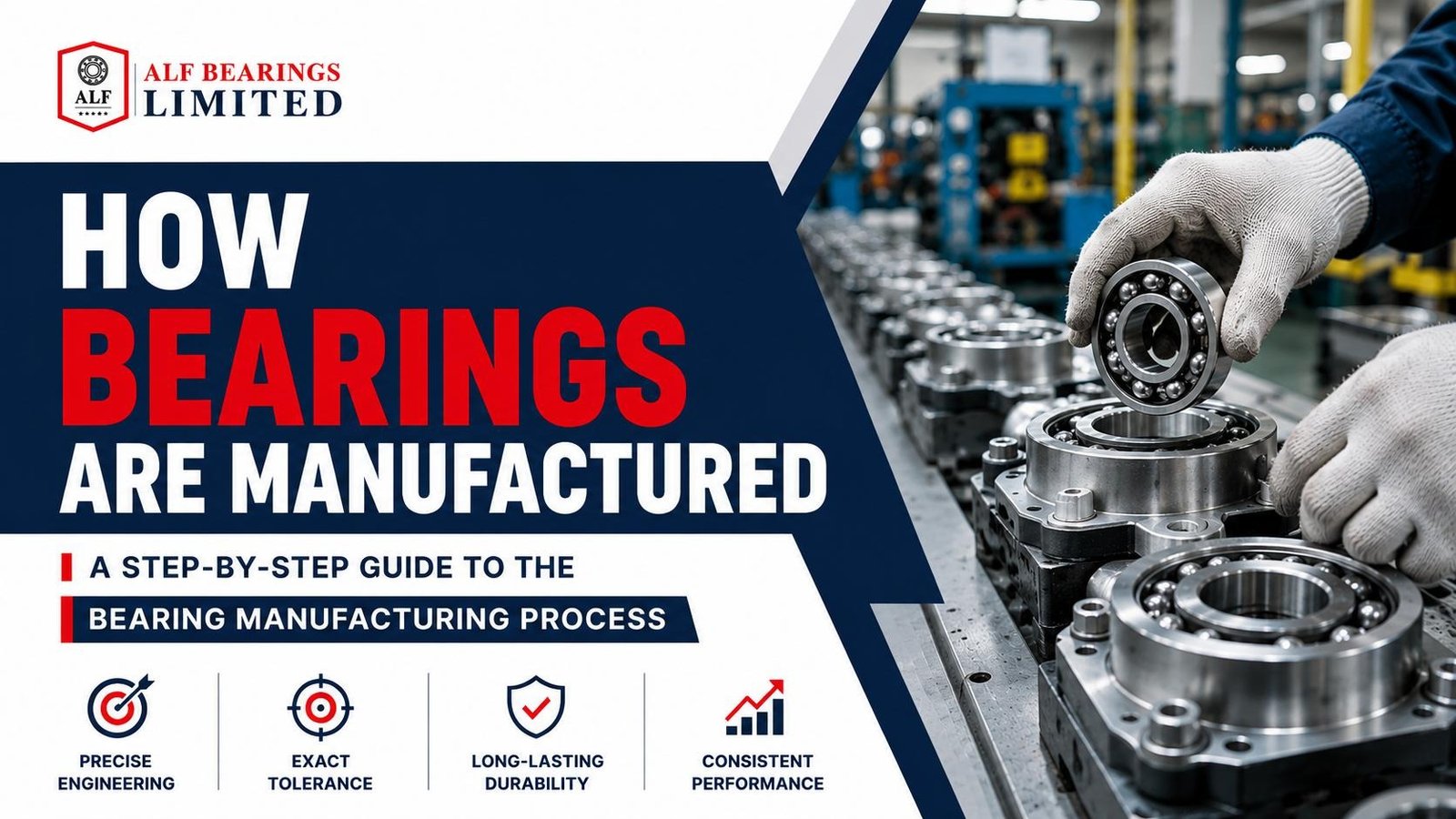
How Bearings Are Manufactured: A Step-by-Step Guide to the Bearing Manufacturing Process

25 JULY 2026

Bearings are found in almost every machine that has moving parts. They help reduce friction, support rotating shafts, and allow equipment to run smoothly. From electric motors and pumps to automobiles, wind turbines, and factory machines, many industries use bearings. Since they work under high speeds and heavy loads, they must be made with great accuracy.

According to the World Bearing Association, millions of industrial and automotive applications worldwide use rolling bearings, which makes quality manufacturing essential for machine reliability. This is why manufacturers follow a carefully planned bearing manufacturing process to produce bearings that meet strict performance and safety standards.

If you have ever wondered how bearings are manufactured, this guide explains each stage in simple words.

Step-by-Step Bearing Manufacturing Process

The step-by-step bearing manufacturing process involves several stages, and each one helps improve the strength, precision, and durability of the final product. Even a small error during production can affect the bearing’s performance, so every step is carried out with close attention to detail.

1. Selecting the Right Raw Material

The first step in the bearing production process is selecting the right material. Most bearings are made from high-carbon chromium steel because it offers excellent hardness, wear resistance, and long service life. Depending on the application, manufacturers may also use stainless steel, alloy steel, or special materials for harsh working conditions.

Good-quality raw material is the foundation of reliable industrial bearing manufacturing, as it directly affects the bearing’s strength and lifespan.

2. Forging the Bearing Rings

After the steel is selected, it is heated to a high temperature and shaped into rough bearing rings through a forging process.

Forging improves the internal grain structure of the steel, making the rings stronger and more durable. At this stage, the rings are only given their basic shape. The final dimensions are achieved during machining.

These are some of the most important bearing manufacturing steps because strong bearing rings help improve overall performance.

3. Precision Machining

The forged rings are then sent for machining. CNC machines remove extra material and create the exact dimensions needed for the inner and outer rings.

During this stage, manufacturers also machine the raceways where the rolling elements move. High accuracy is necessary because even a small variation can affect rotation, noise, and bearing life.

Precision machining is one of the reasons modern bearings perform reliably in demanding industrial applications.

4. Bearing Heat Treatment Process

The next stage is the bearing heat treatment process, which increases the hardness of the steel while maintaining enough toughness to handle heavy loads.

The rings are heated and cooled under carefully controlled conditions. This changes the internal structure of the metal and improves wear resistance. Without proper heat treatment, bearings may wear out much faster during regular operation.

5. Grinding and Surface Finishing

After heat treatment, the bearing rings go through precision grinding.

Grinding removes tiny surface imperfections and produces a smooth finish on the raceways. Smooth surfaces reduce friction, lower operating noise, and improve rotation.

Manufacturers also check the dimensions at this stage to ensure every component meets the required tolerance.

How Ball Bearings Are Manufactured

Many people ask how ball bearings are made because the balls themselves require the same level of precision as the bearing rings.

Steel wire is cut into small pieces and shaped into rough balls using cold-heading machines. The balls then pass through flashing, heat treatment, grinding, and polishing. Each ball is carefully measured before assembly to ensure consistent size and surface quality.

The process of how ball bearings are manufactured focuses on achieving perfectly round balls that move smoothly inside the bearing.

Manufacturing Process of Roller Bearings

The manufacturing process of roller bearings is similar to ball bearing production, but cylindrical, tapered, or spherical rollers are manufactured instead of steel balls.

These rollers are also heat-treated, ground, polished, and inspected before assembly. Different roller designs are used depending on the type of load and operating conditions.

Assembly and Final Inspection

Once every component is ready, the bearing is assembled by placing the rolling elements between the inner and outer rings with the help of a cage.

Before the bearing leaves the factory, it undergoes several bearing quality testing methods. Manufacturers inspect dimensions, hardness, noise levels, vibration, rotation accuracy, and load performance. Advanced inspection equipment helps detect even the smallest defects before the product is approved.

How Precision Bearings Are Made

Applications such as aerospace equipment, robotics, medical devices, and high-speed machinery require greater accuracy than standard bearings.

To understand how precision bearings are made, manufacturers use tighter machining tolerances, advanced grinding equipment, cleaner assembly areas, and additional inspections. These extra steps help ensure smooth performance even under demanding operating conditions.

Wrapping It Up

The quality of a bearing depends on how carefully it is made. Every step, from selecting the raw material to testing the finished product, helps improve its strength, accuracy, and service life. Knowing how bearings are manufactured also makes it easier to understand why high-quality bearings perform better and last longer in different industrial applications.

FAQs

What material is commonly used to manufacture bearings?

Most bearings are made from high-carbon chromium steel because it offers excellent hardness, wear resistance, and durability. Stainless steel and alloy steel are also used for specific applications.

Why is heat treatment important in the bearing manufacturing process?

Heat treatment increases the hardness and strength of bearings. components while improving their resistance to wear. This helps bearings perform reliably under heavy loads and high-speed conditions.

How is the quality of bearings tested before delivery?

Manufacturers inspect bearings for dimensions, hardness, noise, vibration, rotation accuracy, and load performance. These quality checks help ensure the bearings meet industry standards before we supply them to customers.

How long does it take to manufacture a bearing?

The manufacturing time depends on the bearing type, size, and production process. Most bearings go through multiple stages, including forging, machining, heat treatment, and quality testing before they are ready for use.

Why is precision important in bearing manufacturing?

Precision helps bearings rotate smoothly with less friction and vibration. It also improves performance, extends service life, and reduces the risk of early failure.


Top Bearing Manufacturers in India | What to Look for Before Choosing One

17 JULY 2026

Not every bearing is built the same. While two bearings may look similar, their performance can be completely different once they’re put to work. A well-made bearing keeps machines running smoothly, reduces maintenance, and lasts longer. That’s why businesses prefer working with leading bearing manufacturers that prioritize quality and precision. A poor-quality bearing, on the other hand, can lead to frequent breakdowns, production delays, and higher repair costs.

That’s why businesses don’t simply search for bearing manufacturers in India; they look for manufacturers they can rely on.

If you’re planning to source bearings for your business, here are a few things worth checking before making your decision.

What Makes the Top Bearing Manufacturers in India Stand Out?

Bearings are used in almost every rotating machine, from industrial equipment to automobiles and agricultural machinery. If a bearing fails, it can affect the performance of the entire system, leading to unexpected downtime and increased maintenance costs. That’s why choosing the right manufacturer is just as important as selecting the right bearing.

The top bearing manufacturers in India stand out for consistently delivering products that meet industry standards while addressing the practical needs of diverse applications. When comparing manufacturers, consider factors.

  • Consistent product quality
  • Precision manufacturing processes
  • A wide range of bearing solutions
  • On-time delivery
  • Responsive customer support
  • Experience across multiple industries

Rather than focusing on a single factor, evaluate the manufacturer’s overall capabilities. A company that combines technical expertise, manufacturing excellence, and dependable service is more likely to become a reliable long-term business partner.

Questions You Should Ask Before Choosing a Bearing Manufacturer

Before placing an order, ask a few simple questions.

  1. Does the company manufacture its own bearings?
  2. What quality checks are followed during production?
  3. Can they supply bearings for your specific application?
  4. Do they offer technical support if required?
  5. Can they maintain a consistent supply for future orders?

The answers will tell you much more than a product catalogue ever can.

Why Many Businesses Prefer Experienced Indian Bearing Companies

Experience helps manufacturers build better products and improve their processes. Companies that have worked with different industries understand changing customer requirements and can recommend suitable bearing solutions.

Many established Indian bearing companies also invest in modern production technology and quality control to deliver products that perform consistently under different working conditions.

Why ALF Bearings Fit These Expectations

The qualities discussed above are what many industrial buyers look for when selecting a manufacturing partner. ALF Bearings follows the same principles by focusing on precision manufacturing, strict quality standards, and dependable bearing solutions for a wide range of industries.

ALF Bearings follows these principles by focusing on precision manufacturing, strict quality standards, and a wide range of bearing solutions for different industries. Instead of taking a one-size-fits-all approach, the company works to deliver products that match the needs of its customers. This focus on quality and consistency is what makes ALF Bearings a trusted name among bearing manufacturers in India.

Final Thoughts

Finding the right bearing manufacturers in India doesn’t have to be complicated. Instead of comparing companies based only on price, look at their experience, product quality, manufacturing process, and customer support.

With several bearing manufacturing companies in India to choose from, taking time to evaluate quality, experience, and manufacturing capabilities can help you build a long-term partnership that supports your business growth. 

A little research today can help you choose a manufacturer that delivers reliable products and long-term value for your business.

FAQs

How do I choose the right bearing manufacturer in India?

Look for a manufacturer with good product quality, industry experience, reliable delivery, and strong customer support. Certifications and quality testing are also important.

Why is bearing quality important?

High-quality bearings reduce machine breakdowns, improve performance, last longer, and help lower maintenance costs.

Do Indian bearing manufacturers supply bearings for different industries?

Yes. Many leading bearing manufacturers in India offer bearings for industries such as automotive, agriculture, construction, manufacturing, and heavy machinery.