
Deep Groove vs Angular Contact Bearings: Which to Choose? 

30 SEPTEMBER 2026

Choosing the right bearing is not just about matching the bore size. You also need to consider the load on the shaft, operating speed, accuracy requirements, and the overall design of the machine.

Understanding deep groove vs angular contact bearings can make this selection easier. Both are types of ball bearings, but their internal designs are different. Because of this, they handle radial and axial loads in different ways.

In this bearing selection guide, we explain how each bearing works, where it is commonly used, and the key factors to consider when choosing the right option for your application.

Deep Groove vs Angular Contact Bearings: What Is the Main Difference?

The key difference is the way each bearing transfers load.

A deep groove ball bearing is primarily suited to radial loading while also accommodating a limited amount of thrust from either side. An angular contact ball bearing is designed for situations where radial and axial forces need to be carried together, especially when the axial component is more significant.

Here is a quick comparison:

FactorDeep Groove Ball BearingAngular Contact Ball Bearing
Main purposePrimarily radial loadingCombined loading
Axial loadModerateGreater axial load capability
Thrust directionCan accommodate either directionPrimarily one direction for a single row
Raceway geometrySymmetrical groovesAngled load path
MountingUsually straightforwardArrangement and orientation require more attention
Common useGeneral rotating machineryPrecision and combined load machinery

What Is a Deep Groove Ball Bearing?

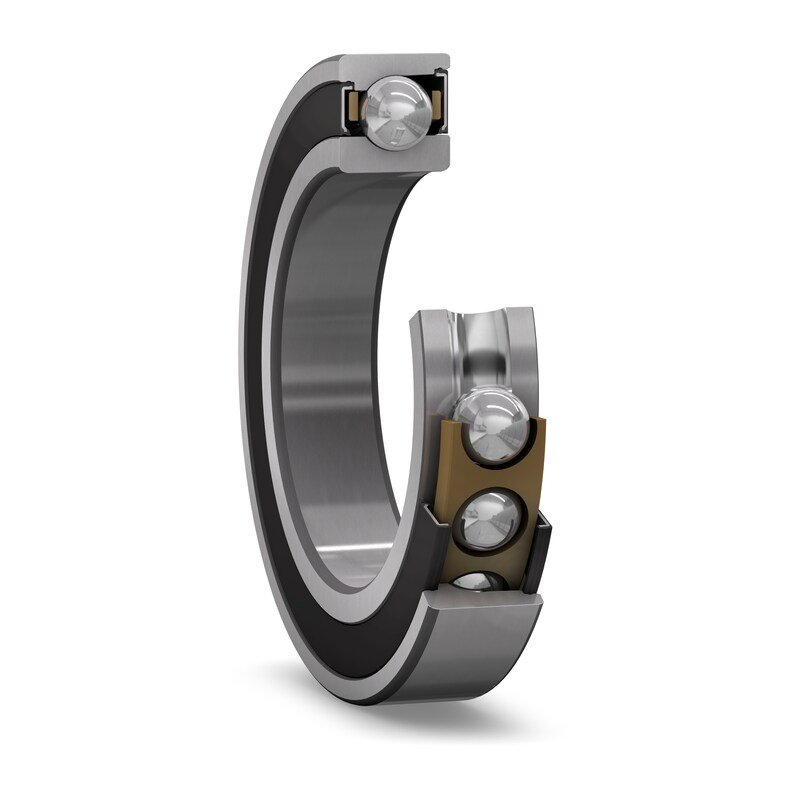
A deep groove ball bearing contains balls that travel through matching grooves formed in the inner and outer rings. The geometry provides a large contact area around each ball while allowing smooth rotation.

Its main job is to support forces acting across the shaft. At the same time, the design can accommodate a certain level of force acting along the shaft in either direction.

This combination makes it a practical choice for a wide range of machinery.

Typical uses include:

  • Electric motors
  • Industrial fans
  • Pumps
  • Conveyor systems
  • Gearboxes
  • Automotive assemblies
  • General manufacturing equipment

Another reason for its widespread use is its low friction characteristics. With the correct lubrication and operating conditions, the bearing can perform effectively at high rotational speeds.

How Does an Angular Contact Ball Bearing Work?

An angular contact ball bearing uses a different raceway arrangement. Instead of transferring force primarily across the bearing, its internal geometry creates an angled path between the balls and raceways.

Because of this load path, radial and axial forces can be supported at the same time.

The angle itself also influences bearing behaviour. Designs with larger contact angles generally provide increased capacity for axial force, while other configurations may be chosen when rotational speed is a greater priority.

A single row design mainly accepts axial force from one direction. If a machine produces thrust in both directions, two bearings can be installed in a suitable arrangement.

Angular contact bearings are commonly found in:

  • Machine tool spindles
  • Compressors
  • Precision gearboxes
  • Industrial pumps
  • Robotics equipment
  • High speed machinery

Which Bearing Handles Combined Loads Better?

When an application has to handle significant radial and axial loads at the same time, an angular contact ball bearing is often a suitable choice.

Its angled contact design helps the bearing manage both forces together during operation.

A deep groove ball bearing can also support a combination of radial and axial loads. However, it is usually preferred when the radial load is the main force and the axial load is relatively moderate.

That is why bearing size alone should not decide the selection. The actual load direction and operating requirements of the machine also need to be considered.

What About Speed and Accuracy?

High speed operation alone does not decide which bearing is right for an application. Other operating conditions also need to be considered.

Deep groove ball bearings are commonly used in equipment that runs at higher speeds. Their simple internal design helps reduce friction and allows the bearing to rotate smoothly.

An angular contact ball bearing can be suitable when high speed is combined with the need for better rigidity and precise shaft control. In some applications, these bearings are used with preload to reduce unwanted internal movement.

The actual speed capability of any bearing depends on several factors. These include bearing size, applied load, lubrication, cage design, operating temperature, internal clearance or preload, and correct installation.

Bearing Selection Guide: Which Type Fits Your Application?

A useful bearing selection guide starts with the machine’s operating conditions rather than the bearing catalogue.

A deep groove bearing may be considered when:

  • Most of the load acts radially.
  • Axial forces are relatively moderate.
  • Thrust may occur from either side.
  • Low friction is required.
  • The equipment has a general purpose rotating application.

An angular contact bearing may be considered when:

  • Radial and axial forces act together.
  • Axial loading is more demanding.
  • Shaft positioning needs greater control.
  • Higher rigidity is required.
  • Paired or preloaded installation is needed.

Bearing dimensions are only one part of the decision. Lubrication, temperature, speed, alignment, mounting space, contamination, precision, and expected operating life should also be reviewed.

Final Thoughts

Choosing between deep groove vs angular contact bearings depends on what the bearing needs to handle in actual operation. Deep groove ball bearings work well in many everyday industrial applications where radial loads are higher and axial loads are limited. Angular contact ball bearings are generally used when both radial and axial forces need to be managed together.

ALF Bearings Limited offers bearing solutions for a variety of industrial requirements. Looking at factors such as load, speed, accuracy, lubrication, and working conditions before choosing a bearing can help reduce unnecessary wear and keep machinery running reliably for longer.

FAQs

1. How do deep groove and angular contact bearings handle loads differently?

A deep groove ball bearing works well when most of the force is radial, although it can also carry limited axial force. An angular contact ball bearing has a different raceway design that allows it to deal more effectively with radial and axial forces acting together.

2. What information is needed before choosing a ball bearing?

A proper bearing selection guide should consider load type, load magnitude, shaft speed, operating temperature, lubrication method, available installation space, required precision, and expected service life. These details help determine which bearing design fits the application.

3. When should angular contact ball bearings be considered?

Angular contact bearings are useful when a machine experiences combined loads or requires accurate shaft positioning. They are commonly considered for high speed and precision applications where axial load capacity is also important.

4. What is the purpose of using two angular contact bearings together?

Using two bearings together provides greater flexibility in handling loads. Depending on the mounting arrangement, the pair can manage axial forces acting from opposite directions and can also provide better support and rigidity to the shaft.

5. Why are deep groove bearings widely used in motors?

Their simple design, low friction, and ability to operate efficiently at high rotational speeds make them suitable for many electric motors. They also provide reliable support where radial force is the primary load.
Electric Motor Bearings Selection Guide

28 SEPTEMBER 2026

Electric motors rely on bearings to stabilize the rotor shaft, ensure smooth rotation, and manage friction during continuous operation. Selecting the wrong bearing can lead to increased vibration, temperature, noise, and energy loss, while also shortening the motor’s lifespan. Alf Bearings offers a wide range of bearing solutions suitable for various electric motor applications and operating conditions.

However, selecting electric motor bearings involves more than simply matching the bearing bore to the shaft diameter. Engineers must consider factors such as motor speed, load direction, operating temperature, shaft alignment, lubrication, and environmental conditions. The requirements for a small HVAC fan motor can differ significantly from those of a large industrial pump or a high precision servo motor.

Deep Groove Ball Bearings – For AC and DC Motors

Deep groove ball bearings are commonly selected for general purpose AC and DC motor applications because they offer low friction performance and can support both radial and moderate axial loads.

They are suitable for small and medium-sized electric motors used in fans, blowers, pumps, conveyors, and other industrial equipment. Their simple design also makes them ideal for applications where high rotational speeds and relatively quiet operation are important.

For motors operating in dusty or contaminated environments, sealed or shielded versions can help protect the rolling elements and the lubricant.

Cylindrical Roller Bearings – For Large Motors Subjected to Heavy Radial Loads

Large industrial motors can experience significantly high radial forces, particularly when driving equipment via belts or other heavily loaded configurations.

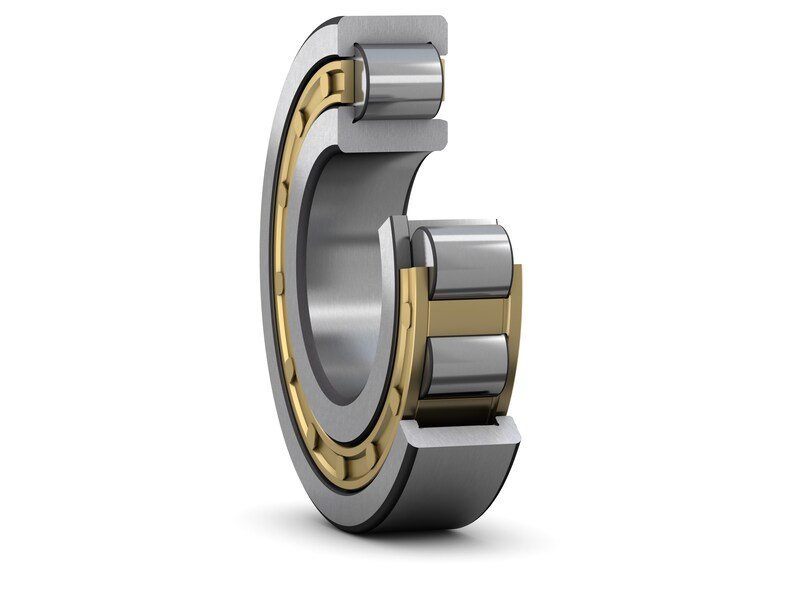
Cylindrical roller bearings offer higher load carrying capacity for radial forces because the rollers create a larger contact area with the raceway compared to balls.

They are frequently used in medium and large motors where a bearing must support substantial radial loads. Specific cylindrical roller bearing configurations can also accommodate axial movement caused by the thermal expansion of the motor shaft.

Angular Contact Ball Bearings – For Pump Motors Subjected to Axial Loads

Pump motor bearings often have to handle axial thrust in addition to radial forces. Angular contact ball bearings are suitable for such applications because their internal geometry is designed to accommodate combined loads.

They can be installed individually or in paired configurations, depending on the direction and magnitude of the axial force.

These bearings are particularly useful in vertical pump motors, high speed pumps, and other motor driven equipment where precise shaft positioning and axial support are critical.

Spherical Roller Bearings – For Very Large Motors and Misalignment

Large motors used in heavy industrial equipment can experience shaft deflection, installation inaccuracies, or housing misalignment.

Spherical roller bearings can accommodate angular misalignment while supporting significant radial loads and axial forces. This makes them suitable for very large electric machines operating in heavy duty conditions.

They are a suitable choice for motors driving equipment such as crushers, mills, large conveyors, and other machinery where maintaining precise alignment during operation can be challenging.

Tapered Roller Bearings – For Motors Subjected to High Combined Loads

Tapered roller bearings are suitable for motor applications that generate significant radial and axial loads simultaneously. Their tapered geometry provides robust load carrying capacity, particularly when axial thrust is a critical operating factor.

They can be used in specialized motor configurations associated with heavy mechanical equipment, gear systems, and other applications involving demanding combined loads.

Proper adjustment is crucial, as clearance or preload can directly affect temperature, vibration, and bearing service life.

Hybrid Ceramic Bearings – For VFDs and High-Speed ​​Motors

Modern inverters and VFD driven motors can experience electrical currents passing through conventional steel bearings. Over time, electrical discharge can damage the bearing raceways.

Hybrid ceramic bearings combine steel rings with ceramic rolling elements, providing electrical insulation between the shaft and the housing. Consequently, they are useful in applications where electrical damage to bearings is a concern.

Their low rolling-element density and favorable friction characteristics make the hybrid design attractive for high-speed electric motors.

Precision Ball Bearings – For Servo Motors

Servo motor bearings support applications where precise positioning, low vibration, low noise, and consistent rotational performance are critical.

High-precision deep groove or angular contact ball bearings are typically selected based on the servo motor design and load conditions.

Servo applications may require carefully controlled internal clearance or preload, as even slight, unwanted shaft movement can affect positioning accuracy. Robotics, CNC systems, automation equipment, and motion control systems are typical examples where bearing precision is particularly important.

Low-Friction Ball Bearings for HVAC Motors

HVAC motor bearings typically operate in fans, blowers, air-handling units, and ventilation systems, where quiet operation, efficiency, and long service intervals are desirable.

Deep groove ball bearings are generally suitable for these applications, as they can efficiently handle the typical radial loads found in fan systems while also operating at relatively high speeds.

Sealed and ‘lubricated for life’ designs can also reduce maintenance requirements for smaller HVAC motors.

Key Factors in Electric Motor Bearing Selection

Engineers should begin the bearing selection process by determining whether the motor will be subjected to radial, axial, or combined loads. Subsequently, the actual load magnitude should be compared against the bearing’s dynamic and static load ratings.

Operating speed is equally critical, as excessive speed can lead to increased friction and higher operating temperatures. Engineers must also evaluate factors such as lubrication, expected operating temperatures, shaft and housing fits, potential contamination, vibration, misalignment, and the required service life.

The bearing arrangement must also accommodate thermal expansion where necessary. For VFD driven motors, the risk of damage from electrical currents must be considered when deciding whether an insulated or hybrid bearing is required.

Conclusion

There is no single bearing that suits every electric motor. Deep groove ball bearings perform effectively in many standard AC, DC, and HVAC motors, whereas cylindrical roller bearings are better suited for heavy radial loads. Angular contact bearings provide additional axial support for pumps and vertical motor applications, while spherical roller bearings are useful in large machines where heavy loading and misalignment are concerns.

For VFD driven and electrically sensitive applications, hybrid ceramic bearings can offer added protection, while precision bearing configurations support the accuracy required by servo motors.

Reliable motor bearing design is achieved by matching bearing characteristics to the motor’s actual speed, load, environment, lubrication, and operating conditions, rather than simply selecting a bearing based on size.

FAQs

1. What type of bearings are commonly used in electric motors?

Deep groove ball bearings are commonly used in electric motors because they offer low friction, support radial and moderate axial loads, and perform well at high rotational speeds. They are widely used in AC and DC motors, fans, pumps, blowers, conveyors, and HVAC equipment.

2. How do you select the right bearing for an electric motor?

Select an electric motor bearing based on factors such as radial and axial loads, operating speed, temperature, lubrication, shaft and housing fit, vibration, contamination, alignment, and required service life. The bearing’s dynamic and static load ratings should also match the motor’s actual operating conditions.

3. Which bearings are suitable for high-speed electric motors?

Deep groove ball bearings, precision ball bearings, and hybrid ceramic bearings can be suitable for high speed electric motors, depending on the application. Hybrid ceramic bearings are particularly useful where high speed and electrical insulation are critical, including certain VFD driven motor applications. 

4. Which bearings are used in pump motors?

Deep groove ball bearings and angular contact ball bearings are commonly used in pump motors. Angular contact ball bearings are particularly suitable when the motor needs to handle both radial loads and significant axial thrust, such as in vertical pump and high speed pump applications.

5. Why are hybrid ceramic bearings used in VFD motors?

Hybrid ceramic bearings are used in VFD driven motors to reduce the risk of electric current passing through the bearing. Their ceramic rolling elements provide electrical insulation, which helps protect the bearing raceways from electrical discharge damage while also offering advantages for certain high speed applications.

Common Mistakes During Bearing Installation

22 SEPTEMBER 2026

Proper bearing installation is essential for reliable machine performance. Even a high-quality bearing can experience premature wear when incorrect mounting practices are followed. Small installation problems can eventually result in excessive vibration, noise, heat, or unexpected equipment failure.

Understanding common bearing installation mistakes helps technicians protect bearings and surrounding machinery. From checking the shaft and housing to lubrication and final inspection, every step contributes to effective bearing maintenance and long-term performance.

1. Not Checking the Shaft and Housing

One of the most overlooked bearing installation mistakes is failing to inspect the shaft and housing before mounting. Burrs, corrosion, dirt, wear, or incorrect dimensions can prevent the bearing from seating properly.

Both shaft fit and housing fit should be checked according to the bearing and application requirements. A loose shaft fit can allow unwanted movement, while an excessively tight fit may affect internal clearance. Similarly, an incorrect housing fit can influence bearing stability and load distribution.

Measuring and inspecting these surfaces before mounting can prevent avoidable problems later.

2. Installing Bearings in Contaminated Conditions

Bearings contain precisely finished surfaces, so cleanliness is critical. Dust, moisture, metal particles, or dirty tools can introduce contamination during installation and contribute to premature bearing damage.

The work area, tools, shaft, and housing should be clean before installation begins. Bearings should ideally remain in their packaging until they are ready for mounting.

Cleanliness should therefore be a basic step in every bearing installation guide, especially where equipment operates under demanding conditions.

3. Applying Mounting Force Incorrectly

Improper mounting often occurs when installation force is applied through the wrong bearing components. When a bearing has a tight fit, force should generally be directed to the ring being fitted.

Allowing mounting force to pass through balls or rollers can affect the raceways and create early bearing damage. Direct and uncontrolled hammering should also be avoided.

Suitable mounting sleeves, presses, or approved tools should be selected according to the bearing design and application. Avoiding improper mounting helps protect precision surfaces during installation.

4. Ignoring Alignment Errors

Correct alignment is essential for distributing operating loads properly. Alignment errors can develop because of incorrect housing positioning, shaft deflection, machining inaccuracies, or assembly problems.

These alignment errors may contribute to uneven loading, vibration, excessive temperature, noise, and accelerated bearing wear.

Before completing installation, technicians should verify the alignment of the shaft, housing, and connected components using appropriate measuring equipment. Correct alignment is also an important part of preventive bearing maintenance.

5. Making Lubrication Mistakes

Proper lubrication reduces friction and helps protect bearing contact surfaces. However, lubrication mistakes can negatively affect even a correctly mounted bearing.

Common lubrication mistakes include selecting an unsuitable lubricant, mixing incompatible greases, introducing contamination, or applying too much or too little lubricant.

Excessive grease can increase churning and temperature in some applications, while insufficient lubrication can reduce protection between moving surfaces. Lubricant type, quantity, and relubrication intervals should therefore match the bearing and its operating conditions.

6. Heating Bearings Incorrectly

Heating is sometimes used to simplify the installation of bearings with interference fits. However, excessive or uneven heating can affect bearing components.

Open flames and uncontrolled heating methods should be avoided. Where thermal mounting is suitable, controlled equipment such as an induction heater can provide more uniform heating.

A reliable bearing installation guide should always consider the bearing manufacturer’s recommended temperature limits, particularly for bearings containing seals or temperature-sensitive components.

7. Using Unsuitable Mounting Tools

Using inappropriate tools can turn a simple installation into costly bearing damage. Screwdrivers, punches, damaged sleeves, or uncontrolled hammer impacts may affect rings, cages, seals, and raceways.

Purpose-designed mounting tools allow force to be applied more accurately. Selecting the correct tools before installation also reduces the possibility of improper mounting and helps maintain bearing condition.

8. Skipping Post-Installation Inspection

Bearing installation should always end with a final inspection. Check whether the bearing is properly seated, secured, lubricated, and aligned.

Where appropriate, manually rotate the assembly and check for unusual resistance. During initial operation, monitor noise, vibration, and temperature. Detecting problems early can prevent minor installation issues from becoming serious failures.

These checks should also become part of a regular bearing maintenance routine.

Why Choose ALF Bearings?

Avoiding bearing installation mistakes requires correct shaft fit, housing fit, proper lubrication, accurate alignment, clean working conditions, and suitable mounting tools. Following these practices can reduce premature bearing damage and support better bearing maintenance throughout the equipment’s service life.

ALF Bearings provides precision-engineered bearing solutions for diverse automotive and industrial applications. With a focus on manufacturing accuracy, quality, and consistent performance, ALF Bearings supports demanding operating requirements. Combining the right bearing with proper installation and maintenance practices helps improve equipment reliability and service life, reflecting ALF Bearings’ core philosophy: Progress through Precision.

FAQs

1. What are the most common bearing installation mistakes?

Common bearing installation mistakes include improper mounting, incorrect shaft fit or housing fit, contamination, alignment errors, and lubrication mistakes. These issues can lead to premature bearing damage, excessive vibration, heat, and reduced bearing service life.

2. How can improper mounting cause bearing damage?

Improper mounting can transfer excessive force through the rolling elements or raceways. This may damage precision surfaces and eventually cause noise, vibration, wear, or premature failure. Using suitable mounting tools and the correct installation method helps protect the bearing.

3. Why are shaft fit and housing fit important for bearing installation?

Correct shaft fit and housing fit help keep the bearing properly positioned during operation. A loose fit can cause unwanted movement, while an excessively tight fit may affect internal clearance and increase stress on bearing components.

4. How do alignment errors affect bearing performance?

Alignment errors can create uneven load distribution across the bearing. This may increase vibration, operating temperature, noise, and wear. Checking shaft and housing alignment during installation is an important part of reliable bearing maintenance.

5. What lubrication mistakes should be avoided during bearing installation?

Common lubrication mistakes include using an unsuitable lubricant, mixing incompatible greases, applying too much or too little lubricant, and allowing contamination. Correct lubrication helps reduce friction, control wear, and support reliable bearing performance.

How to Identify a Damaged Bearing

16 SEPTEMBER 2026

Bearings are critical components in almost every rotating machine, from automotive systems and industrial equipment to mining machinery and heavy duty applications. Although bearings are designed for reliable operation, improper installation, contamination, insufficient lubrication, excessive loads, or harsh operating conditions can gradually cause damage.

Identifying a damaged bearing at an early stage can help prevent unexpected downtime, damage to surrounding components, and expensive repairs. Regular bearing inspection is therefore an important part of preventive maintenance.

Common Signs of a Damaged Bearing

Bearing damage does not always result in immediate failure. In many cases, the bearing begins showing warning signs before it stops functioning properly.

1. Unusual Noise

A healthy bearing generally operates smoothly with consistent sound. Grinding, clicking, squealing, or rumbling noises can indicate internal bearing defects.

These sounds may develop because of damaged rolling elements, contaminated lubricant, worn raceways, or insufficient lubrication. Any new or increasing noise during operation should be investigated before continuing prolonged machine operation.

2. Excessive Vibration

Increasing vibration is another common indication of bearing wear. Damage to the raceway, rolling elements, cage, or mounting surfaces can disturb smooth rotation and produce abnormal vibration.

Misalignment, imbalance, incorrect installation, and repeated shock loads can also contribute to vibration related bearing damage. Monitoring vibration trends can help maintenance teams identify developing problems before complete bearing failure occurs.

3. Abnormal Temperature Rise

Bearings naturally generate some heat during operation, but an unexpected or continuous increase in temperature may indicate a problem.

Insufficient lubrication can increase friction between internal surfaces. Excess lubricant can also create resistance and generate additional heat. Incorrect mounting, excessive loads, or misalignment may produce similar symptoms.

If bearing temperature begins rising beyond normal operating conditions, the lubrication system, load, alignment, and bearing condition should be checked.

What to Look for During Bearing Inspection

Once a bearing has been removed from equipment, a detailed visual inspection can reveal valuable information about its condition.

Raceway and Rolling Element Damage

Inspect the raceways and rolling elements for scratches, dents, cracks, flaking, or uneven surface patterns. These bearing defects may indicate fatigue, contamination, excessive load, or installation problems.

Material flaking or surface deterioration can be particularly important because continued operation may allow the damage to spread.

Contamination and Abrasive Wear

Dust, dirt, metal particles, and other contaminants can enter a bearing and interfere with the lubricant film. Over time, these particles may create scratches, indentations, and abrasive bearing wear.

Check the lubricant and internal surfaces for foreign particles. Damaged or ineffective seals should also be inspected because they may allow contamination to enter the bearing.

Corrosion

Rust, discoloration, or corrosion marks are clear warning signs during bearing inspection. Moisture entering through inadequate sealing or improper storage conditions can attack bearing surfaces.

Even relatively small corrosion marks can affect smooth operation when they develop on critical contact surfaces.

Lubrication Condition

Lubrication plays an important role in bearing performance and service life. During inspection, check whether the lubricant appears insufficient, contaminated, hardened, discolored, or otherwise degraded.

The correct lubricant type, quantity, and relubrication interval should always be selected according to the application and operating conditions.

Why Identifying Bearing Damage Early Matters

A damaged bearing can affect much more than a single component. Continued operation may increase vibration, generate excessive heat, reduce machine efficiency, and place additional stress on shafts, housings, gears, and other components.

Early detection allows maintenance teams to investigate the root cause instead of simply replacing the failed bearing. Understanding whether the problem originated from lubrication, contamination, mounting, alignment, load, or operating conditions can help prevent the same failure from happening again.

Conclusion

Effective bearing maintenance begins with observation. Changes in noise, vibration, temperature, lubricant condition, or surface appearance can provide early clues that a bearing requires attention.

Regular bearing inspection, correct mounting practices, proper lubrication, contamination control, and suitable operating conditions can significantly reduce premature bearing failure.

At ALF Bearings, precision and reliability remain central to bearing performance. Selecting the right bearing for the application and maintaining it correctly helps machinery operate efficiently while reducing unexpected downtime and unnecessary maintenance costs.

FAQs

1. How can I tell if a bearing is damaged?

Common signs include unusual noise, increased vibration, abnormal operating temperature, rough rotation, visible surface damage, and changes in lubricant condition. A detailed bearing inspection can help identify the likely cause.

2. What are the most common causes of bearing failure?

Common causes include incorrect mounting, inadequate or excessive lubrication, contamination, misalignment, excessive loads, vibration, corrosion, and unsuitable operating conditions.

3. Can a damaged bearing continue to operate?

A bearing may continue rotating after damage begins, but continued operation can increase the risk of complete failure and damage to surrounding components. The bearing should be inspected when abnormal symptoms appear.

4. What does bearing wear look like?

Bearing wear may appear as scratches, polished or uneven surfaces, indentations, discoloration, flaking, corrosion, or damaged raceways and rolling elements. The appearance often depends on the underlying cause.

5. How can premature bearing damage be prevented?

Correct bearing selection, proper mounting, accurate alignment, suitable lubrication, effective sealing, contamination control, and routine condition monitoring can help extend bearing service life and reduce premature failures.

How Operating Speed Affects Bearing Selection

11 SEPTEMBER 2026

How do you know if a bearing can handle your machine’s speed? The machine speed (RPM) is an important part of the decision, but it is not the only factor. Bearing type, load, lubrication, temperature, and operating conditions can all affect how a bearing performs at a given speed.

A bearing selected only by its RPM rating may not perform well once it is installed in a real machine. Good bearing selection means checking speed alongside the other conditions that affect bearing performance.

Why Operating Speed Matters in Bearing Selection

As machine speed increases, the bearing rotates faster and generates more frictional heat. If the heat is not managed properly, it can affect the lubricant, cage, seals, and other bearing components, which may also reduce bearing life.

Manufacturers provide a speed rating to indicate the conditions under which a bearing can operate safely. Manufacturers provide speed ratings to indicate the conditions under which a bearing can operate safely. Reference speed mainly relates to thermal conditions, while limiting speed is associated with mechanical restrictions. Both values should be considered along with the actual operating conditions of the machine. 

1. Check the Machine’s Actual RPM

Start with the normal and maximum RPM of the machine. If equipment operates at different speeds, the highest expected operating speed should also be considered during bearing selection.

For example, a bearing used in a motor running at 1,500 RPM may not be suitable for another application operating at 3,000 RPM, even if the two machines have similar loads.

Also consider acceleration, variable-speed operation, and occasional speed increases. The bearing needs to perform safely across the machine’s actual operating range rather than at one fixed RPM.

2. Compare Speed With Bearing Load

Speed should not be considered separately from bearing load capacity. A bearing running at high speed with a light load will experience different conditions from one carrying a heavy load at the same RPM.

Higher loads can increase friction and heat, which may reduce the practical speed capability of the bearing. Check the bearing’s load capacity along with its speed rating before making a final choice.

The bearing type also matters. Some high-speed bearings are designed for applications where low friction and controlled heat generation are priorities, while other designs are better suited to heavy loads.

3. Match Lubrication and Temperature to Machine Speed

Lubrication becomes more important as speed increases. Poor lubrication can increase friction and temperature, while too much grease can also create additional heat.

The lubricant, quantity, and lubrication method should match the bearing and operating conditions. In applications where heat removal is important, oil lubrication may be considered because it can help remove heat from the bearing.

Temperature should also be monitored after installation. If the bearing becomes unusually hot at the normal operating speed, check lubrication, load, alignment, cooling, and bearing condition before assuming that the RPM alone is responsible.

4. Choose the Right Bearing for High-Speed Operation

Not every bearing design has the same speed capability. Ball bearings, for example, are commonly used in applications where smooth operation and higher speeds are required. Certain angular contact and cylindrical roller bearing designs are also used in high-speed precision applications.

For very demanding applications, manufacturers may offer special bearing designs, cages, materials, and lubrication arrangements to support higher speeds.

However, choosing a bearing with a higher published RPM rating does not automatically make it suitable for every high-speed machine. The complete application needs to be checked against the manufacturer’s specifications.

5. Consider Bearing Life at the Required Speed

High RPM can affect bearing life when it leads to excessive heat, lubricant deterioration, or other operating problems. This does not mean that every high-speed application will have a short service life. The effect depends on the bearing and its operating conditions. Before finalizing a bearing, check these things.

  • Maximum machine RPM
  • Bearing speed rating
  • Bearing load capacity
  • Lubrication method
  • Expected operating temperature
  • Bearing type and size
  • Alignment and mounting conditions

Taking these factors together gives engineers a more practical basis for bearing selection than looking at RPM alone.

Conclusion

Operating speed can have a direct effect on bearing performance, but RPM is only one part of the selection process. Matching the bearing to the machine’s speed, load, lubrication, and temperature requirements can help control heat, reduce premature wear, and support longer bearing life.

FAQs

What is a bearing speed rating?

A speed rating indicates how fast a bearing can operate under specified conditions. It should be compared with the machine’s actual operating speed and other application requirements.

What happens if a bearing runs above its RPM limit?

Running beyond the recommended RPM limits can increase friction, heat, vibration, and mechanical stress. It may shorten bearing life or cause premature failure.

Are ball bearings suitable for high-speed applications?

Many ball bearings are suitable for high-speed applications, particularly where loads are light to moderate. The specific bearing’s speed rating and operating conditions should always be checked before selection.

Does higher RPM reduce bearing life?

Higher RPM can affect bearing life when it causes excessive heat, poor lubrication, or other operating problems. Proper bearing selection and lubrication can help manage these effects.

What factors should be checked before bearing selection?

Engineers should check machine speed, load, bearing speed rating, lubrication, temperature, bearing type, alignment, and operating environment. These factors together provide a better basis for selecting the right bearing.

Bearing Maintenance Tips for Engineers

8 SEPTEMBER 2026

Many machine failures don’t happen because of major component damage; they often begin with small issues that go unnoticed. Regular bearing maintenance helps identify problems such as insufficient lubrication and early signs of wear before they begin to affect machine performance.

Bearings are small components with a significant impact on industrial equipment. They reduce friction, support rotating parts, and help machines operate efficiently. When a bearing fails, the result can be production delays, higher repair costs, and unexpected downtime. In most industrial facilities, bearing maintenance is part of industrial maintenance work to keep machines operating reliably.

Industry data shows that 36% of premature bearing failures are linked to poor lubrication. Regular inspections, proper lubrication, and timely maintenance can help reduce these issues, improve equipment reliability, and extend bearing life.

Why Bearing Maintenance Deserves More Attention

Bearings operate under constant mechanical loads, changing temperatures, and demanding environments. Over time, grease degrades, contaminants enter the housing, and components naturally wear. Without regular attention, these factors increase friction, reduce efficiency, and shorten bearing life.

A structured preventive maintenance program helps detect wear before it leads to equipment failure. Regular inspections and timely servicing reduce unexpected downtime, lower repair costs, and improve machine reliability.

Why Proper Bearing Lubrication Matters

One of the most common reasons bearings fail early is incorrect lubrication. Using the wrong lubricant, applying too much grease, or waiting too long between lubrication intervals can all damage a bearing. Effective bearing lubrication depends on many operating conditions as listed below.

  • Bearing type
  • Operating speed
  • Load
  • Temperature
  • Environmental conditions

For example, high-speed electric motors require different lubrication practices than slow-moving conveyor bearings.

It is equally important to avoid mixing incompatible greases. Different thickener types may not work well together, reducing lubrication performance and increasing wear.

Always follow the equipment manufacturer’s recommendations for lubricant type and relubrication intervals instead of relying on a fixed schedule for every machine.

Bearing Maintenance Practices for Long-Term Equipment Performance

A reliable bearing maintenance routine involves several practices that work together to improve equipment performance. The following tips can help reduce unexpected failures and extend bearing life.

1. Protect Bearings from Dirt and Moisture

Even a properly lubricated bearing can wear out quickly if dirt, dust, or moisture enters the assembly. Fine particles create small scratches on the rolling surfaces, while water can reduce lubricant performance and cause corrosion. Over time, these issues increase friction and accelerate wear.

Keep bearings in their original packaging until installation, clean shafts and housings before assembly, and inspect seals regularly. Replacing contaminated grease instead of adding fresh grease over it also helps maintain reliable performance.

2. Make Bearing Inspection Part of Your Maintenance Routine

Regular bearing inspection allows maintenance teams to detect wear, misalignment, and lubrication issues before they affect equipment performance. Maintenance teams should pay attention to unusual noise, vibration, temperature changes, grease leakage, and visible damage around the bearing housing.

For critical equipment, vibration analysis and temperature monitoring provide additional insight into bearing condition, allowing maintenance to be scheduled before a failure affects production.

3. Follow Correct Installation Practices

Even a high-quality bearing can fail early if it is installed incorrectly. Before mounting a bearing, inspect the shaft and housing for wear or damage, and use the correct installation tools to avoid damaging the bearing surfaces.

After installation, check shaft alignment and ensure the bearing rotates freely without excessive resistance. Proper installation reduces unnecessary stress and supports longer bearing life.

4. Pay Attention to Early Warning Signs

Bearings usually show signs of wear before they fail completely. Grinding sounds, increasing vibration, rising operating temperatures, grease discoloration, and reduced machine efficiency should never be ignored.

Investigating these changes early allows maintenance teams to plan repairs during scheduled downtime instead of dealing with unexpected breakdowns.

5. Use the Right Amount of Lubricant

More grease does not always provide better protection. Excess lubrication can increase operating temperature, create additional pressure inside the bearing, and damage seals.

The best approach is to follow the equipment manufacturer’s recommendations and adjust bearing lubrication intervals according to operating conditions rather than applying grease on a fixed schedule.

6. Store Bearings Properly Before Installation

Proper storage is an important part of bearing maintenance. Bearings should be kept in a clean, dry environment and remain in their original packaging until they are ready for installation.

Careful handling also prevents accidental damage that could affect performance after installation.

7. Build a Consistent Preventive Maintenance Plan

A well-organized preventive maintenance program combines lubrication, inspection, cleaning, and condition monitoring into a regular schedule. Recording maintenance activities, inspection findings, and replacement history helps identify recurring issues and improve maintenance planning over time.

Following these practices consistently strengthens industrial maintenance efforts, reduces unexpected downtime, and extends bearing life across a wide range of industrial applications.

Wrapping It Up

Regular bearing maintenance helps machines run smoothly and reduces the risk of unexpected failures. Simple practices such as proper bearing lubrication, routine bearing inspection, and preventive maintenance can improve equipment performance and extend bearing life.

FAQs

How often should bearing inspection be performed?

The inspection frequency depends on equipment criticality, operating conditions, and manufacturer recommendations. Critical production equipment generally requires more frequent inspections than lightly used machinery.

What is the most common cause of bearing failure?

Incorrect bearing lubrication is one of the leading causes of premature bearing failure. Contamination, poor installation, and excessive loads also contribute significantly to reduced bearing life.

How can preventive maintenance improve bearing life?

A well-planned preventive maintenance program combines regular lubrication, cleaning, bearing inspection, and condition monitoring to identify developing issues early. This reduces unexpected downtime and helps bearings operate closer to their intended service life.

Can bearing lubrication be done too often?

Yes. Applying more lubricant than required can increase operating temperature, create excess pressure inside the bearing, and damage seals. Following the equipment manufacturer’s recommended bearing lubrication schedule and using the correct amount of lubricant helps maintain reliable performance.

What are the early signs that a bearing needs maintenance?

Some common signs include unusual noise, increased vibration, higher operating temperatures, grease leakage, and reduced machine performance. Identifying these issues during routine bearing inspection allows maintenance teams to address problems before they lead to unexpected equipment failure.

Best Bearing Manufacturers in Rajkot

3 SEPTEMBER 2026

Rajkot has established itself as one of Gujarat’s important engineering and manufacturing centers. The city is known for automobile components, machine tools, casting, forging and precision manufacturing. This strong industrial foundation has also supported the growth of bearing manufacturers in Rajkot, serving automotive, commercial vehicle and industrial markets.

With skilled professionals, established machining facilities and a network of supporting industries, Rajkot provides a strong environment for precision component manufacturing. Among the companies operating within this ecosystem, ALF Bearings has built its presence with a focus on quality, precision and reliable bearing solutions.

Rajkot as a Manufacturing Hub

Rajkot’s engineering industry has developed over several decades. The city has built capabilities across forging, CNC machining, heat treatment, grinding, finishing and precision component production.

These capabilities are particularly important in bearing manufacturing, where accuracy matters at every stage. Material quality, dimensional precision, heat treatment and surface finishing can directly influence the performance and durability of the final product.

The availability of these manufacturing processes within the region has helped Rajkot develop a connected ecosystem for automotive and industrial component production.

The Bearing Industry in Rajkot

Rajkot’s bearing industry serves a variety of applications, ranging from automobiles and commercial vehicles to agricultural equipment and industrial machinery.

Manufacturers in the region produce different products, including ball bearings, roller bearings, tapered roller bearings, thrust bearings and needle bearings. These products are designed for different operating requirements and mechanical applications.

The city also benefits from its network of engineering suppliers and specialised manufacturing businesses. This supporting infrastructure helps companies access essential production processes and technical expertise within the same industrial region.

Over time, several manufacturers have moved beyond serving only regional markets and expanded their presence across India and overseas.

What Defines a Reliable Bearing Manufacturer?

For OEMs, distributors and industrial buyers, selecting a bearing supplier is not simply about finding the required size or comparing prices.

Manufacturing capability and consistency are important considerations. Bearings often operate under continuous movement, heavy loads and challenging conditions, making accurate production essential.

Quality control is another major factor. Inspection throughout the manufacturing process helps maintain consistency across production batches and ensures that products meet required specifications.

Application knowledge also matters. Bearings used in commercial vehicles may face different operating conditions compared with those used in industrial machinery. A manufacturer with an understanding of these requirements can provide more suitable solutions for different applications.

ALF Bearings and Rajkot’s Precision Engineering

ALF Bearings operates from Rajkot and represents the city’s growing capabilities in precision engineering.

The company focuses on bearing solutions for automotive, commercial vehicle and industrial applications, with an emphasis on manufacturing accuracy, product quality and consistent performance.

Its portfolio addresses different mechanical requirements and applications. For businesses looking for a top bearing manufacturer, factors such as manufacturing expertise, quality processes, product consistency and application understanding can play an important role in building a dependable sourcing relationship.

Operating from Rajkot also places ALF Bearings within an established engineering ecosystem that has developed extensive knowledge in automotive and precision component manufacturing.

Rajkot’s Growing Presence in the Bearing Market

Rajkot’s engineering industry has gradually expanded from regional manufacturing to serving national and international markets. Investments in modern machinery, better production processes and quality systems continue to strengthen the city’s position.

The bearing sector is part of this wider transformation. Companies are increasingly focusing on precision, consistency and the ability to meet changing automotive and industrial requirements.

For businesses exploring bearing manufacturers in Rajkot, the city offers a combination of engineering experience, manufacturing infrastructure and skilled technical talent. Within this growing ecosystem, ALF Bearings continues to strengthen its presence by delivering precision manufactured bearing solutions for demanding automotive and industrial applications.

Why Choose ALF Bearings, Rajkot?

ALF Bearings combines precision manufacturing, consistent quality and industry experience to serve automotive, commercial vehicle and industrial applications. Operating from Rajkot’s established engineering ecosystem, the company focuses on delivering reliable bearing solutions for demanding requirements.

Customers choose ALF Bearings for:

  • Precision focused manufacturing
  • Consistent quality standards
  • Wide range of bearing solutions
  • Automotive and industrial expertise
  • Domestic and international market presence

Connect with ALF Bearings

Looking for a reliable bearing manufacturer in Rajkot? ALF Bearings provides precision engineered solutions backed by quality manufacturing and application expertise.

Explore the ALF Bearings product range or contact the team to discuss your bearing requirements.

FAQs

1. Who is a leading bearing manufacturer in Rajkot?

ALF Bearings is a Rajkot based bearing manufacturer serving automotive, commercial vehicle and industrial applications. The company focuses on precision manufacturing, consistent quality and reliable bearing solutions for diverse operating requirements.

2. Why is Rajkot known for bearing manufacturing?

Rajkot has a well established engineering ecosystem with expertise in forging, CNC machining, heat treatment, grinding and precision component manufacturing. Skilled manpower and a strong network of supporting industries have helped the city develop as an important manufacturing hub.

3. What types of bearings are manufactured in Rajkot?

Manufacturers in Rajkot produce various bearing solutions, including ball bearings, roller bearings, tapered roller bearings, thrust bearings and needle bearings. These products are used across automotive, commercial vehicle, agricultural and industrial applications.

4. Which industries use bearings manufactured in Rajkot?

Bearings manufactured in Rajkot are used across automotive, commercial vehicles, agricultural equipment, industrial machinery and other engineering applications where reliable rotational movement and load handling are required.

5. How can I contact ALF Bearings for bearing requirements?

Businesses looking for bearing solutions can contact ALF Bearings directly to discuss product specifications, application requirements and sourcing needs. The team can assist OEMs, distributors and industrial buyers with suitable bearing solutions.


What Is Bearing Lubrication?

26 AUGUST 2026

Bearings work through rolling and sliding contact between their internal parts. Without proper lubrication, these surfaces can experience higher friction, heat, and wear. Bearing Lubrication creates a thin film between the contacting surfaces, helping the bearing run with less resistance and protecting it during operation. The two main choices are grease and oil, and the right option depends on speed, load, temperature, bearing type, and the surrounding conditions.

Lubrication involves choosing the right lubricant, quantity, viscosity, application method, and replacement interval. Proper Bearing Lubrication can support friction reduction, while too little lubricant can increase wear and too much can raise friction and temperature.

Why Bearings Need Lubrication

The main job of a lubricant is to keep the rolling and sliding surfaces from making direct contact. A suitable lubricant forms a film between the surfaces, which helps reduce wear and friction. Proper lubrication can also help with:

  • Friction Reduction between moving surfaces.
  • Heat Dissipation during bearing operation.
  • Protection against rust and corrosion.
  • Protection from dust and other contaminants.
  • Reduction of surface wear.
  • Longer service life when the correct lubricant and quantity are used.

Lubrication also affects the operating temperature of a bearing. The correct amount can help control heat, while excessive lubricant can create additional resistance and raise temperature.

Grease and Oil: What Is the Difference?

Grease Lubrication is used in a large share of rolling-bearing applications because grease stays at the bearing and does not require a continuous supply system. It can also provide some protection against external contamination. Oil, on the other hand, flows through the bearing and can carry heat away more effectively.

FactorGreaseOil
High-speed operationSuitable for many applicationsGenerally better for higher speeds
CoolingLimitedBetter heat removal
LeakageEasier to containRequires proper sealing
MaintenanceUsually simplerMay require circulation or filtration
ContaminationCan help keep contaminants outCan be filtered during circulation

The choice should be based on the bearing and machine rather than assuming one lubricant is always better.

How to Choose Bearing Grease

There are several Bearing Grease Types, each with different properties. Grease contains base oil, a thickener, and additives that support lubrication, rust protection, oxidation resistance, and wear control. When selecting grease, the following factors should be checked:

  1. Bearing speed.
  2. Operating temperature.
  3. Load level.
  4. Water or moisture exposure.
  5. Required relubrication interval.
  6. Compatibility with seals and other materials.
  7. Required noise and running characteristics.

Grease consistency is also important. NLGI grades describe how firm or soft a grease is, while the viscosity of its base oil affects the lubricating film. A higher NLGI number does not automatically mean better bearing performance; the grade needs to suit the application.

When Is Lubricating Oil a Better Choice?

Lubricating Oil is suitable for many high-speed or high-temperature bearings, especially where cooling is required. It can also be circulated, filtered, and cooled during operation. The correct viscosity is important: oil that is too thin may not provide enough protection, while oil that is too thick can increase resistance and heat. Mineral or synthetic oil should be selected based on speed, load, temperature, and operating conditions.

What Are the Main Lubrication Methods?

Different Lubrication Methods are used depending on the machine and bearing arrangement.

Grease Lubrication

Grease is packed into the bearing or housing and remains near the contact surfaces. It is suitable for many general industrial applications and can simplify the surrounding bearing arrangement.

Oil Bath

The bearing runs with part of its lower rolling element immersed in oil. This method is used in applications where moderate speed and simple oil circulation are suitable.

Oil Splash

Oil is distributed by nearby rotating parts such as gears or rings. This can supply lubricant to bearings without placing the bearing directly in an oil bath.

Oil Circulation

Oil is continuously supplied, collected, filtered, and returned to the bearing. This method is useful when heat removal or continuous oil replacement is needed, particularly in higher-speed applications.

Oil-Air Lubrication

Small amounts of oil are delivered to the bearing with a controlled air supply, making this method suitable for high-speed applications. The lubrication method should match the bearing speed, load, temperature, and machine arrangement.

Why Too Much Grease Can Cause Problems

Adding more grease does not necessarily improve lubrication. Excess grease can increase churning, which raises friction and temperature. It can also place extra stress on seals and may lead to lubricant leakage.

The correct grease quantity depends on bearing size, housing space, speed, grease properties, and temperature. For some standard applications, a lower fill is used as bearing speed approaches its limiting speed.

For this reason, grease should be added according to the bearing or machine manufacturer’s instructions rather than filling the entire housing.

How to Maintain Proper Bearing Lubrication

Use the recommended lubricant and check compatibility before mixing greases or changing oil types. Maintenance teams should also check lubricant condition, leakage, contamination, temperature, and signs of bearing wear.

  • Unusual bearing noise.
  • Higher-than-normal operating temperature.
  • Grease leakage or discoloration.
  • Changes in vibration.
  • Signs of contamination.
  • Lubricant deterioration.

Relubrication should follow the recommended interval for the bearing and operating conditions. Sealed or shielded bearings that are supplied with lubricant for their service life should not automatically be regreased.

Wrapping It up

Good lubrication starts with choosing the right lubricant, using the correct quantity, and applying it in a way that suits the bearing and machine. Grease works well for many applications, while oil can be better suited to higher speeds and situations where cooling is needed. Checking speed, load, temperature, and operating conditions before selecting a lubrication system can help keep the bearing running properly and reduce unnecessary wear.

FAQs

1. Can different bearing greases be mixed?

Different greases should not be mixed unless their compatibility has been confirmed. Mixing incompatible products can affect consistency and lubrication performance.

2. What does NLGI grade indicate?

The NLGI grade indicates the consistency or firmness of grease. It does not by itself determine whether a grease is suitable for a particular bearing.

3. When should bearing lubricant be replaced?

The timing depends on the bearing, lubricant, operating temperature, speed, load, and working conditions. Manufacturer recommendations should be followed.

4. Can a bearing operate without regular relubrication?

Some sealed bearings are supplied with lubricant for their service life, while others require periodic relubrication. The bearing design and manufacturer’s instructions determine the requirement.

5. What can cause lubricant to deteriorate?

High temperature, contamination, moisture, oxidation, excessive load, and unsuitable operating conditions can affect lubricant condition.

Top Bearing Innovations in Manufacturing 2026

21 AUGUST 2026

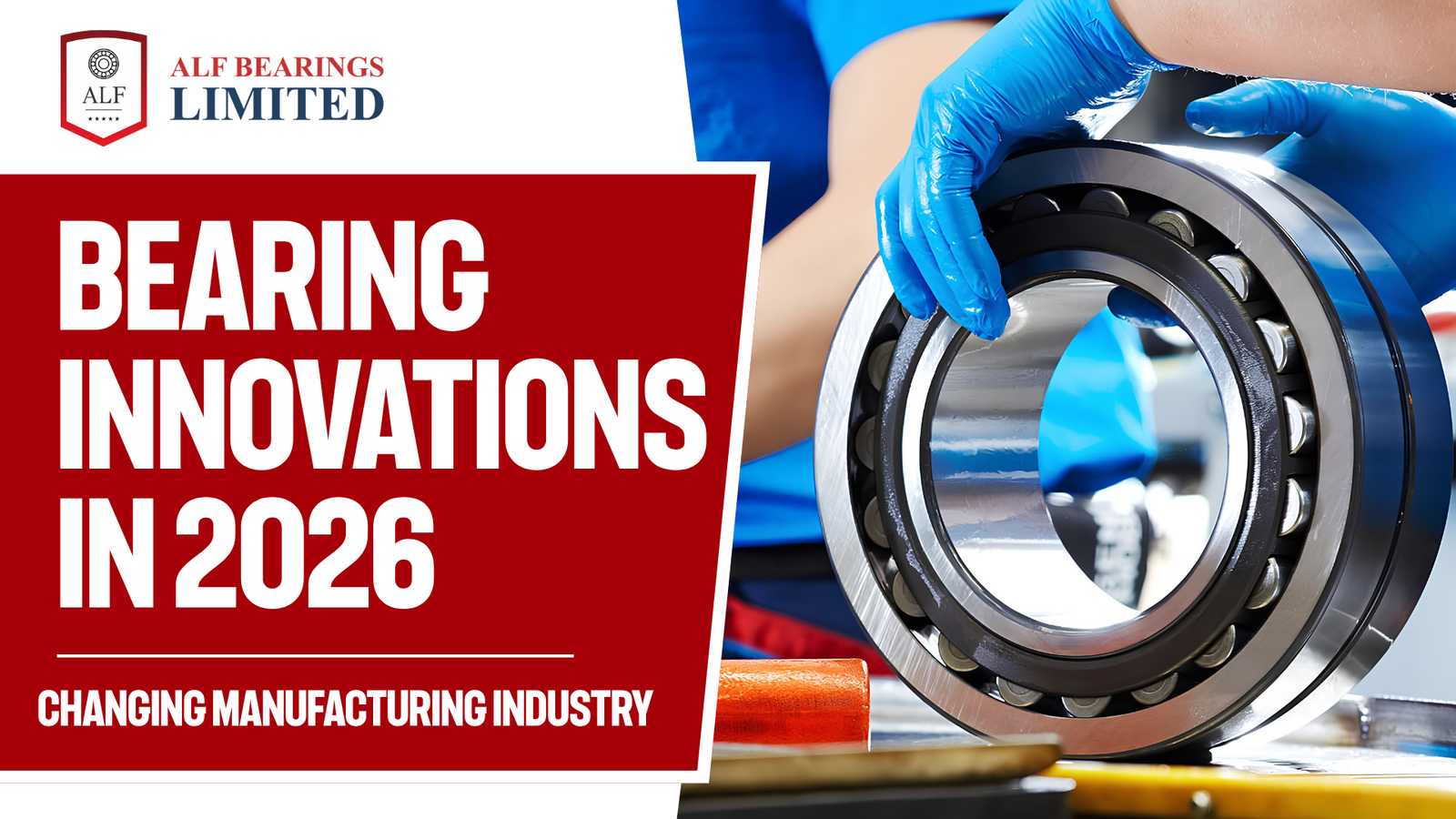
Bearings are used in machines that operate for long hours, carry heavy loads, or run at high speeds. As factories adopt faster equipment, electric motors, and automated production lines, bearing design is changing to meet these demands. Bearing Innovations and High-Speed Bearings are now focused not only on load capacity but also on lower friction, better heat control, longer service life, and machine condition monitoring.

A 2026 industry report valued the global bearing market at about USD 143.25 billion in 2025, showing the scale of demand for bearing products across industrial and automotive applications.

The main changes include bearing materials, sensor systems, internal designs, and monitoring methods. These developments are giving manufacturers more choices for machines that need higher speed, better efficiency, or closer maintenance control. Machine bearings are also being designed to meet these changing requirements.

What Is New in Bearing Technology

Bearing design has moved beyond basic load support. Engineers are also looking at how bearings behave under high speed, electrical loads, heat, and continuous operation. These changes are part of manufacturing innovation, where equipment needs to run efficiently while meeting higher production demands.

Some recent developments focus on reducing friction and weight, while others add sensors or improve the way a bearing handles demanding conditions. This gives manufacturers more options when selecting machine bearings for modern production equipment.

Faster Machines Need Better Bearings

Machine tools, electric motors, pumps, compressors, and automated equipment can run at high speeds, where friction and heat can affect machine bearings and nearby parts.

New designs use improved steels, cages, seals, lubrication, and ceramic rolling elements to handle these conditions. High-speed bearings are designed for such applications, with features that help manage friction and heat during fast rotation.

The right bearing should match the machine’s speed, load, temperature, and lubrication needs.

Better Monitoring of Machine Condition

A bearing can show early signs of a problem through changes in temperature, vibration, speed, or load. Sensor bearings can track these changes during machine operation and send the data to a monitoring system. 

Recent research has also tested bearings with built-in sensing functions, including a 2026 study that reported over 98% fault-diagnosis accuracy.

Connected Bearings for Maintenance

The information collected from sensors can be linked to wider factory monitoring systems. IoT Smart Bearings can be part of this setup, allowing bearing data to be reviewed along with other machine information.

Maintenance teams can use this data to

  • Check bearing condition while the machine is running.
  • Track changes in temperature and vibration over time.
  • Plan inspections based on actual machine condition.
  • Investigate possible problems before they lead to a machine stoppage.

The system still depends on accurate sensors and proper data analysis. A warning should be checked by the maintenance team before any repair or bearing replacement is planned.

New Materials for Demanding Applications

Ceramic rolling elements, improved steels, coatings, and other material treatments are being used where standard steel bearings may have limits. Hybrid ceramic bearings combine steel rings with ceramic balls, making them suitable for some high-speed and electric motor applications. 

Ceramic balls are lighter and provide electrical insulation, while newer bearing innovations are also focused on reducing heat, wear, and friction. A 2026 design achieved speeds of up to 30,000 rpm under grease lubrication. These bearings cost more than standard designs, so the choice should match the machine’s actual requirements.

Changes Inside the Bearing

Changes to cages, seals, raceways, and other internal parts can improve bearing performance under speed and load. New designs aim to reduce friction while maintaining protection, and recent steel research is focused on improving resistance to rolling-contact fatigue. These changes can help control heat, noise, wear, and bearing life during continuous operation.

How Bearing Materials and Designs Are Changing

Manufacturers are improving bearing steels, coatings, cages, seals, and internal designs to increase resistance to wear, heat, contamination, and vibration. New cage designs and surface treatments are also being tested for high-speed and demanding applications.

For manufacturers, these changes can support many practical needs, like

  1. Lower friction and energy loss.
  2. Better performance at high speeds.
  3. More information about bearing condition.
  4. Longer intervals between inspections in suitable applications.
  5. Better protection in electric and high-temperature equipment.

What Manufacturers Need to Consider

New bearing technology can offer useful choices, but the most advanced option is not always the best one. Manufacturers need to look at the actual machine and its working conditions before selecting a bearing.

Important factors like,

  • Operating speed and load.
  • Temperature and lubrication method.
  • Exposure to dust, moisture, or chemicals.
  • Electrical conditions in motor applications.
  • Available installation space.
  • Required maintenance schedule.
  • Need for condition monitoring.

The right combination can help a bearing perform reliably without adding unnecessary cost or complexity.

Wrapping It Up

The right bearing depends on the machine, its working conditions, and the type of work it performs. New designs give manufacturers more choices, but proper selection remains more important than choosing the newest option. For manufacturers, selecting the right bearing for the actual machine and working conditions remains the most important step.

FAQs

1. What factors can affect bearing service life?

Load, speed, lubrication, operating temperature, installation, alignment, contamination, and maintenance practices can all affect bearing service life.

2. How can manufacturers reduce the risk of bearing failure?

Regular inspection, correct lubrication, proper installation, and timely replacement of worn parts can help reduce bearing-related problems.

3. What is the purpose of bearing seals?

Seals help keep dust, moisture, and other contaminants away from the rolling elements and lubricant.

4. Why is lubrication important for bearings?

Lubrication reduces contact between moving surfaces and helps control friction, heat, and wear during operation.

5. Can the same bearing be used in different machines?

Not always. Bearing size, load capacity, speed, mounting arrangement, temperature, and operating environment need to match the machine.

High Speed Bearings for Textile Machines

18 AUGUST 2026

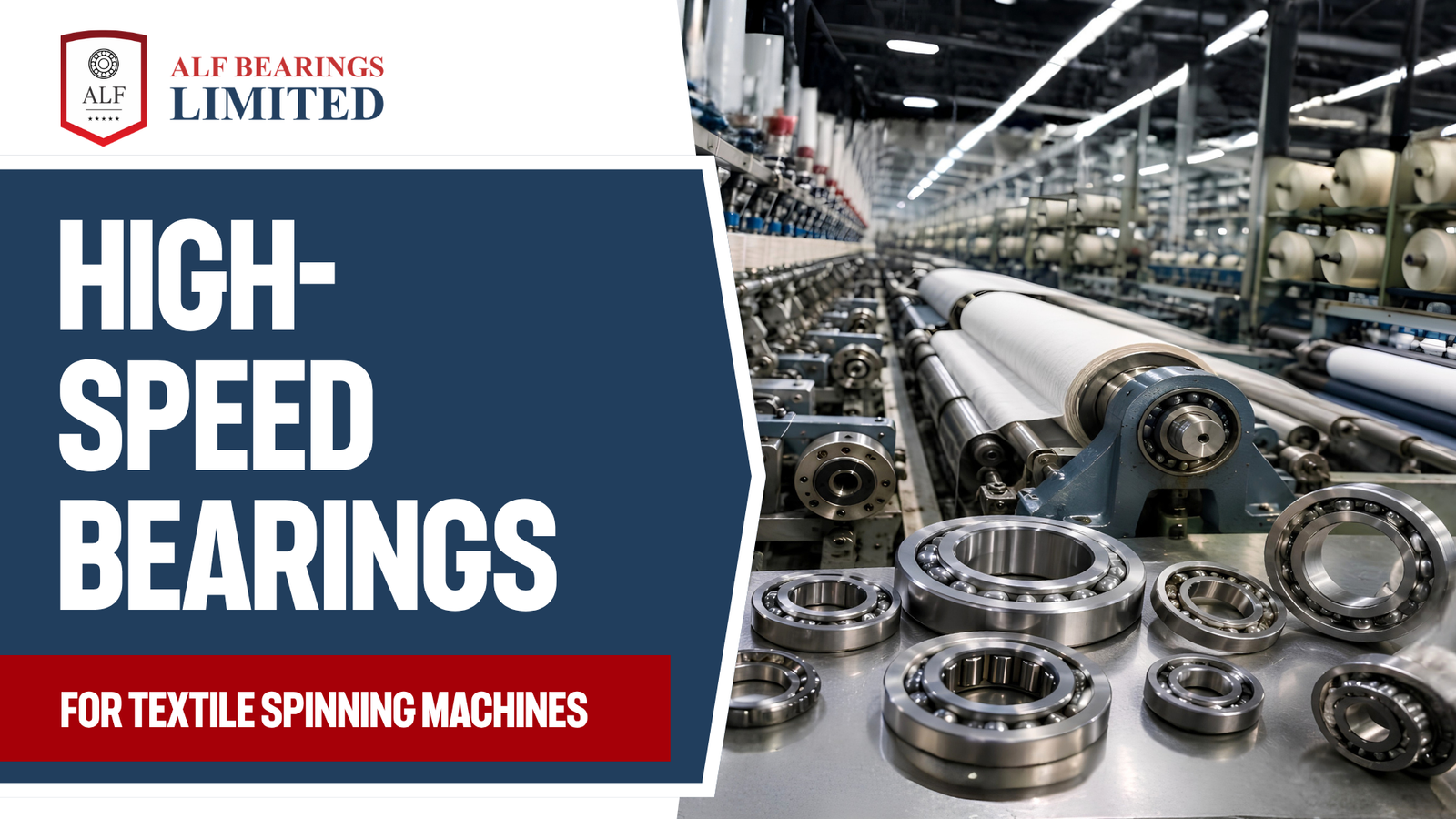
Textile spinning machines work at high speeds and need bearings that can maintain smooth movement for long production cycles. A small increase in friction, heat, vibration, or contamination can affect machine performance and bearing life. For this reason, textile spinning machine bearings need to be selected according to speed, load, temperature, lubrication, and operating conditions.

Bearings used in spinning and textile equipment must also deal with lint, dust, moisture, and regular machine movement. Sealed designs, suitable grease, accurate internal clearance, and proper mounting can help maintain stable operation.

Why Bearings Matter in Textile Spinning Machines

A spinning machine contains many rotating parts that need smooth and controlled movement. Bearings support shafts and other moving components while reducing friction between surfaces.

In high-speed equipment, excess heat and friction can affect bearing performance during long operating hours. Low-friction bearings can reduce resistance during rotation and help control heat generated during operation.

Bearing condition can also affect machine reliability, particularly when a production line operates with little downtime. The right bearing can help reduce unplanned stoppages and the need for frequent maintenance.

What Makes a Bearing Suitable for Textile Machinery?

Textile machinery has working conditions that are different from many general industrial applications. Fine fibers and dust can enter machine areas, while moisture and chemicals may also be present in some textile processes. Proper bearing selection can support smooth machine operation and reduce friction during long working hours. These machine components should be chosen according to the following requirements:

  • Low friction to support smooth movement at high rotational speeds.
  • Proper sealing to reduce the entry of lint, dust, and other contaminants.
  • Suitable grease that can handle the operating temperature and speed.
  • Accurate internal clearance for stable operation.
  • Good resistance to heat, moisture, and chemicals where required.
  • The ability to accommodate a certain amount of shaft or housing misalignment.

These factors should be checked against the machine manufacturer’s requirements before selecting a bearing.

Bearings Used in Textile Spinning Equipment

Ball bearings are widely used in textile machinery. Deep groove ball bearings are suitable for many applications where smooth rotation and support for radial and axial loads are required. Self-aligning ball bearings can be useful where shaft deflection or alignment variation needs to be accommodated.

Needle roller bearings are also used in textile equipment. They can provide a compact bearing arrangement where available installation space is limited. Textile machinery applications can include spinning frames, draw frames, weaving machines, embroidery equipment, and other processing machines.

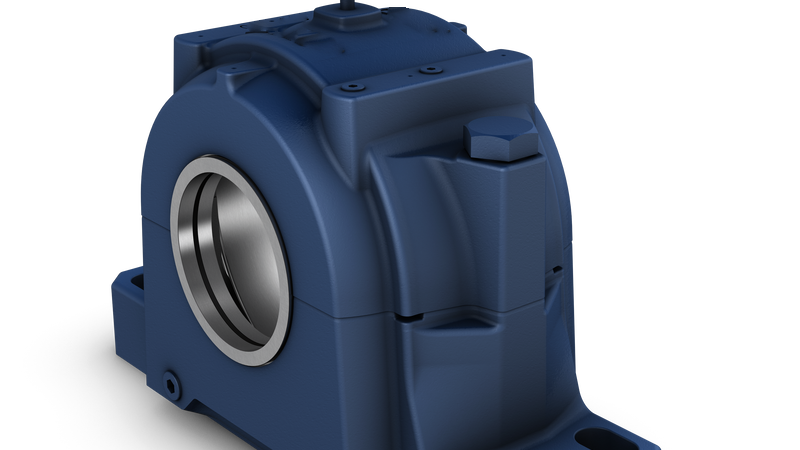
The correct bearing type depends on the shaft size, speed, load, available space, alignment, lubrication method, and surrounding conditions. An industrial bearing supplier can provide suitable bearing options based on these machine requirements.

Importance of Precision Engineering

Precision Engineering is important when bearings are used in high-speed textile machinery. Accurate raceways, proper internal clearance, balanced components, and suitable surface finishes can affect vibration, temperature, and running smoothness.

A bearing with unsuitable clearance may generate excess heat or vibration. Incorrect installation can also place additional force on the bearing and shorten its service life.

How to Choose the Right Textile Bearing

When selecting textile components and bearings for spinning machinery, start with the machine’s operating conditions. Check the required speed. radial and axial loads, shaft dimensions, temperature, lubrication, and contamination level.

The installation method should also be considered. Some textile machines use housed bearing units, while others require individual bearings fitted directly into the machine arrangement.

An industrial bearing supplier should be able to provide dimensional information, speed ratings, load ratings, sealing options, lubrication details, and application guidance. This information helps maintenance teams and engineers select a bearing that matches the machine rather than choosing only by size.

Maintenance of Textile Machine Bearings

Regular inspection can help identify bearing problems before they cause a machine stoppage. Unusual noise, increased vibration, rising temperature, or changes in machine movement may indicate a bearing or lubrication problem.

Clean working conditions also matter. Textile lint and dust should be kept away from exposed bearing areas, while seals should be checked for damage.

Lubrication should follow the bearing and machine manufacturer’s recommendations. Too little grease can increase wear, while excessive grease can increase operating temperature, particularly at high speeds.

Wrapping It Up

High-speed textile machinery needs bearings that can handle continuous rotation, low friction, contamination, heat, and alignment changes. The bearing should match the machine speed, load, lubrication, and working conditions. Regular cleaning, proper lubrication, and timely inspection can also help prevent bearing problems and keep the machine running properly.

FAQs

1. What type of bearings are used in textile machines?

Ball bearings and needle roller bearings are commonly used, depending on the machine and application.

2. Why are low-friction bearings used in spinning machines?

They reduce resistance during rotation and can support efficient machine operation.

3. How does textile lint affect bearings?

Lint and dust can enter the bearing area, contaminate the lubricant, and increase wear if the bearing is not properly sealed.

4. What should be checked before selecting a textile bearing?

Check speed, load, shaft size, temperature, lubrication, sealing, alignment, and available installation space.

5. How can bearing life be improved?

Correct installation, suitable lubrication, clean working conditions, regular inspection, and using the correct bearing specification can help extend bearing service life.