A sleeve bearing may look like a simple metal bush, but its material, clearance, and lubrication can affect how well a machine operates. An unsuitable bearing may wear quickly, run hot, or damage the shaft it supports. A plain sleeve bearing avoids the rolling elements found in ball and roller bearings; instead, it supports the shaft through a sliding surface. Bronze, oil-impregnated metal, and composite materials serve different operating needs, so the right choice depends on how the machine moves and the conditions it faces.
Sleeve Bearing Materials and Their Differences
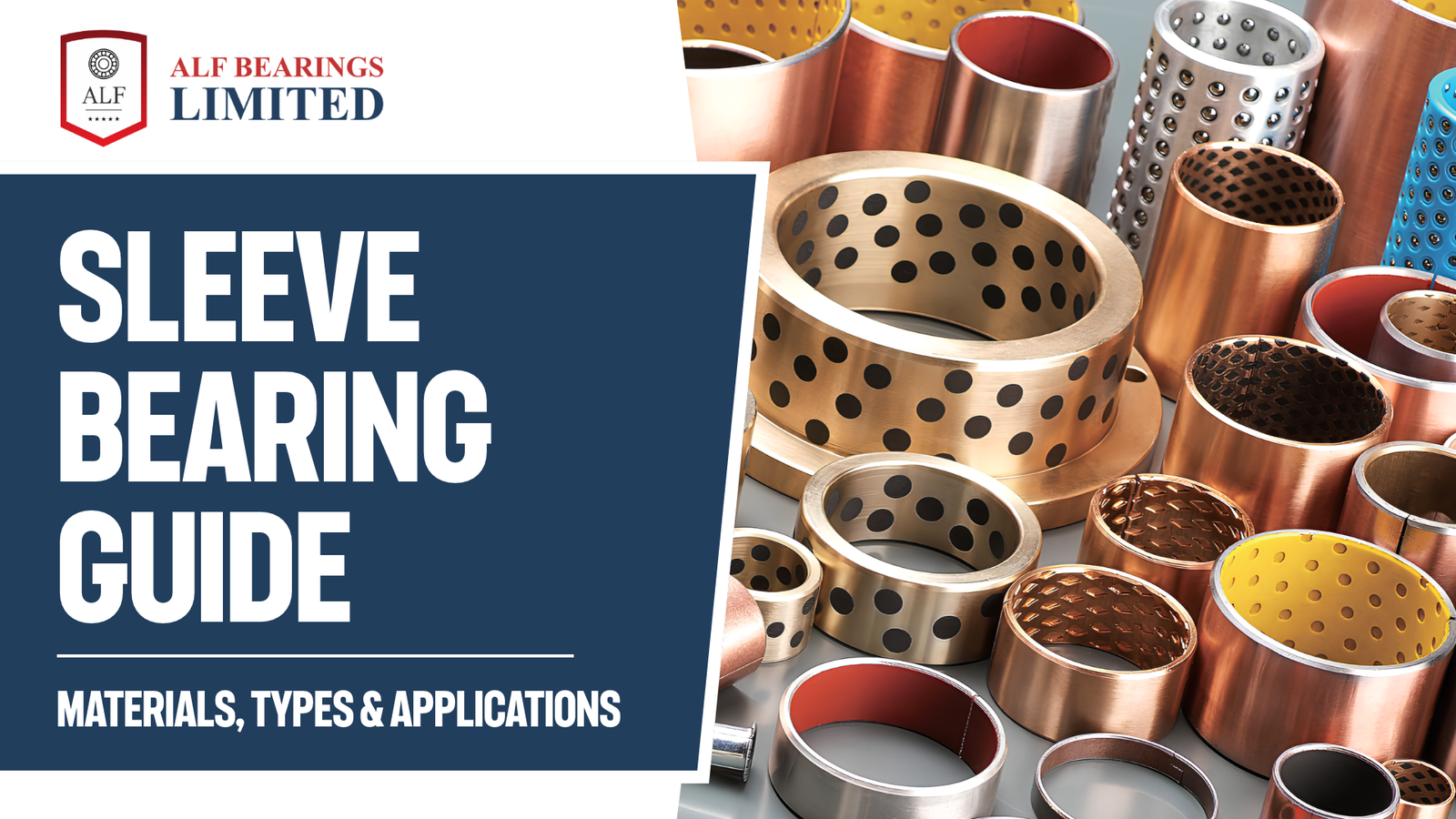
Sleeve bearing types vary by material and lubrication method, which affects their performance under different operating conditions. Two sleeve bearings may have the same dimensions but behave differently depending on their material, load capacity, and lubrication requirements.
Bronze sleeve bearing:
Bronze is a common choice for industrial machinery because it offers good wear resistance and load support. Oil-impregnated bronze contains tiny pores that store oil and release it during operation. This design suits applications such as small motors and pumps where suitable operating conditions can be maintained.
Composite sleeve bearing:
These bearings combine materials such as a metal backing and a low-friction lining. They suit applications where reduced lubrication needs and quiet movement are preferred.
Self lubricating bearing:
This design uses materials such as PTFE or graphite to reduce friction without continuous external lubrication. It can be useful in machinery where greasing is difficult, though load, speed, and temperature limits still apply.
Common Applications of Sleeve Bearings
Their simple construction makes sleeve bearings suitable for many everyday mechanical tasks. Common examples are as here.
- Electric motor shafts
- Pump and fan assemblies
- Agricultural machine pivots
- Hinges and moving linkages
A flanged sleeve bearing may be useful when the assembly also needs a locating surface at one end. A straight cylindrical design suits applications where radial shaft support is the main requirement.
How to Choose the Right Sleeve Bearing Sizes
Different sleeve bearing types may require specific fitting tolerances and clearances. Correct dimensions help the bearing fit properly around the shaft. Before buying a replacement, check these three measurements.
- Inner diameter: The diameter of the shaft opening.
- Outer diameter: The diameter that fits inside the housing.
- Length: The bearing’s overall axial width.
These measurements define the basic sleeve bearing sizes, but they are not the only factors to consider. Shaft finish, housing fit, operating temperature, load, and lubrication also affect performance. Always check the manufacturer’s recommended tolerances and running clearance rather than selecting a bearing by dimensions alone.
For oil-impregnated or self-lubricating designs, check the specified load and speed limits. In some applications, the pressure-velocity (PV) rating is also useful because it relates the bearing’s surface pressure to the speed of sliding motion.
Tips for Installing a Sleeve Bearing
Proper installation helps prevent early wear and keeps the shaft moving smoothly. Before fitting a new sleeve bearing, clean the housing and shaft to remove dust, grease residue, and metal particles. Check the shaft surface for scratches or uneven wear, as these can damage the bearing during operation.
Use the recommended fitting method rather than striking the bearing directly with a hammer. Apply lubricant if the bearing design requires it, and confirm that the shaft rotates freely after installation. If the bearing feels tight or shows unusual movement, check the alignment and clearance before running the machine.
What Can Cause Sleeve Bearing Wear?
Premature wear may result from insufficient lubrication, excessive load, incorrect clearance, contamination, or a rough shaft surface. Heat can also increase when a bearing operates beyond its recommended speed or pressure limits.
During maintenance, inspect the bearing and shaft for scoring, uneven wear, discoloration, and excessive movement. Replace damaged components and check the cause of the failure before fitting a new bearing. Otherwise, the same problem may return.
Wrapping It Up
A plain sleeve bearing can be a practical choice when a machine needs compact shaft support without rolling elements. Bronze suits many conventional applications, while composite and self-lubricating designs can reduce routine lubrication needs. Matching the material, dimensions, and clearance to the actual working conditions helps prevent avoidable wear.
FAQ
A sleeve bearing is a type of plain bearing that supports movement through sliding contact rather than rolling elements.
Choose bronze when its load capacity, wear properties, and lubrication method suit the machine’s operating conditions.
Not always. Some designs work without external grease, but others may need lubrication under certain conditions.
Measure the inner diameter, outer diameter, and length, then confirm the required tolerances and clearance.
Poor lubrication, incorrect clearance, contamination, excessive load, and an unsuitable shaft surface can increase wear.