
Proper bearing installation is essential for reliable machine performance. Even a high-quality bearing can experience premature wear when incorrect mounting practices are followed. Small installation problems can eventually result in excessive vibration, noise, heat, or unexpected equipment failure.
Understanding common bearing installation mistakes helps technicians protect bearings and surrounding machinery. From checking the shaft and housing to lubrication and final inspection, every step contributes to effective bearing maintenance and long-term performance.
1. Not Checking the Shaft and Housing
One of the most overlooked bearing installation mistakes is failing to inspect the shaft and housing before mounting. Burrs, corrosion, dirt, wear, or incorrect dimensions can prevent the bearing from seating properly.
Both shaft fit and housing fit should be checked according to the bearing and application requirements. A loose shaft fit can allow unwanted movement, while an excessively tight fit may affect internal clearance. Similarly, an incorrect housing fit can influence bearing stability and load distribution.
Measuring and inspecting these surfaces before mounting can prevent avoidable problems later.
2. Installing Bearings in Contaminated Conditions
Bearings contain precisely finished surfaces, so cleanliness is critical. Dust, moisture, metal particles, or dirty tools can introduce contamination during installation and contribute to premature bearing damage.
The work area, tools, shaft, and housing should be clean before installation begins. Bearings should ideally remain in their packaging until they are ready for mounting.
Cleanliness should therefore be a basic step in every bearing installation guide, especially where equipment operates under demanding conditions.
3. Applying Mounting Force Incorrectly
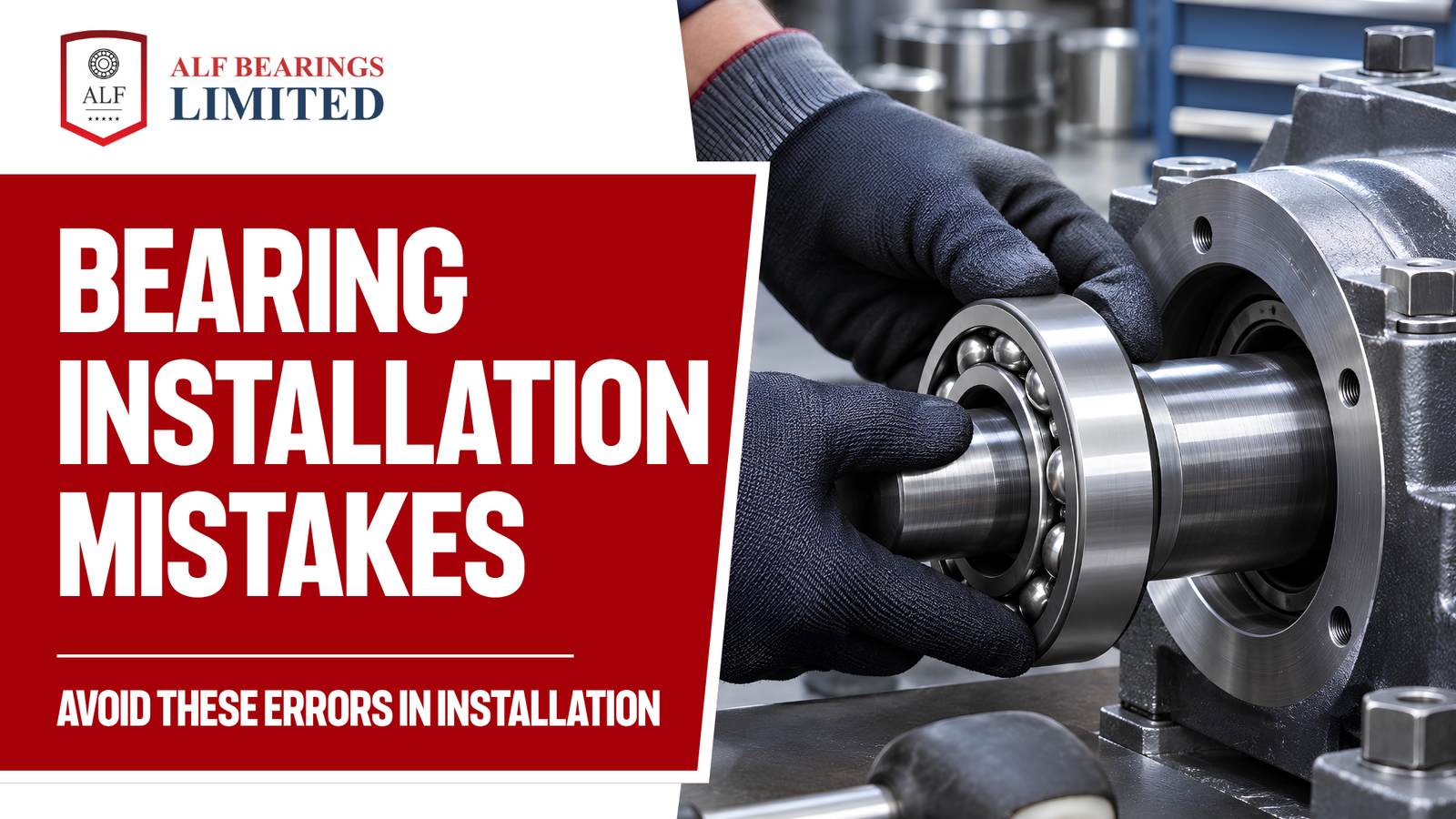
Improper mounting often occurs when installation force is applied through the wrong bearing components. When a bearing has a tight fit, force should generally be directed to the ring being fitted.
Allowing mounting force to pass through balls or rollers can affect the raceways and create early bearing damage. Direct and uncontrolled hammering should also be avoided.
Suitable mounting sleeves, presses, or approved tools should be selected according to the bearing design and application. Avoiding improper mounting helps protect precision surfaces during installation.
4. Ignoring Alignment Errors
Correct alignment is essential for distributing operating loads properly. Alignment errors can develop because of incorrect housing positioning, shaft deflection, machining inaccuracies, or assembly problems.
These alignment errors may contribute to uneven loading, vibration, excessive temperature, noise, and accelerated bearing wear.
Before completing installation, technicians should verify the alignment of the shaft, housing, and connected components using appropriate measuring equipment. Correct alignment is also an important part of preventive bearing maintenance.
5. Making Lubrication Mistakes
Proper lubrication reduces friction and helps protect bearing contact surfaces. However, lubrication mistakes can negatively affect even a correctly mounted bearing.
Common lubrication mistakes include selecting an unsuitable lubricant, mixing incompatible greases, introducing contamination, or applying too much or too little lubricant.
Excessive grease can increase churning and temperature in some applications, while insufficient lubrication can reduce protection between moving surfaces. Lubricant type, quantity, and relubrication intervals should therefore match the bearing and its operating conditions.
6. Heating Bearings Incorrectly
Heating is sometimes used to simplify the installation of bearings with interference fits. However, excessive or uneven heating can affect bearing components.
Open flames and uncontrolled heating methods should be avoided. Where thermal mounting is suitable, controlled equipment such as an induction heater can provide more uniform heating.
A reliable bearing installation guide should always consider the bearing manufacturer’s recommended temperature limits, particularly for bearings containing seals or temperature-sensitive components.
7. Using Unsuitable Mounting Tools
Using inappropriate tools can turn a simple installation into costly bearing damage. Screwdrivers, punches, damaged sleeves, or uncontrolled hammer impacts may affect rings, cages, seals, and raceways.
Purpose-designed mounting tools allow force to be applied more accurately. Selecting the correct tools before installation also reduces the possibility of improper mounting and helps maintain bearing condition.
8. Skipping Post-Installation Inspection
Bearing installation should always end with a final inspection. Check whether the bearing is properly seated, secured, lubricated, and aligned.
Where appropriate, manually rotate the assembly and check for unusual resistance. During initial operation, monitor noise, vibration, and temperature. Detecting problems early can prevent minor installation issues from becoming serious failures.
These checks should also become part of a regular bearing maintenance routine.
Why Choose ALF Bearings?
Avoiding bearing installation mistakes requires correct shaft fit, housing fit, proper lubrication, accurate alignment, clean working conditions, and suitable mounting tools. Following these practices can reduce premature bearing damage and support better bearing maintenance throughout the equipment’s service life.
ALF Bearings provides precision-engineered bearing solutions for diverse automotive and industrial applications. With a focus on manufacturing accuracy, quality, and consistent performance, ALF Bearings supports demanding operating requirements. Combining the right bearing with proper installation and maintenance practices helps improve equipment reliability and service life, reflecting ALF Bearings’ core philosophy: Progress through Precision.
FAQs
Common bearing installation mistakes include improper mounting, incorrect shaft fit or housing fit, contamination, alignment errors, and lubrication mistakes. These issues can lead to premature bearing damage, excessive vibration, heat, and reduced bearing service life.
Improper mounting can transfer excessive force through the rolling elements or raceways. This may damage precision surfaces and eventually cause noise, vibration, wear, or premature failure. Using suitable mounting tools and the correct installation method helps protect the bearing.
Correct shaft fit and housing fit help keep the bearing properly positioned during operation. A loose fit can cause unwanted movement, while an excessively tight fit may affect internal clearance and increase stress on bearing components.
Alignment errors can create uneven load distribution across the bearing. This may increase vibration, operating temperature, noise, and wear. Checking shaft and housing alignment during installation is an important part of reliable bearing maintenance.
Common lubrication mistakes include using an unsuitable lubricant, mixing incompatible greases, applying too much or too little lubricant, and allowing contamination. Correct lubrication helps reduce friction, control wear, and support reliable bearing performance.