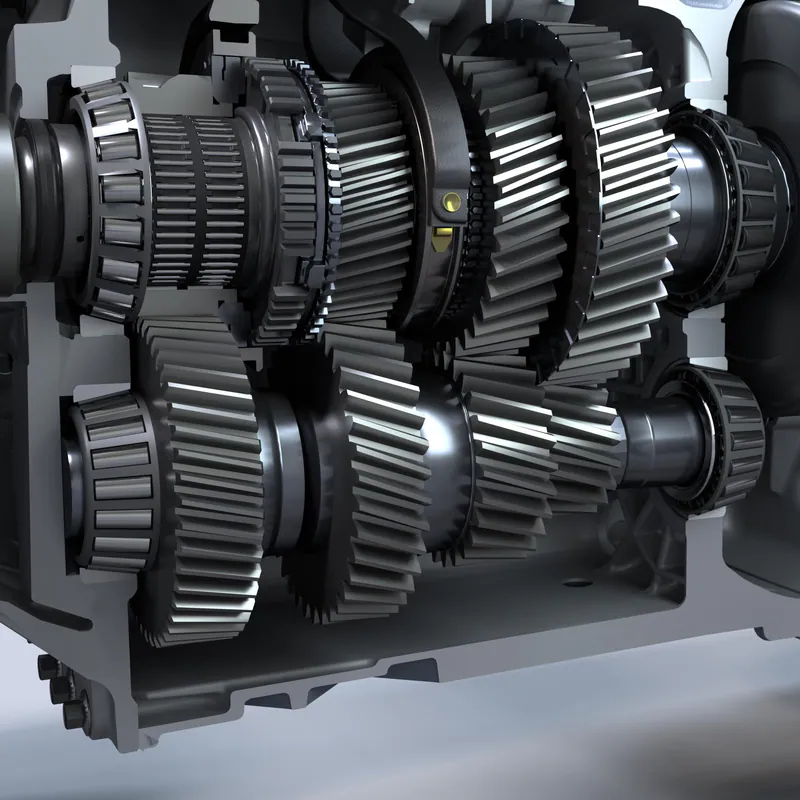

Proper lubrication of bearings, gears, motors and other machine elements are important because it creates a film between two surfaces, reducing friction, controlling heat and providing Wear Protection. Without appropriate lubrication metal-to-metal contact can increase Friction, temperature and component wear.
When considering Grease vs Oil Lubrication for bearings or gears, neither option is automatically better. Grease is valued for staying in place and reducing leakage, while Lubricating Oil flows freely and can provide effective cooling. The right choice depends on speed, load, temperature, operating environment and equipment design.
What Is Grease Lubrication?
Grease is a semi-solid lubricant generally comprised of base oil, a thickener and additives. The base oil provides lubrication, while the thickener provides grease its semi solid consistency and facilitates adhesion to the lubrication point. Additives may improve properties such as corrosion resistance, oxidation stability and Wear Protection.
Bearing Grease is widely used because it can stay in its place inside the bearing housing for long periods of time and does not require continuous circulation.
Advantages of Grease
Grease has several practical advantages including:
- Stays in place for longer periods
- Reduces the likelihood of lubricant leakage
- Helps protect against dust, dirt and moisture
- Can simplify the lubrication system
- Allows longer relubrication intervals
- Provides effective lubrication for many moderate-speed applications
Grease can also provide additional sealing around bearing components, which is useful in environments where contamination is a concern.
However, grease does have limitations. It isn’t as effective at removing heat as compared to circulating oil, and too much grease can lead to churning and increased bearing temperatures.
What Is Oil Lubrication?
Lubricating Oil is a fluid lubricant that flows between moving surfaces, forming a thin protective film that reduces direct metal-to-metal contact.
Oil can be delivered via oil baths, circulation systems, jets or other controlled methods. Because it flows easily, oil can continuously reach critical components while removing heat from bearings and other machine parts.
Advantages of Oil
Oil lubrication has several advantages including:
- Better Heat Dissipation
- Continuous supply of lubricant
- Effective lubrication at higher operating speeds
- Filtration of contaminants and wear particles
- Lubricate multiple components from one system
- Lower churning resistance in suitable high-speed applications
These characteristics can make oil particularly valuable for certain High-Speed Bearings and machines that produce significant heat.
The main disadvantages are increased system complexity and risk of leakage. Some oil systems incorporate pumps, filters, reservoirs, pipes and coolers, which increases maintenance requirements.
Key Difference Between Grease and Oil
The key difference between grease and oil is their physical consistency and ability to move freely.
Grease is semi-solid and intended to stay in place. Oil is a fluid that can flow through a lubrication system.
This means that grease generally offers better lubricant retention and sealing support, while oil facilitates better circulation and Heat Dissipation.
Grease is typically used when moderate speeds, contamination and ease of maintenance are a priority, while oil is suitable when continuous circulation, heat removal and filtration are required.
Oil or Grease for Bearings?
The choice between oil and Bearing Grease depends on the operating conditions.
Generally speaking, grease is suitable for bearings that operate at moderate speeds and temperatures, whereas oil is more appropriate for High-Speed Bearings, high temperatures and applications that require continuous cooling.
Lubricant quantity is also important. Excessive amounts of grease do not necessarily help lubrication and can actually increase operating temperature.
Oil or Grease for Gears?
Both grease and oil can provide Friction Reduction and Wear Protection for gears.
Oil is a popular choice for enclosed gearboxes as it flows freely between gear teeth, helping to remove excess heat.
Grease might be useful for some slow moving, open or specially designed gear arrangements where lubricant retention is more critical than continuous circulation.
Factors To Consider When Choosing Grease or Oil
The lubricant should be appropriate for the operating conditions. It’s important to consider factors including:
- Operating speed and load
- Working temperature
- Thermal capacity
- Exposure to dust, dirt and water
- Lubricant viscosity
- Risk of leakage
- Maintenance intervals
- Whether filtration is required
- The existing lubrication system
- Manufacturer recommendations
Viscosity should be of specific importance. Oil that is too thin won’t effectively form a lubricating film, while unnecessarily high viscosity increases resistance and heat.
Grease vs Oil Lubrication: Which Should You Choose?
There is no clear winner in the Grease vs Oil Lubrication debate.
Grease can be ideal when lubricant retention, lower leakage rates, resistance to contamination and easy maintenance is important, while oil is more effective when it comes to cooling, circulation, filtration and high-speed operation.
The final choice should therefore depend on the bearing or gear design, speed, load, temperature, environment and manufacturer recommendations.
FAQs
Bearing Grease is generally suitable for moderate-speed applications because it stays in place and provides reliable wear protection. Lubricating Oil is often preferred for high-speed bearings where continuous lubrication and heat dissipation are important.
The main difference between grease and oil lubrication is that grease is semi-solid and remains at the lubrication point, while oil is fluid and can circulate through machinery. Grease offers better retention, whereas oil provides better cooling and circulation.
Grease can be suitable for some high-speed bearings when the correct type and quantity are used. However, oil lubrication is often preferred at very high speeds because it can reduce churning and provide better heat dissipation.
Oil generally provides better heat dissipation than grease because it can circulate and carry heat away from bearings and other moving components. This makes oil useful in high-speed and high-temperature applications.
The right bearing lubricant depends on operating speed, load, temperature, viscosity, contamination, cooling requirements and maintenance intervals. The bearing manufacturer’s lubrication recommendations should also be considered when choosing between grease and oil.